Report Confirms Very Low 28-Pages Readership on Capitol Hill

THE HILLIn a story published Monday, The Hill’s Martin Matishak and Julian Hattem made a very important contribution to the growing movement to declassify 28 pages on foreign government support of the 9/11 hijackers—by providing the best indication yet of the just how few members of the House have read the censored material.

According to Matishak and Hattem:

A spokesman for Rep. Devin Nunes (R-Calif.), the Intelligence panel’s chairman, said the committee granted more than 30 requests from lawmakers to view the pages in the 113th Congress.

That tally is disappointing but not surprising, confirming suspicions of extremely low readership voiced by 28Pages.org in September.

Professional Curiosity in Short Supply

The 113th Congress ended its two-year run in December 2014, a full year after Congressmen Walter Jones and Stephen Lynch began urging peers to read the 28-page chapter of a joint Congressional intelligence report on 9/11.

Knowing Jones, Lynch and Massie account for three of the “more than 30” requests granted by the intelligence committee during the last congress, The Hill’s report suggests that fewer than one in ten of the trio’s peers were moved to action by these attention-grabbing descriptions of the 28 pages:

  • Jones: “I was absolutely shocked by what I read. What was so surprising was that those whom we thought we could trust really disappointed me.”
  • Lynch: “These pages contain information that is vital to a full understanding of the events and circumstances surrounding this tragedy.”
  • Massie: “I had to stop every two or three pages and rearrange my perception of history….it’s that fundamental.”

These statements were sufficient to spark the creation of a grassroots movement—and the launch of 28Pages.org—yet they weren’t enough to prompt the typical member of Congress to make the short trip to the Capitol basement to read the 28 pages themselves.

Congressman Stephen Lynch

These 28 pages aren’t just about history. Lynch told The Boston Globe that, in the context of the war on terror, the 28 pages illuminate “the web of intrigue here and the treacherous nature of the parties we are dealing with — the terrorists and their supporters.”

At a time when Congress is contemplating a new authorization of military force in the Middle East, it’s no exaggeration to say that casting a life-and-death vote on counter-terror strategy without having read the 28 pages is tantamount to legislative malpractice.

Matishak and Hattem deserve credit for providing this critical information, and intelligence committee chairman Nunes should be applauded for enabling this initial level of transparency. That said, more transparency is needed—specifically, the names of those in both houses of Congress who have read the 28 pages.

The Bright Side

While confirming our worst suspicions about 28-pages readership on the Hill, Matishak and Hattem’s report offered a measure of encouragement, too:  Eight more requests to read the censored passage were approved by the House intelligence committee on Thursday.

In that same week, seven new cosponsors joined House Resolution 14, which urges the president to declassify the 28 pages. With heightened media attention and increased involvement by citizens in the form of calls and letters to Congress and letters to newspaper editors, we’re confident that number will continue to grow.

REDACTED w911Has your representative read the 28 pages? Ask today.

Follow us on Facebook and Twitter

28 Pages Resolution Picks Up Seven Cosponsors in Three Days

Updated to reflect two more cosponsors added after story first published

In the wake of major headlines about the censored 28-page finding on foreign government support of the 9/11 hijackers and claims by “20th hijacker” Zacarias Moussaoui of Saudi Arabia’s direct support of al Qaeda, the House resolution urging the president to declassify the 28 pages gained seven cosponsors in just three days this week.

Congressman Peter Welch

With this week’s haul, House Resolution 14 now has 13 cosponsors. Peter Welch, a Democrat and Vermont’s sole representative in the House, is joining the 28 pages movement for the first time along with Bill Posey (R, FL-8). The other five had been cosponsors of the identically-worded resolution in the previous Congress. They are Mark Sanford (R, SC-1), Collin Peterson (D, MN-7), Lloyd Doggett (D, TX-35), John “Jimmy” Duncan (D, TN-2) and Ted Yoho (R, FL-3)

Congressman Mike Capuano

Last week, Mike Capuano (D, MA-1) also became a 28 pages cosponsor for the first time, telling The Boston Globe that “so many questions have been raised over the years about the contents of the 28 pages and what they reveal about the September 11th terrorist attacks. I think the public has a right to that information and in the interest of transparency, they should be declassified.”

BILL POSEY
Congressman Bill Posey

Meanwhile, Congressman Walter Jones—who introduced H.Res.14—told The Hill’s Molly Hooper that Michael Burgess (R, TX-26) recently secured permission from the House intelligence committee to read the 28 pages and will do so when Congress returns from its break.

Jones summed up the overall strategy: “What we are trying to do is put the pressure on the White House by building the number of cosponsors in the House.” He also said he’s still working to identify a champion in the upper chamber to join him in the campaign to release the 28 pages. “I have reached out to several senators. I am hoping to talk to Senator Rand Paul today to put in the same resolution in the Senate,” said Jones.

REDACTED w911Write to Congress today

Follow us on Facebook and Twitter

Create Free 28 Pages Publicity with Letters to the Editor

The movement to declassify the 28-page finding on foreign government support of the 9/11 hijackers depends on individual actions by concerned citizens. While we emphasize calls and letters to Congress and the White House, another powerful tool is a letter to the editor of a newspaper or magazine.

Today’s Austin American-Statesman features a letter that focuses on Congressman Lamar Smith:

Release Classified 9/11 Finding

If you were elected to Congress and your peers urged you to read a classified 28-page finding on foreign government support of the 9/11 hijackers because it was critical to understanding sources of terrorism, would you do it? Not if you’re Rep. Lamar Smith.

After months of sidestepping my questions posed via letters, emails and phone calls, the congressman’s staff finally acknowledged that Smith hasn’t done the homework that peers in both parties have urged him to do. Bottom line: Lamar Smith—a member of the House Homeland Security Committee—votes with an incomplete understanding of the terror threat.

After reading this material, Rep. Thomas Massie said: “I had to stop every two or three pages and rearrange my perception of history.” Every American should be able to read those 28 pages. Every member of Congress should support House Resolution 14, which urges our president to release them.

Public Political Pressure…and Praise

Rep. Lamar Smith
Rep. Lamar Smith

It’s been more than a year since Congressmen Walter Jones, Stephen Lynch and Thomas Massie began urging members to read the 28 pages. Letters like these provide a means of public accountability, alert other legislators to a potential vulnerability of their own and enlighten both readers and the newspaper’s staff about the issue.

Your letter doesn’t have to focus on your representative’s failure to read the 28 pages—something that staffs will take a long time to admit. Instead, you could simply express concern that they haven’t joined the list of cosponsors of House Resolution 14, which urges the president to declassify the 28 pages and give Americans information they need and deserve.

If your legislator is already on board, use a letter to the editor to praise them publicly while encouraging others to follow their leadership on the issue—the way districts are drawn, a given newspaper’s reach often spans multiple districts.

A More General Approach

As another alternative, you can take a broader approach to the issue. Here’s an example of a letter—published in the Northwest Herald in Woodstock, Illinois—that pressures Congress in general and the president specifically:

The day terrorists attacked the Charlie Hebdo office in France, Congressmen Walter Jones and Stephen Lynch – with former Senate Intelligence Chairman Bob Graham and Terry Strada, co-chair of the 9/11 Families United for Justice Against Terrorism – held a news conference to announce the introduction of House Resolution 14, which calls on the president to declassify 28 pages of the joint congressional inquiry into 9/11.

This news conference is the latest attempt to bring the truth to the public about who is financing terrorism.

Follow the money is a common phrase used when trying to disclose how things happen.

On two occasions, in the presence of 9/11 victims’ families, President Barack Obama has said he would declassify the 28 pages, but has so far refused.

There should be massive pressure placed upon the House to sign the resolution and pressure on the Senate to sponsor a corresponding resolution. These actions might give Obama a backbone to do the right thing.

As long as this cover-up continues, all counterterrorism plans are for naught.

NICHOLAS C. KOCKLER, WOODSTOCK

Tips for Your Letter to the Editor

  • Keep it focused on just this topic
  • Keep it brief—no more than 150 words
  • Have a pal proofread it
  • Check the paper’s guidance for length and how to submit it; most have online forms
  • Increase your odds of success: Try more than one newspaper or magazine
  • If your letter is published, share it in a comment on our Facebook page, and spread it around using Facebook, Twitter and other social media
  • For inspiration on key points to hit, use the letters above and skim through this page and this one

REDACTED w91128 Ways You Can Build the 28 Pages Movement

Follow us on Facebook and Twitter

Latest Jon Gold 9/11 Podcast Episode Covers the 28 Pages

28Pages.org director Brian McGlinchey is the guest on the latest episode of We Were Lied to About 9/11, a podcast hosted by Jon Gold, a self-described advocate for 9/11 justice who has built a reputation for his encyclopedic knowledge of the event and its aftermath.

Gold’s interview series scrutinizes 9/11 from a variety of angles with guests that have included investigative journalist Philip Shenon—author of the authoritative book, The Commission—NSA whistleblower Thomas Drake and FBI whistleblower Coleen Rowley. McGlinchey and Gold’s discussion provides a comprehensive overview of the history of the classified 28-page finding on foreign government links to 9/11 and the drive to declassify it.

We Were Lied to About 9/11 is available on iTunes and YouTube and is part of the Soapbox People’s Network.


REDACTED w911Call or write to Congress about the 28 pages today

Help us build the 28 pages movement: Follow us on Facebook and Twitter

In New York Times Story on the 28 Pages, 9/11 Commission’s Zelikow Dismissive of Their Value

It’s been a week of heightened attention to links between Saudi Arabia and the 9/11 hijackers, first with the news that so-called “20th hijacker” Zacarias Moussaoui has testified that members of the Saudi royal family were major patrons of al Qaeda, and now with a front-page story from New York Times chief Washington correspondent Carl Hulse that discusses the classified, 28-page finding on foreign government links to the 9/11 hijackers found in the report of a joint congressional intelligence inquiry.

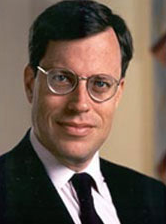
9/11 Executive Director Philip Zelikow

Read the piece here. As for our thoughts on the story, we’d like to focus on one specific aspect: The attempt by 9/11 Commission executive director Philip Zelikow to position the commission as having throughly investigated and then dismissed the Saudi Arabia leads uncovered by the congressional inquiry that preceded it. Writes Hulse:

Others familiar with that section of the report say that while it might implicate Saudi Arabia, the suspicions, investigatory leads and other findings it contains did not withstand deeper scrutiny. Philip D. Zelikow, the executive director of the national commission that investigated the Sept. 11 attacks after the congressional panels, said the commission followed up on the allegations, using some of the same personnel who wrote them initially, but reached a different conclusion.

Many close followers of the 28 pages story and the 9/11 Commission’s work will take particular issue with this quote from Zelikow:

“Those involved in the preparation of the famous 28 pages joined the staff of the 9/11 Commission and participated in the follow-up investigation of all the leads that had been developed earlier,” he said Wednesday. “In doing so, they were aided by a larger team with more members, more powers and for the first time actually conducted interviews of relevant people both in this country and in Saudi Arabia.”

Chances are, Zelikow neglected to tell Hulse that he fired a member of the 9/11 Commission staff, Dana Lesemann, for going around him to acquire a copy of those very 28 pages—pages she needed to perform her assigned task of investigating potential ties to Saudi Arabia.

According to The Commission, Philip Shenon’s exhaustive account of the 9/11 investigation, Zelikow had, for weeks, neglected Lesemann’s request for a copy of the 28 pages. “Philip, how are we supposed to do our work if you won’t provide us with basic research material?” reportedly asked an agitated Lesemann, prompting Zelikow to storm off in silence. Fed up, she took matters into her own hands. When Zelikow discovered it, he fired her.

911 Report CvrThat’s not the only aspect of Lesemann’s experience that undercuts Zelikow’s portrayal of the commission’s work as exceedingly thorough. Before the firing over the 28 pages, Zelikow and Lesemann clashed over the breadth of the investigation. Again according to Shenon, Lesemann had presented Zelikow with a list of 20 government officials she wanted to interview to pursue the Saudi links. She was furious when Zelikow, several days later replied that she could interview only 10—a numerical limitation that Lesemann felt “arbitrary”, “crazy” and damaging to the work of the commission at its critical outset.

Beyond what Shenon portrays as a pervasive pattern of Zelikow restricting investigators and excessively limiting access to and sharing of information, there are other reasons to question Zelikow’s assertions on this topic, starting with the fact that, to the extent the 28 pages put the commission’s final product in doubt, he may have an interest in prolonging their censorship.

And then there are Zelikow’s conflicts of interest in his role, including:

  • His previous friendship with Bush’s National Security Advisor Condoleeza Rice, with whom he’d even authored a book.
  • His position on the Bush administration’s transition team.
  • His frequent contacts with Bush political advisor Karl Rove—while the investigation was underway—which lend credence to characterizations that he failed to be an impartial and, when necessary, adversarial investigator.

That last point is critical, given widespread reports that the Bush White House routinely impeded the commission’s investigation of possible Saudi ties to 9/11. The Commission describes 9/11 Commission member and former Secretary of the Navy John Lehman’s frustration with the Bush administration’s relentless shielding of Saudi Arabia:

Lehman was struck by the determination of the Bush White House to try to hide any evidence of the relationship between the Saudis and al Qaeda. “They were refusing to declassify anything having to do with Saudi Arabia,” Lehman said. “Anything having to do with the Saudis, for some reason, it had this very special sensitivity.” He raised the Saudi issue repeatedly with Andy Card. “I used to go over over to see Andy, and I met with Rumsfeld three or four times, mainly to say, ‘What are you guys doing? This stonewalling is so counterproductive.”

Zelikow portrays the commission’s work on the Saudi threads as more thorough than that of the joint congressional intelligence inquiry behind the 28 pages, but—even if that’s in some ways true—the question remains: Was it thorough enough?

9/11 Commission chairman Tom Keane doesn’t seem to think so. Said Keane, “(Vice chairman Lee Hamilton and I) think the commission was in many ways set up to fail because we had not enough money…we didn’t have enough time.” Indeed, charged with unraveling and studying the vast and extraordinarily complex tapestry that is 9/11, the commission was initially given a budget of just $3 million—later increased to a still-paltry $15 million—and issued its final report just over 18 months after the very first organizational meeting.

Keane and Hamilton aren’t the only ones who, unlike Zelikow, acknowledge that the 9/11 Commission report is far from the last word on potential Saudi government complicity in 9/11. Commission member and former Senator Bob Kerrey, in a sworn statement recently submitted in litigation by 9/11 family members and victims against Saudi Arabia, said the commission report does not exonerate the kingdom. Wrote Kerrey:

“To the contrary, significant questions remain unanswered concerning the possible involvement of Saudi government institutions and actors in the financing and sponsorship of al Qaeda, and evidence relating to the plausible involvement of possible Saudi government agents in the September 11th attacks has never been fully pursued.

REDACTED w911Let’s release the 28 pages: Call or write to Congress today

Help us build the 28 pages movement: Follow us on Facebook and Twitter