The ten days leading up to Congress’s holiday recess saw a surge in cosponsorship of House Resolution 14, which urges the president to declassify 28 pages detailing specific indications of foreign government support of the 9/11 hijackers.
Spurred on by Republican North Carolina Congressman Walter Jones and his staff, and perhaps motivated by recent terror attacks in Paris and San Bernardino, eight members—five Democrats and three Republicans—joined the resolution. The pre-holiday surge pushed the tally of cosponsors to 28, surpassing the 21 supporters of an identically-worded resolution, H.Res.428, in the previous Congress.
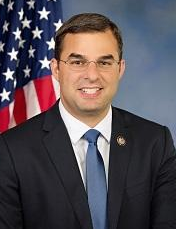
Five of the new cosponsors are taking their first legislative stand in support of releasing the classified 28-page chapter from a 2003 joint Congressional intelligence inquiry into 9/11: Justin Amash, Mike Honda, Louie Gohmert, Austin Scott and Bennie Thompson.
Three of the eight new cosponsors—Lacy Clay, Alcee Hastings and James McGovern—had cosponsored H.Res.428. There are still four others who signed on to the H.Res.428 but have yet to join H.Res.14: Keith Ellison, Gene Green, Charlie Rangel and Louise Slaughter.
Rep. Mike Honda (D, CA)
Jones has said, “I was absolutely shocked by what I read,” and has been forceful in declaring that the American people and 9/11 families have a right to know what is revealed in the 28 pages—and equally forceful in asserting that there would be no risk to national security in releasing the material to the public.
Former Senator Bob Graham, who helped lead the joint congressional inquiry that produced the 28 pages as part of a much larger report, told reporters at a January 2015 press conference that “the 28 pages relate to who financed 9/11 and they point a very strong finger at Saudi Arabia as being the principal financier.”
On Tuesday, U.S. District Court Judge George Daniels dismissed claims against Saudi Arabia by 9/11 family members, survivors and insurers who allege that the kingdom provided financial and other support to the September 11 hijackers. An appeal of the decision is likely.
Meanwhile, as the case stalls for a lack of evidence, 28 secret pages said to describe specific indications of foreign government support of the 9/11 hijackers remain unavailable to victims and their attorneys. An intelligence community review of the pages for possible declassification continues to languish, having already taken more than twice as long as the entire 9/11 inquiry that produced the pages.
Sean Carter, one of the attorneys for the plaintiffs, told Reuters, “Evidence central to these claims continues to be treated as classified. The government’s decision to continue to classify that material certainly factored into this outcome.”
Foreign Governments Protected from Most Suits
American law presents a high hurdle for anyone suing a foreign government. “Generally, foreign governments and their instrumentalities can’t be sued in the United States,” Villanova University law professor Tuan Samahon explained to 28Pages.org. “They enjoy immunity by federal statute. There are exceptions to that immunity and the 9/11 plaintiffs were suing under one of those exceptions.”
Tuan Samahon
The decision should not be perceived as an exoneration of Saudi Arabia. “It was a jurisdictional dismissal,” says Samahon. That is, the decision reflected the judge’s opinion that the plaintiffs did not present enough evidence to persuade the court that an exception to the U.S. Foreign Sovereign Immunities Act (FSIA) applied to the case.
For the case to proceed, the plaintiffs needed to persuade Judge Daniels that individuals acting within the scope of their employment by Saudi Arabia committed “tortious conduct” inside the United States by helping the 9/11 hijackers advance their terror plot.
In his 21-page opinion, Daniels concluded that the plaintiffs failed to make that case. He said allegations about, for example, extensive assistance provided by suspected Saudi operative Omar al-Bayoumi to hijackers Nawaf al-Hazmi and Khalid al-Midhar, relied on speculative conclusions rather than compelling proof that al-Bayoumi was directed by the Saudi government to furnish that assistance to facilitate terrorist activity.
President Obama is said to have twice promised 9/11 family members that he would release the 28 pages. His failure to fulfill that promise in timely fashion may well have prevented an otherwise viable case from clearing the FSIA hurdle. “Having the 28 pages would have gone a long way to do that,” says Villanova’s Samahon.
9/11 family members need the 28 pages—call Congress today
Last week, we shared the story of former FBI agent Mark Rossini. The CIA ordered him not to alert FBI headquarters that a known al Qaeda operative—and future 9/11 hijacker—had obtained a multi-entry U.S. travel visa. This week, we share Rossini’s views on the 28 pages, the 9/11 Commission Report and claims of Iranian ties to 9/11.
FBI Veteran Mark Rossini
“It’s a disgrace that they haven’t been released.”
Mark Rossini, the veteran FBI agent and whistleblower who was assigned to the CIA’s Osama bin Laden unit, says 28 pages detailing foreign government ties to the 9/11 hijackers should be declassified, and that the continued secrecy flies in the face of the American system of government.
“We’re a government of the people, for the people and by the people. The Constitution starts with the word ‘we.’ It’s not ‘we the government’ and ‘you the people,’ its ‘we’ and in a sense that document is ours. And we have every right as American citizens to see that document,” says Rossini.
The 28 pages are said to implicate the Saudi Arabia, and Rossini says the cover-up is part of the U.S. government’s practice of shielding the kingdom from embarrassment.
“What are we afraid of? It’s all about that black ooze coming out of the ground. If it weren’t for that black ooze, we wouldn’t be having this conversation. Preventing that embarrassment is sadly more important (to the government) than 3,000 people dead and the families,” Rossini says.
What the Saudis Knew
While Rossini believes the 28 pages will demonstrate that prominent Saudis provided financial and logistical support to al Qaeda, he doesn’t think those Saudi benefactors knew about the specifics of the 9/11 plot.
“The way al Qaeda operates and in particular Khalid Sheikh Mohammed—in his operations, secrecy and operational security were paramount, so there’s no way the people that are in the report knew that an operation to attack America was going on,” says Rossini.
That’s not, however, an exoneration. “In my mind, what the report does show is that prominent Saudis contribute to organizations that they know, deep in their heart, engage in activity that is not gentle,” he says.
Government Withholding Important Evidence
In July, attorneys for the Kingdom of Saudi Arabia asked Judge George Daniels to drop them from a lawsuit pressed against them by 9/11 victims, family members and insurers—for lack of evidence. His decision is expected by the end of the year.
“As I tweeted when that happened, the very evidence the plaintiffs want is in the 28 pages. So Judge Daniels is saying to them, ‘I’m going to drop the Saudis out of the lawsuit because you can’t prove what you want to prove.’ Well, your honor, the proof is in the damn 28 pages you’re blocking,” Rossini says.
The very evidence Judge Daniels requires, is in the sealed 28 Pages. Sadly ironic. The proof plaintiffs need is what is being blocked.
Rossini suggested Daniels could take an aggressive stance in the name of justice, ordering the government to release the 28 pages: “Now, the government (would) fight it, but it would be a victory on many, many levels. He would go down in history as a great man.”
The very same Judge Daniels who controls the near-term fate of the suit against Saudi Arabia previously issued a summary judgment against Iran for its supposed connections to September 11. Iran did not respond to the complaint.
The judgment against Iran has been ridiculed by many observers, and Rossini—who was one of the founding executives of the National Counterterrorism Center and who provided daily threat matrix briefings to the CIA director and senior leadership—emphatically joined the chorus of criticism.
“The Iranian judgment is just totally, totally delusional. I will say this and you can print this in bold.” Pausing repeatedly to hammer home each word, Rossini continues, “Iran had nothing…nothing…nothing…nothing…nothing to do with 9/11. And it just outrages me that people say this. It is beyond comprehension. To connect Iran to 9/11—all you’re doing is placing blame on another regime because you know they have money and they’re an easy target and everybody hates them.”
9/11 Commission Report: “I have no words that are fit to print”
The 9/11 Commission Report was also the subject of Rossini’s ire—especially this passage at the end of the fifth chapter: “To date, the U.S. government has not been able to determine the origin of the money used for the 9/11 attacks. Ultimately the question is of little practical significance.”
28Pages.org read the passage to Rossini and asked him, as a former FBI agent and thinking about how crimes are investigated, what he thought of it.
“I have no words that are fit to print regarding that statement. That’s just despicable. It flies in the face of logic, it’s an insult and an embarrassment—I’m actually standing in my kitchen and I can’t come up with the proper words to address that other than utter disbelief and shame and embarrassment,” Rossini says.
He continues, forcefully, “If I was still an FBI supervisor, I would say to the agent writing that to me, ‘Are you crazy? What is your job in life? What are you supposed to do for a living? You’re supposed to investigate and find the answer to that. That’s the foundation and fundamental root of every single financial trial, every case we do. Where did the money come from?'”
“How do you write that statement with a straight face? It’s all about protecting the regime. Further evidence (that it’s about) not embarrassing King Salman, because he might get upset and he might turn the spigot off,” Rossini says.
To Rossini, however, transparency for the American people and justice for 9/11 families and victims should take the highest priority: “Let the chips fall where they may. Release the 28 pages. Let King Salman wriggle in his robes a little bit and get upset. Let the truth out there. Let it hang. Let’s see what happens.”
In 2000, then-FBI agent Mark Rossini was a witness to perhaps the most disastrous and consequential incident in the history of the U.S. intelligence community—one he believes is ultimately the only reason why al Qaeda was able to kill 2,977 people on September 11, 2001 and unleash a chain of worldwide aftershocks that continue to this day.
Rossini told 28Pages.org about the CIA’s intentional obstruction of a warning about a future 9/11 hijacker, and the agency secret that he thinks lies behind it.
By Brian P. McGlinchey
Mark Rossini
In January 2000, Mark Rossini and Doug Miller were FBI agents with an unusual assignment: They worked in the CIA’s Osama bin Laden unit, code-named “Alec Station.”
That month, the CIA learned that known Al Qaeda terrorist Khalid al-Midhar—who had been linked to a pair of devastating attacks on U.S. embassies in Africa and who had just attended a terrorist summit in Malaysia—had obtained a multi-entry visa enabling him to travel to the United States.
To alert his FBI superiors that a known “bad actor” was now equipped to travel to the homeland—the FBI’s jurisdiction—Miller dutifully drafted a Central Intelligence Report, or CIR. To the astonishment of Miller and Rossini, however, the message was stopped in its tracks.
A CIA supervisor, responding via the computer system that managed the flow of CIRs, wrote: “pls hold off on CIR for now per Tom Wilshire.” Wilshire was Alec Station’s deputy chief.
Bewildered and alarmed, given what was at stake, Miller turned to Rossini who, as the senior of the two, took it upon himself to follow up with the supervisor. In his interview with 28Pages.org, Rossini would not name this person—whose name is still considered classified—and instead referred to her using the pseudonym “Michelle.” Elsewhere, however, it’s been reported that the CIA supervisor was a woman named Michael Anne Casey.
In a heated exchange, Rossini says Casey told him, “You are not to tell the FBI about it. When and if we want the FBI to know about it, we will.”
Had the FBI been alerted, Rossini says, “(FBI counter-terror chief) John O’Neill would have assembled a whole team to come to the agency and demanded a meeting and ask how do you know about this information, why do you know about this information, and for how long?”
The questions would have been followed by decisive action. “If they come here, we’re going to follow them and put them on every watch list, put them in a computer system, tickler the NSA because the NSA monitors all their travel and tickets and everything. They’re coming to America? Great. We’ll have people there that day to follow them in America,” he says. Given such scrutiny, it seems likely the broader plot could have been detected and foiled.
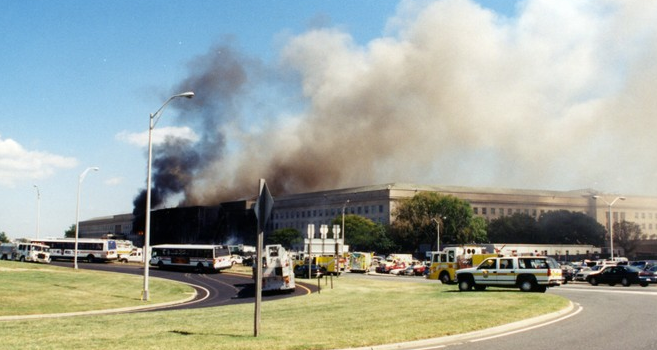
But because of Wilshire’s directive and its enforcement by Casey, none of that happened. Instead, on September 11, al-Midhar helped hijack American Airlines Flight 77, which struck the Pentagon and killed 64 people on the aircraft and 125 on the ground.
The CIA incident—and the thought of what would have happened if he or Doug had disobeyed the order—has weighed heavily on Rossini ever since.
Today, Rossini is a man on a mission—a mission to expose what he believes was an illegal CIA operation that was the reason for the agency’s interference: “I’m trying to prove circumstantially, for the rest of my life, there was a recruitment op that went bad.”
Rossini is convinced that the CIA, in an effort to get more information on al Qaeda, was trying to recruit al-Midhar or, less likely, his close associate, Nawaf al-Hazmi—in other words, to turn one or both of them into a source that would share the terror organization’s secrets. Doing so on U.S. soil without consulting the FBI is prohibited. Bush counter-terrorism czar Richard Clarke, who was also kept in the dark, embraces the same theory.
More Suspicious Behavior…and a Cover-Up
According to a revealing 2011 story by Rory O’Connor and Ray Nowosielski in Salon, although Casey prevented Miller and Rossini from alerting the FBI, she sent out a message—or cable, in CIA parlance—to others in the CIA saying the FBI had been notified. And she sent that message two days before the heated conversation with Rossini.
Casey’s supervisor, identified by O’Connor and Nowosielski as Alfreda Frances Bikowsky, would later tell investigators working for the 2002 joint congressional intelligence inquiry into 9/11 that she had personally delivered al-Midhar’s visa information to FBI headquarters, a statement proven false when the investigators checked the FBI visitor log.
That congressional inquiry, a precursor to the 9/11 Commission, is the same one that produced the famously classified, 28-page chapter documenting foreign government ties to 9/11.
Rossini says that, before the inquiry’s investigators arrived, the word was put out: “You’re not to talk about anything going on here. Those (joint inquiry investigators) are not cleared to know about the operations going on here, so just keep your mouth shut. No one said ‘lie,’ but it was put in my head that they’re after somebody to put in jail. And I wasn’t allowed to have an attorney present,” says Rossini.
While Rossini didn’t have an attorney, someone else was present in the interview: A CIA monitor, taking notes. “Every question I was asked, she would just look at me in the eye and stare at me while I talked,” says Rossini, whose repeated responses of “I don’t know” and “I don’t remember” made for a very brief discussion: “Maybe 15 minutes at most.”
Looking back now and asked to characterize the CIA’s approach to the joint inquiry, Rossini replies, “Obstruction. And fear. An assurance that questions would just hit roadblocks.” Those roadblocks were so effective that the 9/11 Commission skipped Miller and Rossini altogether.
It wasn’t until the FBI’s Office of Professional Responsibility (OPR) conducted its own 9/11 inquiries—with an assurance that participants needn’t worry about being prosecuted, found civilly liable or losing their jobs—that Rossini finally felt comfortable fully exposing the CIA’s stifling of the warning about al-Midhar.
The OPR interviews took place in a conference room filled with executives and staff members. “We came in one by one, and you sat at the end of the table. It was like a Senate hearing and they peppered you with questions.” Rossini was near one of seven audio recorders arrayed around the table. The FBI’s assistant director of OPR, Candice Will, was seated next to him.
Then came the question he yearned to answer: “Mark, why do you think Doug’s memo didn’t go?”
“I can be a little cheeky,” says Rossini. “I tapped the recorder and looked at Candice Will in the eye and said, ‘This thing on?’ She smiled and said ‘yes’ and I said, ‘Well, let me tell you a little story…'”
The Unasked, Unanswered Question: “Why Did You Write That?”
Though Rossini has told his story, what’s missing, he says, is the rationale behind the message that halted Miller’s CIR: “pls hold off for now on CIR per Tom Wilshire.”
“No one’s ever drilled down on the person who wrote it and found out why. Not to my knowledge. The 9/11 Commission certainly didn’t do it,” says Rossini. “We need to know why she wrote that, and why (Tom Wilshire) told her to tell that to Doug. And what was said between those two people. The answer to that is the reason 9/11 happened. No other issue. No other thing.”
“Tell me why. Why you hold off on sending a CIR to the FBI that evil people that you took the time and effort to follow halfway around the globe, you hold off on telling the bureau that they have visas to come to the USA. There’s no logical reason. None, other than they wanted to recruit somebody or try to and they didn’t want the FBI in the form of John O’Neill messing up their operation and they didn’t want the FBI to cause embarrassment to the Saudi regime.”
Rossini said that, to protect Saudi Arabia from embarrassment, the CIA and its Saudi Arabian counterparts had something of a gentleman’s agreement—one that can help explain why the CIA wouldn’t want the FBI to know a prominent al-Qaeda member was poised to travel to the United States.
“(Former CIA officer) Bruce Reidel says that, essentially, the U.S. government had an agreement with the Saudi GID—the General Intelligence Directorate, their version of a combined FBI/CIA—that if and when we identify wayward Saudis around the globe, boys that had lost their moral compass, if you will, rather than embarrassing the regime and arresting them with big splashy headlines like we’re prone to do, we would get them back home to be reprogrammed. Or—we use the term in the FBI—‘rechromed,”’ said Rossini. “If you screw up in the FBI, they’ll send you to headquarters for two years to be rechromed, and you come out like a fresh new Cadillac.”
The kingdom’s extreme fear of embarrassment—which Rossini says flows from its self-perceived position as the promoter of pure Islam and the keeper of the religion’s two holiest sites—obstructed the FBI before, in the wake of the 1996 bombing of a housing complex in Saudi Arabia that killed 19 U.S. servicemembers.
The Devastated Khobar Towers
“This all ties in to Khobar Towers and the FBI trying to go over there and interview the people and the Saudis executed them before they even got a chance to talk to them. Because they don’t want to be embarrassed,” says Rossini. “‘You can’t interview them, they’re dead.'”
“In my opinion, I think the person that was most logically recruited or intended to be recruited was Khalid al-Midhar, for the simple reason that he had a wife and children back in Yemen. Remember, he was allowed to go back home, get a new passport and come back to America,” says Rossini.
Connecting that CIA-GID understanding to his circumstantial case against the CIA, Rossini continued, “So when Khalid al-Midhar was identified, rather than making a big splashy headline, rather than letting my colleague’s memo go to the FBI and have John O’Neill and us go follow him and then maybe arrest him, the CIA said let him be rechromed, let him go back home to Yemen to see his wife, let him go get a new passport. And in that passport they put a chip or a code identifying him as someone who is to be watched.”
Rossini says the CIA’s feelings about O’Neill figured heavily in the agency’s behavior. “They feared John O’Neill being a loose cannon because they hated O’Neill and they feared O’Neill and they thought wrongly of O’Neill. And they feared O’Neill going in and arresting them and embarrassing the Saudis,” he says.
John P. O’Neill
In a terrible twist, O’Neill was killed on September 11 in New York City, where he served as chief of security for the World Trade Center after leaving the FBI.
The CIA may also have realized they would likely clash on priorities. “The bureau, first of all, would never have given a damn about recruiting them. The first thing the bureau would have done is follow them. And monitor them and get a FISA and then maybe try to recruit them,” says Rossini.
Eventually, the CIA and FBI would talk—to a limited extent. In August of 2001, the CIA had a sudden change of attitude, calling a meeting with the FBI in New York to ask for the bureau’s help in tracking down al-Midhar and al-Hazmi. Notably, Rossini wasn’t invited, and the CIA wouldn’t tell the FBI exactly why they were looking for them.
To Rossini, the shift bolsters the proposition that the CIA had tried to recruit al-Midhar or al-Hazmi—but that something went very wrong.
“What happened in Yemen, when he was there? When he went back home, when he left America. Did someone talk to him, try to speak to him? That’s the thing we need to know. And why was he allowed to come back to America, on July 4th of all days? And then why did the CIA come running up to the FBI and saying ‘you gotta find these guys’? Why? Did Khalid al-Midhar tell them to go pound sand? Did he turn around and say I’m not going to talk to you anymore? Did he stop communicating and they couldn’t find him? That’s really it, that’s what we need to know,” said Rossini.
Footnote 44
Given the history-altering nature of the CIA’s silencing of Miller and Rossini, and the documented dishonesty of CIA supervisors that followed it, one would expect the incident to command an entire chapter within the 9/11 Commission Report—ostensibly a definitive accounting of the attacks and the government’s failure to thwart them. Instead, it’s relegated to a single endnote, buried deep within 116 pages of tiny print in the back of the book.
“Mr. Strada is not a footnote and neither is anybody else who died that day,” says Rossini with disgust. “I’m not a footnote, and you’re not a footnote. And to be treated like a footnote is sickening in a government that’s by the people for the people.”
There was a time when, so very fatefully, Mark Rossini was silenced. Today, he is speaking out forcefully and repeatedly, determined to help expose the secret buried somewhere behind footnote 44.
More from Mark Rossini: His thoughts on the 28 pages and his pointed answer to the question of whether Iran may have had a hand in 9/11.
A new investigative news program, “Full Measure with Sharyll Attkisson,” has taken a detailed look at the still-simmering controversy over the classification of 28 pages from a 2002 9/11 report that are said to indicate that the hijackers received financial and logistical support from Saudi Arabia.
The report includes interviews with House Resolution 14 champion Stephen Lynch, former congressman Pete Hoekstra and 9/11 widow and activist Terry Strada.
Hoekstra, who chaired the House intelligence committee and supports the release of the pages, said the continued concealment of the 28 pages can largely be attributed to the White House’s desire to avoid having to cope with the resulting fall-out: “It’s a complication they’d rather not deal with. They’re just saying, ‘We’ve got enough problems…we’ve got to deal with ISIS, we’ve got to deal with Iran, we’ve got to deal with al Qaeda…'”
However, former senator Bob Graham has said the shielding of Saudi Arabia from the consequences of its funding of extremism has only encouraged the kingdom’s continuation of that behavior—and thus paved the way for the ascent of ISIS into the disruptive force it is today.
Rep. Stephen Lynch
Congressman Lynch described the level of detail found in the classified chapter of a 2002 congressional intelligence inquiry.
“It gave names of individuals and entities that I believe were complicit in the attacks on September 11. They were facilitators of those attacks. They are clearly identified…how people were financed, where they were housed, where the money was coming from, the conduits that were used and the connections between some of these individuals,” Lynch told Attkisson.
Asked why thought the pages are still secret, Lynch said, “I believe it’s to allow those individuals to escape accountability.”
Terry Strada is seeking that accountability. Her group, 9/11 Families & Survivors United for Justice Against Terrorism earlier this week sent letters to President Obama and James Clapper, Director of National Intelligence pressing for the material to be released.
The White House, sometime in the summer of 2014, tasked Clapper to lead an intelligence community review of the 28 pages for potential declassification. As 28Pages.org recently noted, the review has already taken twice as long as the entire joint inquiry that produced the 28 pages as part of a much larger report.
Noting the milestone, the group told Clapper, “It has been over a year since the request was made and we are both perplexed and troubled for the delay. Years before the formal request, in 2009 and again at the 10th anniversary in 2011, President Obama assured 9/11 family members steps would be taken to release the pages.” Read the group’s letter to Obama and letter to Clapper.




 28Pages.org