National Security Whistleblowers Call for Release of 28 Pages

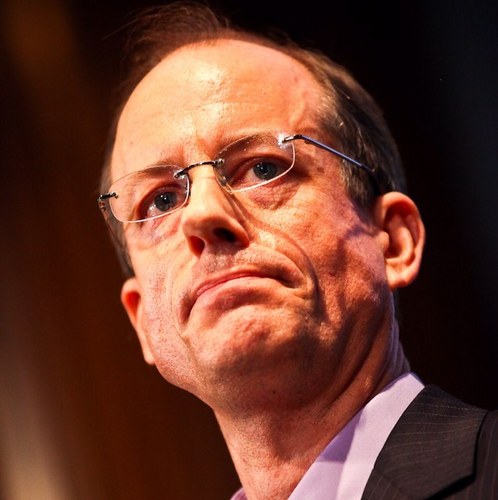
NSA Whistleblower Thomas Drake

With the 14th anniversary of the September 11 attacks approaching, three national security whistleblowers are adding their voices to the growing movement to declassify 28 pages from a 2002 congressional inquiry that document indications of foreign government support of the 9/11 hijackers.

Former senior NSA executive Thomas Drake and FBI veterans Mark Rossini and Coleen Rowley are all urging the release of the material that was classified by President George W. Bush amid controversy and criticism.

Meanwhile, an ongoing intelligence community review of the 28 pages for potential declassification, initiated by the White House last year under pressure from Congress, has already taken more than twice as long as the entire, far-reaching inquiry that produced them.

“After all these years, what is so secret about the 28 pages that so compels the government to still keep hidden from the public, and the families of those murdered on 9/11, the fuller truth of what happened?,” Drake asked in a message to 28Pages.org.

Drake alerted Congress to NSA failures in the months leading up to 9/11, and blew the whistle on mass surveillance programs that he, among many others, considers a sweeping violation of the United States Constitution.

Former Senate intelligence committee chairman Bob Graham—who presided over the congressional inquiry that wrote the 28 pages as part of an  report—has said the 28 pages implicate Saudi Arabia, and that, by shielding the kingdom from scrutiny of its funding of extremists, the classification of the pages paved the way for the rise of ISIS.

“It is way past time to reveal the missing 28 pages and provide a fuller accounting of entangling foreign alliances, active involvement, material support and funding behind the perpetrators of that fateful day in history,” said Drake.

In a recent interview on The Real News Network, Drake told host Paul Jay that, regarding the 28 pages and the connections to Saudi Arabia they are said to reveal, “This is really serious stuff. You’re talking, kind of, the heart of dark government, what I call the double government. This is the other government in action. You’ve set it up in a way that obviously you’re going to protect the Saudis. And yes, clearly the Saudis had a huge—most of the hijackers came from Saudi Arabia.”

Rossini: “It’s a disgrace that they haven’t been released”
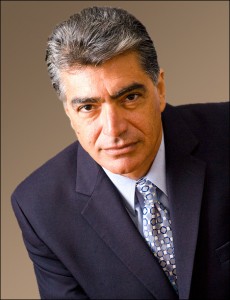
Former FBI Agent Mark Rossini
FBI Veteran Mark Rossini

For Mark Rossini, who was an FBI agent assigned to the CIA’s Osama bin Laden unit, the battle for the release of the 28 pages goes to the very nature of the American system of government.

“It’s a disgrace that they haven’t been released. We’re a government of the people for the people and by the people. The constitution starts with the word ‘we.’ It’s not ‘we the government’ and ‘you the people,’ its ‘we’ and in a sense that document is ours. And we have every right as American citizens to see that document,” Rossini tells 28Pages.org. (See our full stories here and here.)

While at the CIA unit, Rossini was witness to a pivotal incident that has yet to be fully and publicly examined.

Rossini’s fellow agent, Doug Miller, attempted to alert the FBI that known al Qaeda terrorist and future Flight 77 hijacker Khalid al-Midhar had obtained a multi-entry visa for travel to the United States. To the astonishment of Rossini and Miller, a CIA supervisor stopped the message from proceeding to FBI headquarters. When Rossini questioned the decision, the supervisor ordered him to stay quiet, saying, according to Rossini, “You are not to tell the FBI about it. When and if we want the FBI to know about it, we will.”

Reflecting on the fact that the ongoing declassification review of the 28 pages has already taken a year or more—the National Security Council refused to say on which day or even in which month the review began—an animated Rossini said, “There’s nothing to review…come on. Everybody knows what’s in there. To review it again for what? It’s only frickin’ 28 pages, I could read it in a half hour. No, it’s all bull****, it’s just another excuse to push it down the street and make it someone else’s problem, and not release it and not embarrass King Salman and guarantee the continuation of the black ooze coming out of the ground.”

Rowley Publicizes White House Petition

Coleen Rowley, one of three whistleblowers named “Persons of the Year” by Time magazine in 2002, recently helped promote awareness of the White House petition urging the president to release the 28 pages by sharing a link to the petition on Twitter.

Rowley, who was assigned to the FBI’s Minnesota office in 2001, wrote a memo documenting FBI failures in the weeks leading up to 9/11. In a letter to then-FBI Director Robert Mueller, Rowley wrote, “I feel that certain facts…have, up to now, been omitted, downplayed, glossed over and/or mischaracterized in an effort to avoid or minimize personal and/or institutional embarrassment on the part of the FBI and/or perhaps even for improper political reasons.”

REDACTED w911Get involved: Contact your legislators today

Stay involved: Follow us on Facebook and Twitter

Congressmen Reiterate Call for Release of 9/11 Secrets

Rep. Thomas Massie
Rep. Thomas Massie

When Congressman Thomas Massie first arrived in Washington, DC as a freshman from Kentucky, a long-tenured North Carolinian, Walter Jones, asked him an intriguing question.

“He said, ‘Did you realize there’s 28 pages of the 9/11 report that never been released, but as a congressman, you can go read them in a secret room?’,” Massie recalled on The Tyler Cralle Show (audio below).

His curiosity piqued, the MIT grad obtained permission to read the 28 pages and proceeded to a secure, soundproof facility in the basement of the Capitol where he read them under close observation and without the option of taking notes or bringing anyone from his staff.

Massie was surprised by what he found, telling host Tyler Cralle, “They’re the most consequential pages in the thousand-page report.” At a 2014 press conference, Massie said the experience was “shocking,” and that he had to “stop every couple pages and try to rearrange my understanding of history.”

Jones, who joined Massie in his discussion with Cralle, said, “There’s a lot of information (in the 28 pages) the American people and the 9/11 families have a right to see. The American people cannot trust a government that will not let them see information on one of the worst tragedies in America.”

Pages Said to Implicate Saudi Arabia

Former Senator Bob Graham, who co-chaired the 2002 joint congressional intelligence inquiry that produced the 28 pages, has said the 28 pages “point a very strong finger at Saudi Arabia as being the principal financier” of the attacks.

Rep. Walter Jones
Rep. Walter Jones

The pages—an entire chapter of the joint inquiry report—were classified by the Bush White House. “After reading those pages, I will tell you that I can I can understand (why)…because the Bush administration was very close to the Saudis, if you remember. The king actually visited Crawford, Texas,” said Jones.

Republicans Jones and Massie, along with Democrat Stephen Lynch of Massachusetts, are leading the House effort to release the 28 pages. The focus of their campaign is House Resolution 14, which urges the president to release them.

Noting the resolution has attracted a modest 18 cosponsors to date, Massie said, “Trust me, it’s a dangerous thing to cosponsor this because they want to keep this under the rug.” Nonetheless, he said it’s important “to release those 28 pages in the 9/11 report that will once and for all show the American people what caused 9/11 and who funded it.”

Life and Death Decisions Demand Full Information

Jones also told radio host Cralle about his decision-making process regarding the upcoming vote on the Iranian nuclear agreement.

His scrutiny of the topic has already included consultation with Brent Scowcroft, former National Security Advisor to Gerald Ford and George H.W. Bush (he supports it), and will include discussion with scientists and a thorough reading of the arrangement, which places additional safeguards on Iran’s nuclear program that go beyond the ones already imposed on the country as a signatory to the nuclear Non Proliferation Treaty (NPT).

Jones said his very deliberate approach to the vote reflects a painful lesson learned in 2002, when he voted to authorize military action against Iraq.

“I did not do what I should have done to read and find out whether Bush was telling us the truth about Saddam being responsible for 9/11 and having weapons of  mass destruction. Because I did not do my job then, I helped kill 4,000 Americans and I will go to my grave regretting that.”

Though he was talking about Iraq and Iran, his conviction that a full understanding of the facts should precede any critical national security decision seems equally applicable to his drive to release the 28 pages.

That same conviction motivates Massie: “If we’re going to be fighting more wars ostensibly because of terrorism and to keep us safe, shouldn’t we know what caused and what enabled 9/11? The American people are in the dark right now.”

The conversation about the 28 pages begins at the 21:00 mark in the broadcast.

REDACTED w911Get involved: Take action today

Stay involved: Follow us on Facebook and Twitter

Jeb Bush: “I Don’t Know What the 28 Pages Are”

By Brian McGlinchey

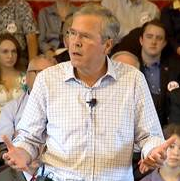
Jeb Bush
Jeb Bush

Activists affiliated with New Hampshire-based “Declassify the 28 Pages” are at it again.

Continuing to make the redacted 28 pages on foreign government support of the 9/11 hijackers a campaign issue, they recently asked Republican presidential candidate Jeb Bush if he would declassify them.

Bush’s answer: “I don’t know what the 28 pages are, so please explain it.” (Video below.)

The exchange took place at an August 7 town hall in Barrington, New Hampshire. Bush added, “Look, I can’t commit to something until I see it. Since I don’t have classified information, I can’t tell you what it is or tell you whether it should be declassified.” When the woman offered to explain what the 28 pages are—as Bush himself had asked in his initial reply—he stopped her from doing so.

There are two potential explanations for Bush’s answer, and neither is flattering to the former Florida governor. Bush is either so poorly informed on national security matters that he is truly unaware of a well-documented and intriguing 13-year old controversy surrounding his brother’s decision to classify a full chapter in the report of a 2002 joint congressional inquiry into September 11, or he was feigning ignorance to dodge discussion of yet another sensitive Bush family topic.

Jeb’s Links to the 28 Pages: Family, Florida and Saudi Arabia

There are many reasons why Bush’s claim of ignorance on this topic invites skepticism. First, of course, is the fact that his brother sits at the center of the controversy.

Then there’s the fact that, for more than a dozen years, the most prominent voice calling for the declassification of the 28 pages has been Bush’s fellow Floridian Bob Graham. While Bush was governor, Graham represented Florida in the Senate and co-chaired the unprecedented joint inquiry that produced the 28 pages. When the 28 pages were released, Graham publicly decried the redaction and was among 46 senators who signed a letter to Jeb’s brother urging their release.

Also during their governor-senator overlap, Graham published “Intelligence Matters,” a book that was very critical of the Bush administration’s actions before and after the September 11 attacks, including the decision to redact the 28 pages.

Among the criticisms advanced by Graham were well-substantiated claims that the Bush White House went out of its way to shield the Kingdom of Saudi Arabia from scrutiny of its ties to the 9/11 hijackers. Graham has since said the 28 pages “point a very strong finger at Saudi Arabia as being the principal financier” of the 9/11 attacks.

Screen shot 2015-08-19 at 1.59.12 PM
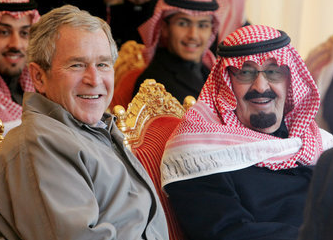
George W. Bush and King Abdullah bin Abd al-Aziz Al Saud

If the family and Florida connections to the 28 pages aren’t enough to put the issue on Bush’s radar, Graham’s claim that the 28 pages implicate Saudi Arabia in the devastating terror attack should be an attention-getter, given the Saudi royal family and the Bush family are deeply connected in ways that are both personal and financial.

$1.4 billion has reportedly made its way from the Saudi royal family to entities tied to the Bush family, and lobbyists for Saudi Arabia are helping to fund Bush’s 2016 presidential campaign. On the same day in February, two different lobbyists for Saudi Arabia gave a combined $15,000 to Bush’s super PAC, and one of them has already raised another $32,400 in bundled contributions for the Bush campaign fund.

Congressman Walter Jones—who has introduced a House resolution urging the release of the 28-pages chapter—has said, “There’s nothing in it about national security. It’s about the Bush Administration and its relationship with the Saudis.”

REDACTED w911Call Congress today—our guide makes it easy

Help us spread the word. Make a gift to 28Pages.org

With 28 Pages Still Hidden, Saudis May Be Released from 9/11 Suit

911 WTC aerial2

By Brian McGlinchey

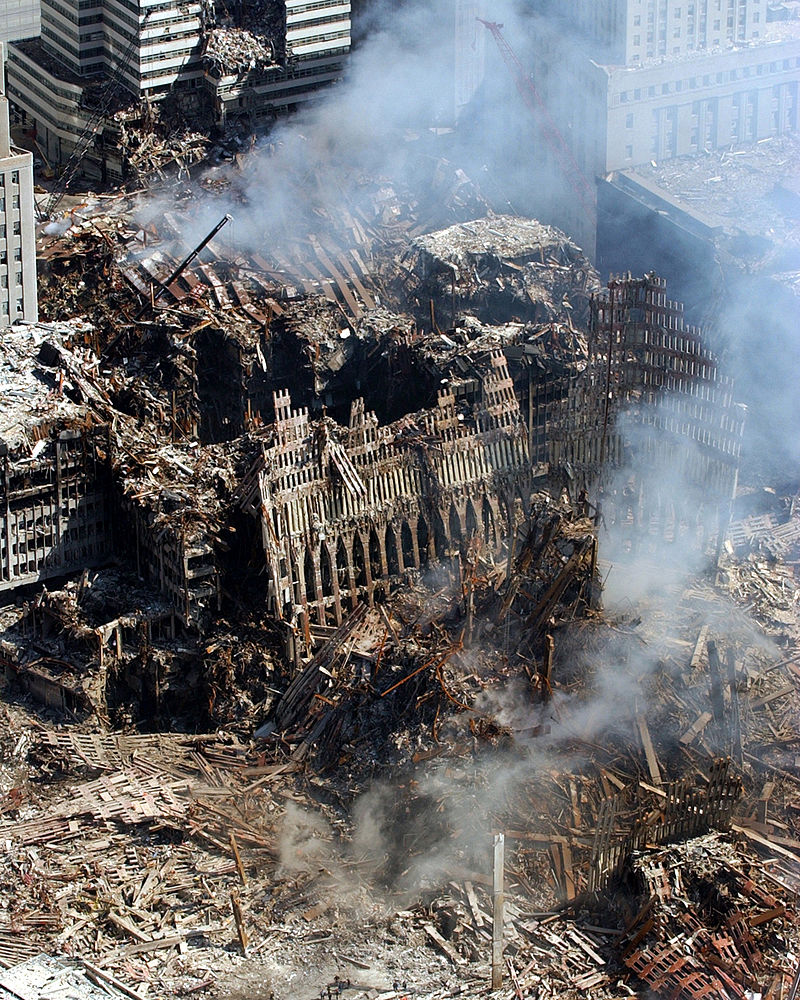
Undermined by the U.S. government’s refusal to share everything it knows about the September 11 attacks, the pursuit of justice by 9/11 family members and survivors could be stopped in its tracks within the next 90 days.

In a courtroom just minutes from the World Trade Center, lawyers for the Kingdom of Saudi Arabia last Thursday asked Judge George Daniels to release the kingdom from a lawsuit seeking to hold it liable for aiding the 9/11 hijackers.

Representing Saudi Arabia, attorney Michael Kellogg said the victims have failed to provide “admissible, concrete, competent evidence” of Saudi Arabia’s complicity in the attacks.

Meanwhile, a 28-page chapter from a 2002 joint congressional intelligence inquiry that might tip the scales of justice in the plaintiffs’ favor remains out of reach, thanks to President Obama’s reluctance to declassify it.

Sean Carter, who represents the families and survivors, told New York’s PIX11 News, “The nature of Saudi support of al Qaeda remains classified at this point…it’s an issue that is featured in a whole range of intelligence documents…there is no real reason for them to be remain classified this many years out.”

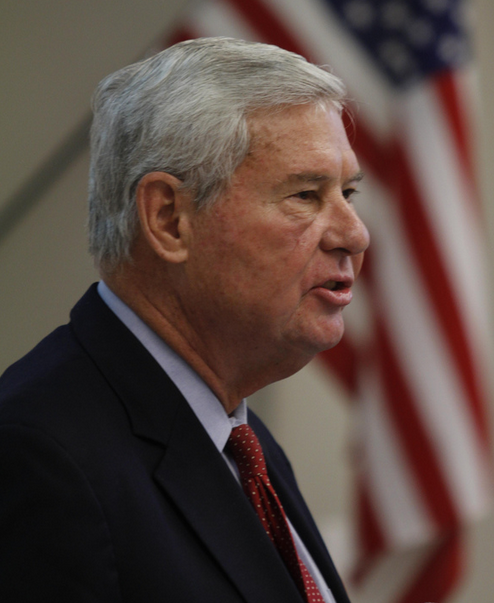
Former Senator Bob Graham

The 28 pages detail specific sources of financial support for the hijackers and, according to former Senator Bob Graham, “point a very strong finger at Saudi Arabia as being the principal financier” of the attacks that killed 2,977 people. Graham and many others who’ve read the 28 pages insist there is no national security justification for the secrecy.

Saudi Arabia’s attorneys claim the 9/11 Commission Report exonerated the kingdom, a notion that’s refuted by, among others, commission member Bob Kerrey. In a sworn statement submitted for the suit last year, the former Nebraska senator wrote, “To the contrary, significant questions remain unanswered concerning the possible involvement of Saudi government institutions…and evidence relating to the plausible involvement of possible Saudi government agents in the September 11th attacks has never been fully pursued.”

The debate over the commission’s conclusion may be rendered moot with the release of the 28 pages: Congressman Walter Jones, who is leading the declassification drive in the House of Representatives, told the New Yorker “those 28 pages tell a story that has been completely removed from the 9/11 (Commission) Report.”

Will Judge Daniels “Connect the Dots”?

According to Michael D. Goldhaber, writing for The American Lawyer, Thursday’s courtroom exchanges emphasized a February 2000 meeting at the Saudi consulate in Los Angeles between alleged San Diego-based Saudi agent Omar al Bayoumi and embassy staffer Fahad al Thumairy. Plaintiffs attorneys and many observers point to that meeting as evidence of Saudi ties to the 9/11 plot.

Flight 77 Hijacker Nawaf al-Hazmi
Flight 77 Hijacker Nawaf al Hazmi

Immediately after the meeting, al Bayoumi went to a restaurant where he said he just happened to befriend 9/11 hijackers Nawaf al Hazmi and Khalid al Mihdhar, who had only days earlier arrived in the United States. (According to Graham’s book, “Intelligence Matters,” before leaving San Diego for Los Angeles that day, al Bayoumi told at least one person he was going to pick up visitors.)

Al Bayoumi proceeded to help the two move to San Diego, initially hosting them in his own home. He helped them find an apartment, paid their first two months rent and introduced them to a network of associates that included Anwar al Awlaki, who would become a prominent al Qaeda figure before dying in a U.S. drone strike in 2011.

Al Bayoumi’s wife served as a conduit for cashiers checks routed from a Saudi princess, and al Bayoumi himself received a dramatic, temporary raise at his no-show cover job coinciding with his generous sponsorship of the pair. On 9/11, al Hazmi and al Mihdhar hijacked American Airlines Flight 77, which hit the Pentagon.

Flight 77 Hijacker Khalid al Mihdhar

That mountain of circumstantial evidence, however, might not be enough to dissuade Judge Daniels from dropping Saudi Arabia from the suit. According to Goldhaber, Judge Daniels challenged the plaintiffs’ attorneys on exactly what was said at al Bayoumi’s meeting at the Saudi consulate, asking, “What’s the factual basis for you to allege that when al Thumairy met with al Bayoumi he said, ‘Give lodging to the hijackers, assist them and give financial support to the hijackers so that they can carry out the 9/11 attacks?’”

Summing the situation, Goldhaber writes, “The quest for historical truth threatens to founder on the judge’s futile desire for direct knowledge of espionage….This case ain’t going to trial against Saudi unless Judge Daniels is willing to connect the dots. The irony is that Daniels already entered a $6 billion default judgment against Iran on far weaker evidence.” (Indeed, even the word “evidence” seems too generous in the context of that case.)

Judge Daniels said he would render his decision within 90 days.

Heightened Urgency for Declassification Effort

Last summer, President Obama tasked the Office of the Director of National Intelligence (ODNI) to review the 28 pages for potential declassification. With a year passing since that order, and with the clock ticking on Judge Daniels’ self-imposed deadline, citizens, journalists and legislators should all be asking the White House one simple question: What’s taking so long?

Full transcript of July 30, 2015 hearing

Brian McGlinchey is the founder and director of 28Pages.org

REDACTED w911Help 9/11 families seek justice: Take action today

Please build awareness of the 28 pages by sharing this post with others

Seymour Hersh, Osama bin Laden and 28 Secret Pages on 9/11

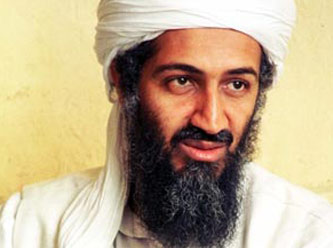
Earlier this month, investigative journalist Seymour Hersh challenged nearly every essential aspect of the United States government’s account of how it tracked, killed and disposed of Osama bin Laden.

Osama bin Laden
Osama bin Laden

Key threads in Hersh’s account, if true, suggest enduring ties between Saudi Arabia and al Qaeda, and paint alleged White House lies about bin Laden’s demise as yet another part of a multifaceted U.S. effort to keep Saudi Arabia’s terror ties under wraps—an effort that, according to former Senator Bob Graham, depends heavily on the continued classification of a 28-page finding on foreign government support of the 9/11 hijackers.

A Challenge to the White House Story

In case you blinked and missed the media’s fleeting examination of Hersh’s 10,000-word piece for the London Review of Books, here are some of the most noteworthy claims Hersh attributes to confidential sources:

  • Bin Laden wasn’t hiding from Pakistani authorities—he’d been captured by them and secured at the Abbottabad compound under house arrest.
  • Bin Laden’s location in Abbottabad wasn’t uncovered by the CIA’s savvy tracking of an al Qaeda courier or aided by the torture of captives—it was handed to the CIA by a Pakistani informer keen on securing a $25 million reward.
  • The Kingdom of Saudi Arabia financed bin Laden’s Abbottabad accommodations.
  • The raid to kill bin Laden was conducted with the acquiescence of the Pakistani army and intelligence service.
  • Pakistani guards had been instructed to flee the compound upon hearing the sound of approaching helicopters—and an unarmed bin Laden was simply exterminated by Navy SEALs who entered the structure unopposed.
  • Bin Laden wasn’t buried at sea; his body was thrown from a helicopter flying over the Hindu Kush mountains.
  • To hide Pakistan’s role, the original arrangement called for the U.S. government to wait about a week after bin Laden’s murder and then announce he’d been killed in a drone strike. The crash of a helicopter used in the raid prompted the Obama administration to hastily craft a different set of lies for public digestion.

Delving Deeper into the Alleged Saudi Connection

For those seeking the declassification of a 28-page passage on foreign government ties to the 9/11 hijackers, the claim that Saudi support of bin Laden lasted years after 9/11 is of particular interest, as it complements an assertion by Senator Graham that the 28 pages “point a very strong finger at Saudi Arabia as being the principal financier” of the September 11 attacks.

Consider this passage from Hersh’s piece:

A worrying factor at this early point, according to the retired (senior U.S. intelligence) official, was Saudi Arabia, which had been financing bin Laden’s upkeep since his seizure by the Pakistanis. ‘The Saudis didn’t want bin Laden’s presence revealed to us because he was a Saudi, and so they told the Pakistanis to keep him out of the picture. The Saudis feared if we knew we would pressure the Pakistanis to let bin Laden start talking to us about what the Saudis had been doing with al-Qaida. And they were dropping money – lots of it.

Seymour Hersh (Photo: Institute for Policy Studies)

Hersh’s intelligence source also pointedly counters the White House’s assertion that Seal Team Six aimed to take bin Laden alive: “It was clearly and absolutely a premeditated murder.” According to Hersh, Pakistan had made bin Laden’s death a condition for its easing the path for the Seal team’s assault.

However, given the U.S. intelligence community’s claims about its prowess in extracting valuable intelligence from captives—and the government’s portrayal of bin Laden as having continued to play a vital role in al Qaeda well after 9/11—one would expect the White House to place an extraordinarily high priority on capturing him alive. Holding extraordinary leverage over the Pakistanis, such a demand should have been dismissed out of hand.

It’s speculative, but did the U.S. government have its own reasons for silencing bin Laden—perhaps to shield Saudi Arabia’s ties to the al Qaeda leader? Earlier this year, it was revealed that “20th hijacker” Zacarias Moussaoui testified—in lawsuits filed against Saudi Arabia by 9/11 family members, victims and insurers—that the Saudi royal family had financed al Qaeda. Did the American government want to prevent bin Laden from emerging as a far more credible star witness against the Saudis?

If so, such a “dead men tell no tales” rationale for bin Laden’s execution would be consistent with a striking statement Senator Graham made earlier this year:

“While the 28 pages are maybe the most important and the most prominent, they are by no means the only example of where information that is important to understanding the full extent of 9/11 have also been withheld from the American people.

This is not a narrow issue of withholding information at one place, in one time. This is a pervasive pattern of covering up the role of Saudi Arabia in 9/11, by all of the agencies of the federal government which have access to information that might illuminate Saudi Arabia’s role in 9/11.”

Controversy Over the Hersh Story

Hersh’s story immediately came under fire from the White House and others inside and outside of government. Some of the criticism focused on the fact that Hersh’s sources are confidential—an avenue of attack that seems rather blunt given the widespread use of confidential sources in national security reporting and the Obama administration’s record-breaking prosecutions of whistleblowers.

On the other hand, other writers support many of the most important claims in the Hersh piece. For example, just days after the 2011 raid, Larry Johnson, a former CIA officer, wrote about the Pakistani informer, Pakistan’s house arrest of Bin Laden and the Saudi maintenance payments.

Responding to Hersh’s work, veteran Pakistan and Afghanistan reporter Carlotta Gall wrote a piece in The New York Times in which she said “the story of the Pakistani informer was circulating in the rumor mill within days of the Abbottabad raid,” and added, “two years later…I learned from a high-level member of the Pakistani intelligence service that the ISI had been hiding Bin Laden and ran a desk specifically to handle him as an intelligence asset.”

28Pages.org cannot validate Hersh’s reporting. However, given his credentials and other outlets reinforcing key parts of his story, we think his account at least merits consideration by the public and further investigation by other journalists.

Of course, there’s one aspect of 9/11 that’s incontrovertible: There exists a 28-page finding on foreign government links to the 9/11 hijackers that’s being hidden from the American people—28 pages that have been called “shocking” by legislators who’ve read them. And it’s time for those pages to be published for all the world to see.

REDACTED w911Help declassify the 28 pages: Call or write to Congress today

Help us build the 28 pages movement: Follow us on Facebook and Twitter