Those Secret 28 Pages on 9/11: Read This Before You Read Them

28 Pages Declassified—See What Was Hidden

By Brian P. McGlinchey
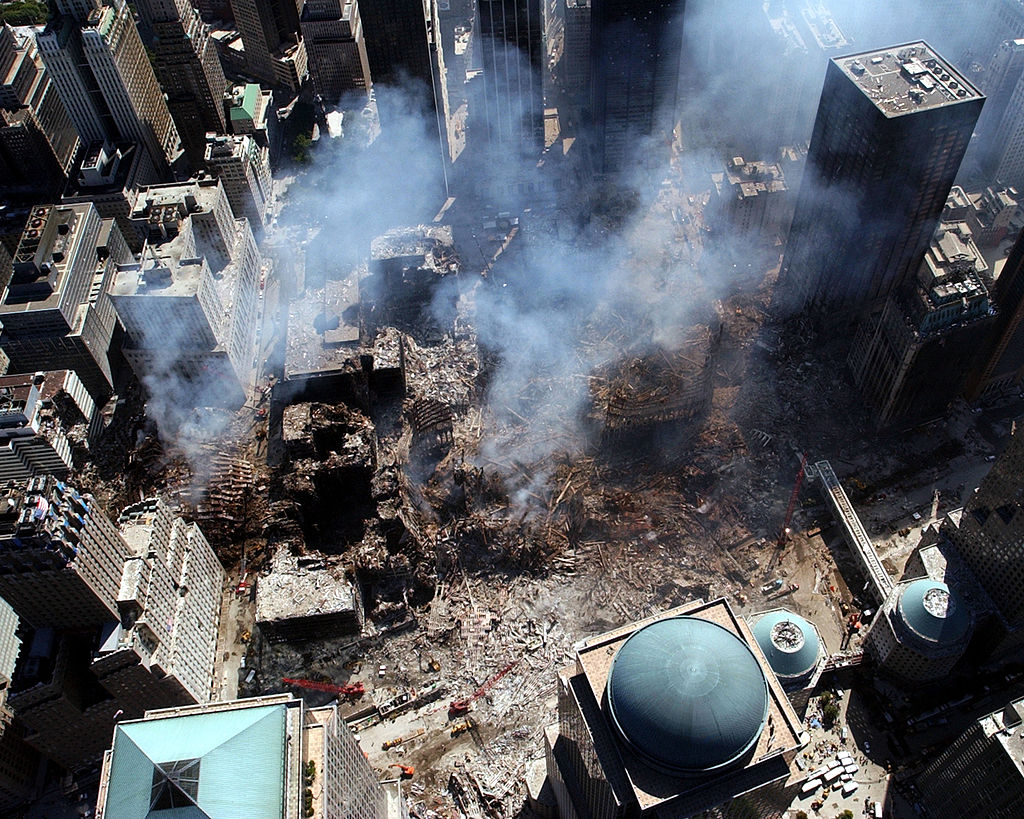
911 wtc aerialThirteen years after they were classified by the George W. Bush administration, 28 pages that are said to detail specific financial links between the Kingdom of Saudi Arabia and the 9/11 hijackers are set to be released as early as Friday, according to CNN and many other outlets. Here’s what to look for both in the 28 pages and in the ensuing debate about their significance.

Less Than Full Declassification

The 28 pages are part of the report of a 2002 congressional intelligence inquiry that spans more than 800 pages. There are periodic, specific redactions throughout the rest of the report, so it would not be surprising if the 28 pages had a few surviving redactions of their own. The more numerous, however, the greater the chance that important information is still being concealed from the American people—and perhaps the greater the chance that concerned members of Congress will take matters into their own hands and release that information on their own.

Residual Cover for Saudi Arabia 

Saudi FlagWhite House press secretary Josh Earnest today seemed to hint that, in addition to protecting intelligence sources and methods, concern for U.S.-Saudi relations will also shape decisions on how much the public is allowed to see.

“We want to make sure that we factor in the diplomatic equities into a decision like that. So when that process is completed, we will obviously coordinate not just with the (Director of National Intelligence) but also with the Congress to make sure those diplomatic equities are properly factored in,” said Earnest at the White House press briefing.

False Narratives About 9/11 Investigations

In the months leading up to the release of the pages, U.S. government officials and the chairs of the 9/11 Commission have been waging a public relations campaign aimed at creating doubt about the reliability of what’s in the 28 pages. Expect that effort to resume with renewed intensity as the pages are released.
Bob Graham
Bob Graham

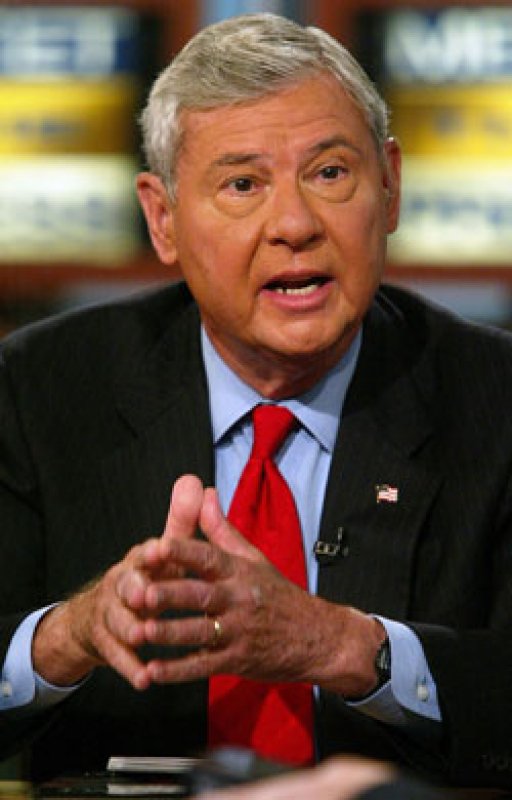
Detractors have described the 28 pages as unvetted investigatory leads. However, former Senator Bob Graham, who chaired the inquiry that produced the 28 pages, noted that “there’s been no questions raised about the professionalism and quality of the other 820 pages of that report and this chapter followed the same standards that they did.”

Those questioning the value of the 28 pages also point to the fact that they were written before the 9/11 Commission, and declare that the commission thoroughly investigated all the leads in the 28 pages and, quoting the commission report, “found no evidence that the Saudi government as an institution or senior Saudi officials individually funded” the hijackers.

In fact, the idea that the 9/11 Commission thoroughly investigated Saudi links to the hijackers has been thoroughly discredited—though that discrediting has so far failed to permeate major media reporting.

9/11 Commission member John Lehman, in a statement offered in support of 9/11 families suing the kingdom, wrote, “Evidence relating to the plausible involvement of possible Saudi government agents in the September 11th attacks has never been fully pursued.”

That statement from someone who should know is only the beginning. Indeed, the case against the commission’s work regarding the Saudi line of inquiry is so broad and multifaceted that, rather than repeating it here, we urge you to review our April piece, “9/11 Commission Leaders Circle Wagons Around Their Legacy.”

Ulterior Motives
Tom Kean
Tom Kean

What’s driving the campaign to denigrate the 28 pages? Where 9/11 Commission chairs Tom Keane and Lee Hamilton are concerned, it’s surely about safeguarding their reputations: To the extent the 28 pages cast doubts on the conclusions of the 9/11 Commission—and raise questions about their personal leadership of that effort—the most salient chapter of their professional careers stand to be tarnished.

For the U.S. government and its intelligence agencies, reputations again hang in the balance. At a press conference last week, Rep. Stephen Lynch said, “I think that those individuals (in the intelligence community) don’t want this to come out. They don’t want the facts to come out because it may reveal terrible, terrible errors on their part and they may bear part of the blame” for failing to foil the attacks.

In addition, the very foundation of the U.S. government’s war on terror may be called into question. Saudi Arabia is routinely praised by government officials and Saudi-funded think tanks as an important partner in fighting extremism; revelations that the kingdom may have aided the 9/11 attacks could in turn expose U.S. hypocrisy—particularly when juxtaposing the invasion of Iraq alongside continued arms sales to Saudi Arabia.

Seeming to make that very point, Rep. Rick Nolan, who has read the 28 pages, said, “They confirm that much of the rhetoric preceding the U.S. attack on Iraq was terribly wrong.”

Bogus Reasons for Redactions

If officials announce that some remaining redactions were made to protect individuals who were initially under suspicion but later exonerated, journalists and citizens should push back, because that is not a valid justification for secrecy.
Steven Aftergood
Steven Aftergood

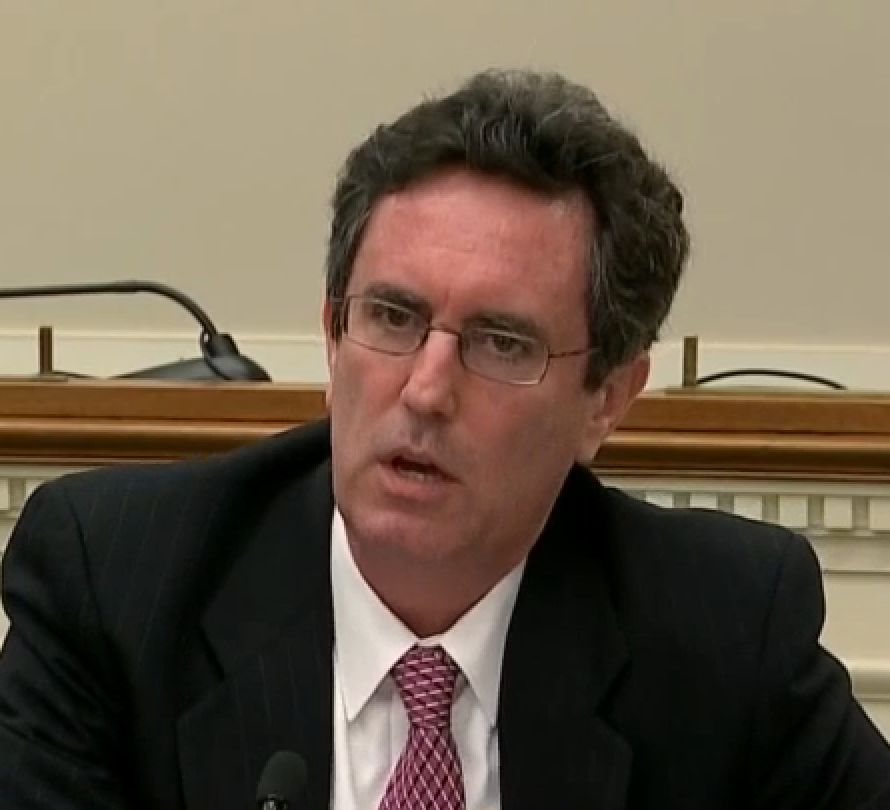
Classification expert Steven Aftergood, who directs the Federation of American Scientists’ Project on Government Secrecy, told 28Pages.org earlier this year, “If you examine the executive order governing the classification system, it does not say that information that is inaccurate or unvetted may be classified. Those words aren’t in there,” said Aftergood.

Driving the point home, Aftergood said, “The 28 pages could be entirely false, malicious and nonsensical. That is not a basis for classification and that should not be an impediment to their declassification.” If persons of interest were subsequently ruled out from aiding the hijackers, the government should release the corresponding documents that led to that conclusion.

Household Names

9/11 Commission member John Lehman was asked by 60 Minutes if the 28 pages name names. He replied, “Yes. The average intelligent watcher of 60 Minutes would recognize them instantly.”

Given very few Saudi officials are household names even among educated viewers, you’d expect Lehman to be referring to someone on the level of, say, former Saudi ambassador to the United States Prince Bandar bin Sultan al Saud.

Outside the 28 pages, it’s already been revealed that cashiers checks found their way from Bandar’s wife to two Saudi citizens in San Diego who furnished heavy financial and other assistance to future 9/11 hijackers Nawaf al-Hazmi and Khalid al-Midhar.

Echoes of Document 17

Last summer, the government silently declassified a 9/11 Commission document that listed dozens of people of interest to investigators who were exploring Saudi links to the hijackers. Written by the same authors as the 28 pages and first revealed by 28Pages.org, “Document 17” had many interesting revelations—most notably, the fact that the FBI found the U.S. pilot license of an al Qaeda associate buried in Pakistan, inside an envelope from the Saudi embassy in Washington.

Brian McGlinchey’s journalism has moved to a Substack newsletter—Stark Realities with Brian McGlinchey: https://starkrealities.substack.com/

Cheney Advisor Led Effort to Kill GOP Platform Plank on 28 Pages

Steve Yates
Steve Yates

A former advisor to vice president Dick Cheney spearheaded the successful drive to kill a Republican Party platform plank that urged the release of 28 pages said to link Saudi Arabia to the 9/11 hijackers.

Steve Yates, who was a deputy national security advisor to Cheney for five years and is now chair of the Idaho Republican Party, offered the amendment that struck the plank. Yates is chair of the platform committee’s national security subcommittee, which narrowly approved the plank on Monday.

The Bush-Cheney administration insisted on classifying the 28 pages, which comprise the final chapter of the report of a 2002 joint congressional intelligence inquiry into 9/11.

In speaking in opposition to the plank, Yates said the idea of releasing the 28 pages “raises the specter that our intelligence gathering may be compromised…and pose a danger to our own national security.”

Yates’ national security claim is strikingly inconsistent with the opinions of other Republicans who have actually read the 28 pages:

  • John Lehman, 9/11 Commission member and former Secretary of the Navy under President Reagan: “We all have dealt for our careers in highly classified and compartmentalized in every aspect of security. We know when something shouldn’t be declassified….those 28 pages in no way fall into that category.
  • Rep. Walter Jones: “There’s nothing in it about national security. It’s about the Bush administration and its relationship with the Saudis.”
  • Sen. Richard Shelby, former chair of the Senate intelligence committee: “I went back and read those pages thoroughly. My judgment is that 95 percent of that information could be declassified.”
John Brennan
John Brennan

Parroting speaking points from CIA Director John Brennan, Yates also claimed that the 28 pages “mainly consists of rumors from third parties that is totally uncorroborated. It is unfair to the individuals involved to allow the speculation to be treated as fact simply because it’s in a secret government report.”

The notion that the 28 pages contain unreliable information has been countered by former senator Bob Graham, who chaired the Senate intelligence committee and co-chaired the inquiry that produced the 28 pages. “There’s been no questions raised about the professionalism and quality of the other 820 pages of that report and this chapter followed the same standards that they did,” said Graham on Meet The Press.

As for the idea that it would be “unfair to the individuals involved” to release the report, classification expert Steven Aftergood, who directs the Federation of American Scientists’ Project on Government Secrecy, told 28Pages.org earlier this year that “the 28 pages could be entirely false, malicious and nonsensical. That is not a basis for classification and that should not be an impediment to their declassification.”

Should 9/11 Justice Should Be a Private Matter?

Yates concluded with a suggestion that seemed to imply that accountability for an alleged Saudi role should be handled behind closed doors, president to king: “If Saudi officials were complicit in 9/11, that is a matter for both governments to resolve at the highest levels.”

Two other delegates spoke out against the plank in Tuesday’s debate: New York’s Thomas Dadey, who chairs the Onandaga County (Syracuse) GOP and Vermont’s Darcie Johnston.

Given New York’s position in the attacks, Dadey’s opposition no doubt stings for the many 9/11 family members who also call the Empire State home.

Likewise, Johnston’s opposition will strike many supporters of Donald Trump as something of a betrayal: Johnston is a Trump organizer, and her opposition to the plank was contrary to her candidate’s stance on the issue. Trump has indicated he would declassify the 28 pages and has said the classified material implicates Saudi Arabia in the 9/11 attacks.  

Follow us on Twitter and Facebook

GOP Platform Subcommittee Approves 28 Pages Plank

UPDATE: The 28 pages plank was voted down on Tuesday morning by the full platform committee. 

Maine State Senator Eric Brakey

The national security subcommittee of the GOP platform committee today approved a plank that calls for the declassification of 28 pages that are said to link the Kingdom of Saudi Arabia to the 9/11 hijackers.

The plank was introduced by Maine state senator Eric Brakey, who contacted 28Pages.org director Brian McGlinchey last week after hearing his interview on The Tom Woods Show. McGlinchey helped Brakey draft the plank’s language.

“The public has a right to know,” said Brakey this evening after the platform committee adjourned. “It saddens me that, here we are, 15 years later and it sounds like there’s key pieces of information to our understanding of what happened on that day, and the government has been keeping that information from us.”

Planks are official expressions of the party’s opinions on various issues. To be incorporated in the final platform, the 28 pages plank must first be approved on Tuesday by a majority of the full, 112-member platform committee. Then, along with all the other proposed planks, it must be approved by the full body of next week’s GOP convention in Cleveland.

If adopted, the plank would represent an important new endorsement of the release of the 28 pages. Supporters of declassification already include more than 70 Democratic and Republican members of Congress, former members of the 9/11 Commission and the editorial boards of many of the nation’s most prominent newspapers, including The New York Times and USA Today.

The proposed platform of the Democratic Party, which has already been approved for consideration at the national convention, is silent on this issue, but could theoretically be amended to address it. The Republican platform committee proceedings can be viewed live at CSPAN.

Brakey’s 28 pages plank reads:

Delivering Transparency on Foreign Government Ties to 9/11

As the nation continues to confront terrorism at home and abroad, the American people are being denied access to information that can provide vital insight into the funding of Islamic extremism: 28 classified pages from a 2002 joint congressional intelligence inquiry into the September 11 attacks. A former senator who co-chaired the inquiry says the pages “point a very strong finger at Saudi Arabia as being the principal financier” of the 9/11 attacks and that, by shielding the kingdom from consequences for its actions, the redaction has encouraged its continued sponsorship of extremism and paved the way for the rise of ISIS.

President Obama twice promised 9/11 family members he would release the pages, which could be invaluable in their pursuit of justice in the courtroom. However, his administration has refused to declassify them, even in the face of bipartisan support for their release that includes former 9/11 Commission members and 73 current representatives and senators. These pages must be released. As Thomas Jefferson said, “An enlightened citizenry is indispensable for the proper functioning of a republic. Self-government is not possible unless the citizens are educated sufficiently to enable them to exercise oversight.”

Follow us on Facebook and Twitter

Rep. Lynch: 28 Pages on 9/11 May Reveal “Terrible, Terrible Errors” by U.S. Intelligence Community

By Brian P. McGlinchey

Rep. Stephen Lynch
Rep. Stephen Lynch

Congressman Stephen Lynch, who has read 28 classified pages said to describe links between Saudi officials and the 9/11 hijackers, today suggested that information in the pages may embarrass the U.S. intelligence community.

Speaking at a press conference promoting a new resolution that calls for Congress to bypass the president and release the 28 pages to the public on its own, Lynch said, “There may be some very embarrassing facts, some very embarrassing moments, and some criticisms on our own intelligence service because of what happened, if all the facts come out.”

“I think that those individuals (in the intelligence community) don’t want this to come out,” continued Lynch. “They don’t want the facts to come out because it may reveal terrible, terrible errors on their part and they may bear part of the blame” for failing to prevent the worst terrorist attack in U.S. history.

Concealing Incompetence?

Lynch’s remarks about the intelligence community seemed to echo a previous statement by former senator Bob Graham, who co-chaired the joint congressional intelligence inquiry that produced the 28 pages as the final chapter in a report spanning more than 800 pages.

At a January 2015 press conference on the 28 pages, Graham said, “Much of what passes for classification for national security reasons is really classified because it would disclose incompetence. And since the people who are classifying are also often the subject of the materials, they have an institutional interest in avoiding exposure of their incompetence.”

Drawing in part on Graham’s statement, 28Pages.org reasoned in a February 2015 piece that “it’s likely that among the most powerful of (the) unseen opponents of 9/11 transparency are two strange bedfellows: The Kingdom of Saudi Arabia, which has fueled the growth of terror (and) the U.S. intelligence community, which is charged with thwarting terror.”

Lynch’s statements today—far more pointed than Graham’s—seem to move that notion decisively away from the category of speculation.

Asked to provide his own explanation for the continued classification of the 28 pages, Kentucky Rep. Thomas Massie replied, “To answer your question in a word, the word is ’embarrassment.'” He elaborated that “releasing these pages is going to open a chapter back up that they tried to slam shut. It’s going to bring more questions that have to be answered and have to be dealt with and I think people don’t want to have to deal with those questions.”

New Resolution Would Bypass President

Today’s press conference was called to promote House Resolution 779, which urges the chair and ranking member of the House intelligence committee to publish the 28 pages into the Congressional Record, relying on the protection from prosecution afforded by the Speech or Debate Clause of the U.S. Constitution.

Introduced last month, H.Res.779 offers a new angle of attack for Capitol Hill’s declassification advocates, who are led by Representatives Walter Jones, Lynch and Massie. A separate resolution—H.Res.14—urges the president to declassify the 28 pages and has attracted a bipartisan mix of 70 cosponsors.

Jones said that, next week, he, Lynch and Massie will send a letter to Devin Nunes and Adam Schiff, the chair and ranking member of the intel committee, urging them to schedule a hearing on H.Res.779 immediately upon the House’s return from summer recess on September 6—just days before the 15th anniversary of the attacks. Both Nunes and Schiff have previously voiced their support for releasing the pages.

No Need for White House Approval

Massie CSPANWhile voicing their hope that President Obama will make good on his reported assurances to 9/11 family members that he would release the pages—and promptly bring to a conclusion a review of the 28 pages that the White House claims has been in progress for two years—the representatives underscored their conviction that Congress has the power to release the pages on its own.

“There is another path here,” said Lynch. “If the Obama administration does not go forward and declassify, then we need to pass House Resolution 779 to urge the House intelligence committee to publish the 28 pages.”

Massie concurred. “Congress has possession and ownership of these documents…we have the power to release them right here in this building. We don’t need to appeal to anybody else,” he said. As part of a congressional report, the 28 pages are kept in a secure facility beneath the U.S. Capitol.

Referring to the precedent set by then-Senator Mike Gravel, who declassified the Pentagon Papers through the Speech or Debate Clause, Lynch said, “It may come to that…it may come to a point where myself and Walter (Jones) and Mr. Massie go to the well of the house and read the text of the 28 pages—if we can get it released to us, that’s the key.”

That scenario seems remote: If the intelligence committee were amenable enough to actually grant the trio unprecedented permission to remove the pages from behind locked doors, it seems likelier it would go ahead and formally publish the document without the drama of having them read on the floor.

If the president and the intelligence committees cannot be persuaded to release the pages, a more plausible Speech or Debate Clause scenario may entail the representatives revealing key information from the 28 pages by speaking about it from memory.

Notable Quotes

You can view the press conference here. A few more noteworthy statements:

  • Jones: “We have been beating a drum for five years. We have always said ‘we are not going to let this go’ and you the American people and the press have joined us in this and it’s time now to put the press on those who can make the decision in the matter of a moment.”
  • Lynch: “I’m on the financial services committee. There are records that we have not been able to access that track financial support for these hijackers while they were in the United States. I would like to see full disclosure of those. It creates a paper trail from the hijackers to individuals who supported them.”
  • 9/11 widow Terry Strada, referring to the long-running declassification review, and the Obama administration’s failure to answer letters from 9/11 family members: “It appears once again the Saudis seem to hold more sway than we, the American people…This type of treatment keeps us, the victims, families and survivors, in a perpetual hell and it’s something we want to end.”
  • Kaitlyn Strada, daughter of Tom Strada, killed at the World Trade Center: “My father lived by the saying ‘do the right thing’ and today I’m urging Congress to do the right thing and sign on to House Resolution 779 and asking President Obama to keep his word and declassify the 28 pages without further delay.”
  • Jones: “This is the right of the American people. Their fellow Americans were killed by enemies of America. If we’re protecting them, then whoever’s protecting them ought to be held responsible for protecting the enemy.”
  • Massie: “We are less safe if (the 28 pages) are kept private…We are debating the causes and sources of terrorism and seeking to prevent it in the future, these 28 pages will inform the public and they will inform members of congress who haven’t taken the time to go read it.”

Stay informed: Follow us on Facebook and Twitter

Brennan: Release of 28 Pages Requires “Discussions” with Congress

John Brennan
John Brennan

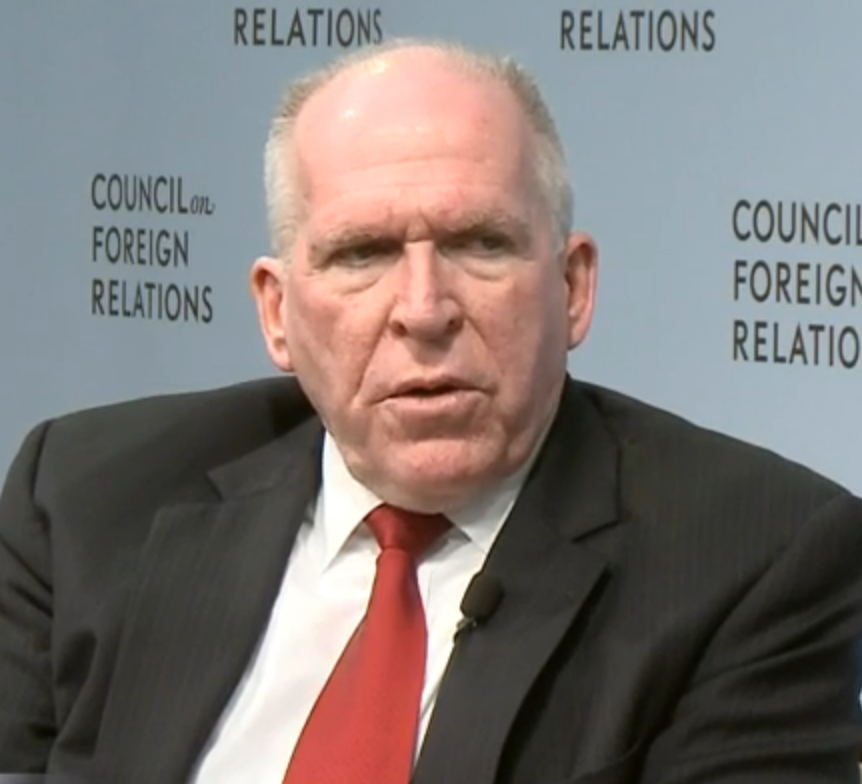
Echoing private comments made by Director of National Intelligence James Clapper in May, CIA Director John Brennan today said the release of 28 classified pages that describe links between Saudi Arabia and 9/11 would necessitate coordination between the White House and Congress.

Brennan’s remarks came in an appearance at the Council on Foreign Relations, and are the first public assertion by an administration official that an ongoing review of the 28 pages will not end at the White House.

The CIA director’s statement was prompted by a question from the audience—posed by a registered foreign agent of the Kingdom of Saudi Arabia.

A Review Two Years in the Making

In the summer of 2014, spurred by members of the House seeking the release of the 28 pages, President Obama tasked Clapper with coordinating an intelligence community review of the 28 pages.

Asked today about the status of the review, Brennan replied, “I am only the director of CIA, so I don’t make decisions about the release of a congressional document.”

“There’s an executive branch responsibility, because that document cited executive branch information,” said Brennan. However, he said, “there is going to be the appropriate discussions that need to take place between the executive and legislative branches to finalize (the declassification process.)”

Brennan did not elaborate on who would participate in those discussions or when they would take place. In May, White House press secretary Josh Earnest told reporters that “intelligence officials have indicated they expect to complete that process by the end of June.”

This Secure U.S. Capitol Facility Houses the 28 Pages
The 28 Pages: Locked Behind These Doors

The 28 pages are found in the report of a 2002 congressional joint intelligence inquiry into 9/11, and are housed in a secure facility beneath the U.S. Capitol.

As he did earlier this month, Brennan simultaneously endorsed the release of the 28 pages while questioning their value in providing a better understanding of the attacks that killed nearly 3,000 people.

“I believe it’s important that that document get out because there’s so much speculation and conjecture about it,” said Brennan. “I have said there are a lot of things in there that unfortunately I think will be used by some to maybe misrepresent the facts or history, but that’s why the 9/11 Commission’s thorough, thorough, researched investigation really should be seen by folks as the much more dispositive of it.”

28 Pages vs 9/11 Commission Report

Brennan did not mention Saudi Arabia in his remarks, but has previously made clear his concern that readers of the 28 pages might conclude the Saudis were complicit in aiding the hijackers—a conclusion that they would share with former Sen. Bob Graham, who co-chaired the congressional inquiry. Graham has said that “the 28 pages point a very strong finger at Saudi Arabia as being the principal financier” of the 9/11 attacks.

On Meet the Press, Brennan said, “The 9/11 Commission took that joint inquiry, and those 28 pages or so, and followed through on the investigation. And they came out with a very clear judgment that there was no evidence that indicated that the Saudi government as an institution, or Saudi officials individually, had provided financial support to Al Qaeda.”

Brennan’s suggestion that the 9/11 Commission report effectively rendered the 28 pages obsolete is countered by members of the commission, including former senator Bob Kerrey. In a statement offered in support of a the 9/11 families and victims suit against Saudi Arabia, Kerrey said, “Evidence relating to the plausible involvement of possible Saudi government agents in the September 11th attacks has never been fully pursued.”

In addition, there are many more counterpoints to Brennan’s assertion that the 9/11 Commission conducted a “thorough, thorough” investigation of Saudi links to the attacks.

28 Pages May Be Accompanied by Other Documents

Brennan’s remarks were elicited by a question from George Salem, a strategic advisor to DLA Piper, which is a registered foreign agent of Saudi Arabia. Salem asked Brennan to comment on the timing of the release, the expected extent of declassification and whether the release would be accompanied by additional investigation reports to provide fuller context.

“There are some other documents that may come out at the same time, as you point out, but again I defer to others who have that decision-making responsibility,” said Brennan.

Follow us on Facebook and Twitter