Nation Awaits June Conclusion of 28 Pages Declassification Review

If the Obama administration is to live up to expectations it set, a two-year long declassification review of 28 pages said to describe Saudi government links to the 9/11 hijackers will finally conclude by this Thursday.

As yet, there are no public indications that an announcement is imminent. The Saudi embassy in Washington has scheduled a mid-day briefing for reporters on Thursday, but no topic has been announced and it could be unrelated.

End of June Target

According to a September 2014 White House statement issued in response to a CNN report on the 28 pages, President Obama tasked the Office of the Director of National Intelligence (ODNI) to review the secret chapter from a 2002 congressional intelligence inquiry earlier that summer. (A National Security Council spokesperson refused to specify on which day or even in which month this task was assigned.)

With the media seemingly placated by a mere White House assurance that the pages were being reviewed, little more was heard of the alleged review until April of this year, when a 60 Minutes report gave the 28 pages their most prominent exposure to date.

Josh Earnest
Josh Earnest

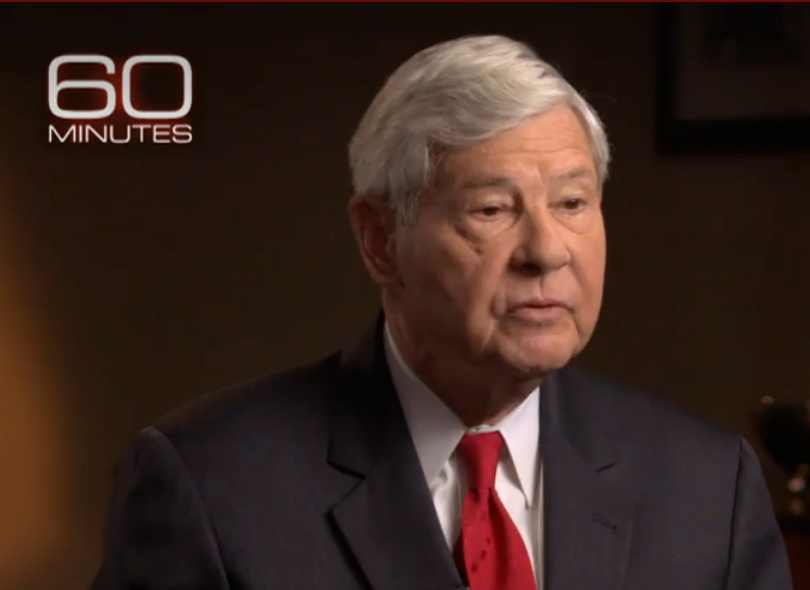
Two days later, former Senator Bob Graham—who co-chaired the inquiry that produced the 28 pages and been a leading advocate of their release—received a phone call from Homeland Security policy adviser Brett Holmgren, who told him the review should be completed in one or two months.

On May 2, White House spokesperson Josh Earnest said “our intelligence officials have indicated that they expect to complete that process by the end of June.”

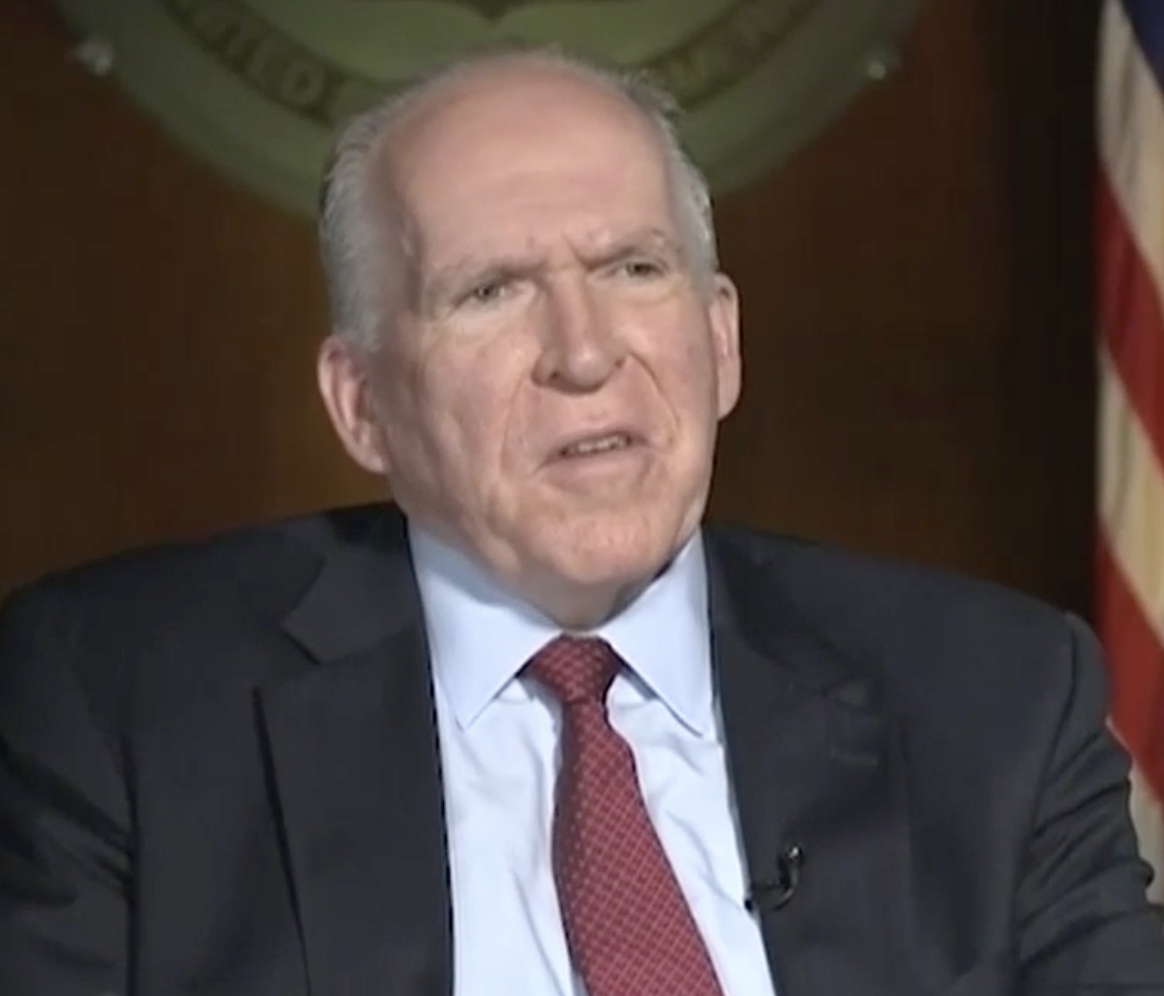
Earlier this month, CIA Director John Brennan signaled that a declassification was likely, telling Saudi television network Al Arabiya, “I believe they are going to come out, I think it’s good that they come out.”

Review Endgame is Unclear

Though the White House was clear in setting an end-of-June expectation, it remains unclear exactly what will happen at the end of the intelligence community’s review.

In a May meeting with Graham and Representatives Walter Jones and Stephen Lynch, Director of National Intelligence James Clapper reportedly seemed to indicate that, after receiving the intelligence community’s recommendation, the president would turn the issue back over to Congress for final disposition. The 28 pages were produced by a joint inquiry of the House and Senate intelligence committees and are in Congress’s custody.

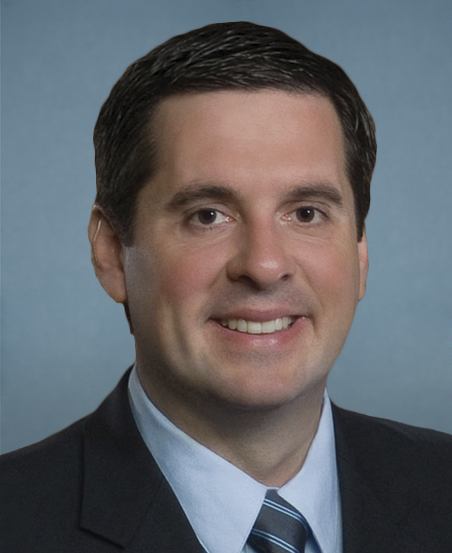
Devin Nunes and Adam Schiff, the chair and ranking member of the House intelligence committee, have each endorsed the release of the 28 pages, as has Senate intelligence committee vice chair Dianne Feinstein. In February 2015, Senate intel chair Richard Burr told Carl Hulse of The New York Times he saw little value in declassifying the pages, noting that “there may have been a level of participation by some Muslim country that is not commensurate with today.”

Earlier this month, Jones, Lynch and Thomas Massie introduced a resolution that would direct Nunes and Schiff to release the 28 pages themselves under the protection of the Constitution’s Speech or Debate Clause.

Looking Ahead

If the Obama administration wants the next milestone in the 28 pages saga to receive as little attention as possible, expect a Friday afternoon, pre-holiday weekend announcement.

MSNBC 28 PAGESAs for the substance of that announcement, we can only speculate. If the president has decided to finally make good on his reported promises to 9/11 family members, we might see a full declassification, perhaps accompanied by the release of a companion document that reiterates CIA Director Brennan’s characterizations of the 28 pages as “uncorroborated, unvetted information” that was essentially rendered obsolete by the subsequent work of the 9/11 Commission. (As we’ve written here and here, that premise is a false one.)

If, on the other hand, the White House is bent on continuing to stall the release as long as possible, we may simply see an statement that the administration has forwarded ODNI’s recommendation to the House and Senate intelligence committees for further action. That would give Congress just eight working days to act before it goes into a long summer recess.

They will return on September 6, just five days before the 15th anniversary of the attacks.

Follow us on Facebook and Twitter

New House Resolution Directs Intel Committee to Release 28 Pages From 9/11 Report

By Brian P. McGlinchey

Rep. Walter Jones
Rep. Walter Jones

Encouraged by rising, bipartisan support for a resolution urging President Obama to declassify 28 pages said to link Saudi Arabia to the 9/11 hijackers, the leaders of Capitol Hill’s declassification drive have now introduced a resolution directing the leaders of the House intelligence committee to take matters into their own hands.

Introduced Monday, House Resolution 779 directs the chair and ranking member of the House intelligence committee—Devin Nunes and Adam Schiff, respectively—to disclose the con the 28 pages by publishing them in the Congressional Record under the protection of the Constitution’s Speech or Debate Clause.

Congressman Walter Jones introduced the resolution along with original cosponsors Stephen Lynch and Thomas Massie. The same trio is the driving force behind House Resolution 14, which urges the president to release the pages that comprise the final chapter in the report of a 2002 congressional intelligence inquiry. Introduced last year, HRes 14 has seen a surge in support following an April 60 Minutes report on the 28 pages, and now has 70 cosponsors.

“I have read these pages and can say that while their release will not harm national security, the contents are critical to our foreign policy moving forward…That is why I have introduced a resolution that would enable the House Committee on Intelligence to declassify the 28 pages,” said Jones in a press release issued today.

Committee Leaders Support Declassification

Intelligence Committee Chair Devin Nunes
Rep. Devin Nunes

In April, both Nunes and Schiff voiced their support for releasing the 28 pages. Nunes said “the benefits of publishing this information would outweigh any potential damage to America’s national security,” and Schiff told MSNBC’s Andrea Mitchell, “They should be released and I think, as is often the case, the speculation about what they contain is more damaging in fact than the contents.”

H.Res.779 has been referred to the House rules committee. The committee’s ranking member, Louise Slaughter, is a cosponsor of the resolution urging the president to declassify the pages.

The resolution’s preamble notes that the CIA has acknowledged that the 28 pages are the property of Congress and that the Supreme Court “upheld the constitutional prerogative of Members of Congress or committees of Congress to disclose classified information” by way of the Speech or Debate Clause.

This new legislative action comes as an intelligence community declassification review of the 28 pages is expected to wrap up in the next few weeks.

The White House said it ordered the review in the summer of 2014. Skeptical that a review of just 28 pages could truly take two years and counting, many observers—including 9/11 family members and victims—point to the delay as signaling the Obama administration’s desire to put off a resolution of the issue as long as possible.

Former Sen. Bob Graham

The delay strategy grew untenable in April when the 60 Minutes report spawned fresh media attention, dozens of newspaper editorials, heightened citizen interest and an increase in legislator requests to read the secret pages. Soon after the 60 Minutes segment aired, former senator Bob Graham said that a Department of Homeland Security advisor told him to expect a decision in June.

However, confusion has mounted over what exactly will happen at the end of that review. In a May meeting with proponents of the pages’ release, Director of National Intelligence James Clapper reportedly voiced an expectation that the president would turn the matter back over to the Congress. If that is indeed the White House’s intention, it could represent a new means of stalling the release of a document that, according to Graham, “point(s) a very strong finger at Saudi Arabia as being the principal financier” of the 9/11 attacks. H.Res. 779 addresses that possibility head-on.

A New Angle on Speech or Debate Clause

The drive to declassify the 28 pages has spanned 13 years; throughout that time, many citizens have called for members of Congress to declassify the 28 pages by entering them into the congressional record under the protection from prosecution provided by the Constitution’s Speech or Debate Clause.

As we reported earlier this month, one of those advocating that avenue of declassification is former senator Mike Gravel, who used it to release the “Pentagon Papers,” a secret government history of the Vietnam War.

In his own declassification feat, Gravel had something that individual members of Congress lack where the 28 pages are concerned: physical custody of the document. The 28 pages are kept in a secure facility in the basement of the Capitol, precluding Jones, Lynch, Massie or other members of Congress from entering them into the record themselves.

SchiffRecognizing that, House Resolution 779 challenges those with greater dominion over the 28 pages—the chair and ranking member of the House intelligence committee—to do for Congress what rank-and-file members cannot do on their own.

Apart from the Speech or Debate Clause, both the House and Senate have rules by which either body, acting alone, can declassify information, even over the objection of the president. In both houses, the initiation of that process begins in the intelligence committee, but also entails seeking the president’s opinion and then a majority vote of the chamber to override it, if necessary.

In opting instead for a Speech or Debate Clause approach, Jones, Lynch and Massie are pursuing a route that bypasses the president and gives Congress an opportunity to assert its own authority by flexing a rarely-used muscle.

A Multi-Purpose Tactic

In the widening, multi-front battle to secure the release of the 28 pages, House Resolution 779 could serve two purposes.

First, the prospect of a congressional declassification of the 28 pages adds a new variable for Obama to weigh as he considers his own decision to declassify the 28 pages.

REDACTED1Embedded in his pending decision is yet another question: If the pages are released, what information, if any, should continue to remain secret? Knowing that the House intelligence committee could later release additional details he chose to conceal puts additional pressure on the president to be more liberal in his declassification. If he attempts to cater to Saudi Arabia or other interested parties by leaving damning details secret, he could face criticism and questioning of his motives if and when those details come out later.

Second, the new resolution also serves as a Plan B: Should the president decide not to release the 28 pages, to do so with heavy redactions, or turn the issue back to Capitol Hill, Congress would be poised to deliver transparency to the American people on its own.

“At a minimum, the draft resolution tends to maintain a drumbeat of pressure on the issue and makes it a tad more likely that the administration will act to release the material,” said Steven Aftergood, who directs the Federation of American Scientists’ Project on Government Secrecy, in an email to 28Pages.org.” Whether the resolution does more than that depends on what kind of reception it receives in the House.”

The development was applauded by Sharon Premoli, who endured a harrowing escape from the World Trade Center on 9/11: “I think it is unconscionable that it has taken this administration 8 years to read 28 pages and to make a decision. Anything that can move congress to declassify the 28 pages is a good thing and I support it 100 percent.”

Follow us on Facebook and Twitter

CIA Director: 28 Secret 9/11 Pages Should, Likely Will Be Released

John Brennan
John Brennan

CIA Director John Brennan this weekend endorsed the declassification of 28 pages that detail foreign government links to the 9/11 hijackers. More significantly, he also said he expects the material will indeed be released when the intelligence community’s declassification review is complete.

In an interview with the Saudi television network Al Arabiya, Brennan said, “I believe they are going to come out, I think it’s good that they come out.”

At the same time, however, he also dismissed what former Senator Bob Graham and many others have said about the contents of those 28 pages. “People shouldn’t take them as evidence of Saudi complicity in the attacks,” said Brennan.

28 Pages a “Very Preliminary Review”

Brennan’s declaration that the release of the 28 pages would be a good thing marked a subtle but significant shift in tone from last month: In a May 1 appearance on Meet The Press, Brennan didn’t say anything positive about the idea of releasing the classified chapter from a 2002 congressional intelligence inquiry into 9/11.

With the rest of his remarks to Al Arabiya, however, Brennan reiterated his previous attack on the credibility of the 28 pages.

“These so-called 28 pages…(were) a very preliminary review trying to pull together bits and pieces of information reporting about who was responsible for 9/11. Subsequently, the 9/11 Commission looked very thoroughly at these allegations of Saudi government involvement and their finding, their conclusion was that there was no evidence to indicate that the Saudi government as an institution or senior Saudi officials individually had supported the 9/11 attacks.”

Brennan’s Spin Depends on a False Premise

As 28Pages.org noted after his Meet the Press appearance, Brennan’s claims about the 28 pages rests on a false premise—that the 9/11 Commission thoroughly investigated leads that pointed toward Saudi Arabia. That premise has been attacked by some of those most familiar with the commission’s work.

“Our report should never have been read as an exoneration of the Saudis,” 9/11 Commission member and former U.S. Navy secretary John Lehman told The Guardian last month.

His sentiments are shared by 9/11 Commission member and former senator Bob Kerrey. “Evidence relating to the plausible involvement of possible Saudi government agents in the September 11th attacks has never been fully pursued,” he said in a statement prepared in support of 9/11 victims’ lawsuit against the kingdom.

Lehman and Kerrey’s remarks are just the start: In contrast to what the CIA director would have us believe, there are many more indications that the 9/11 Commission failed to thoroughly investigate Saudi links to the attacks, and that the release of the 28 pages will prompt Americans to question the commission’s conclusions—and not the other way around.

Follow us on Facebook and Twitter

“Pentagon Papers” Senator Urges Use of Speech or Debate Clause to Disclose Secrets of 28 Pages

By Brian P. McGlinchey

Former Sen. Mike Gravel

As an intelligence community declassification review of 28 pages on foreign government links to the 9/11 hijackers enters its third year, the former senator who put the Pentagon Papers into the public record under the protection of the Constitution’s Speech or Debate Clause is urging members of Congress to use the same tactic to finally reveal what’s in the 28 pages.

Mike Gravel, who represented Alaska in the Senate from 1969 to 1981, has shared the idea with Senator Ron Wyden and staffers for Senators Rand Paul and Kirsten Gillibrand. (Last year, Paul and Wyden introduced Senate Bill 1471, which would direct the president to release the pages; Gillibrand is the bill’s only other cosponsor.)

A Powerful Option Seldom Used

Found in Article 1, Section 6 of the U.S. Constitution, the Speech or Debate Clause shields senators and representatives from criminal prosecution for their remarks during official congressional business:

“Senators and Representatives…shall in all cases, except Treason, Felony and Breach of the Peace, be privileged from Arrest during their attendance at the Session of their Respective Houses, and in going to and from the same; and for any Speech or Debate in either House, they shall not be questioned in any other Place.”

In 1971, Gravel used the clause to single-handedly declassify 4,100 pages from the Pentagon Papers, a classified history of the Vietnam War. After securing a leaked copy of the report, he convened a meeting of a Senate subcommittee he chaired, read from them for an hour and then entered all of them into the congressional record.

In Gravel v. United States, the Supreme Court ruled that the Speech or Debate Clause protected both Gravel and his aide who assisted him from prosecution for the disclosure.

“What the Pentagon Papers proved in my case, which was the landmark of it, was that any member of Congress could release anything—secret, top secret, confidential—anything that they felt was in the best interest of the people to know. Period. That’s a judgment they have the power to make under the constitution,” said Gravel.

Though Gravel blazed a broad declassification trail 45 years ago, it hasn’t been used since. Now, he’d like to see the path used to bypass the executive branch’s classification of the 28 pages.

“We are three separate divisions. That’s the strength of our country. You have the executive, the legislative and the judiciary. The legislative has no obligation to honor the classification of the executive. That’s what the Speech or Debate Clause is all about,” said Gravel.

Easier Said Than Done?

“I think it’s a hypothetical scenario and not a very likely one,” said Steven Aftergood, who directs the Federation of American Scientists’ Project on Government Secrecy. “There’s a reason we call it a Pentagon Papers scenario—because it really hasn’t happened deliberately since then.”

The first hurdle to a Gravel-style release of the pages is a physical one: The pages are kept in a secure facility beneath the U.S. Capitol. Members of Congress can only read them with the permission of their intelligence committee, and then do so under close observation, after first shedding their pens, papers and cell phones.

REDACTED1
One of the 28 Pages

“The problem is that no one can take notes, so how are you going to get the 28 pages—are you going to put them in your pocket and walk out? I doubt it,” said Rep. Walter Jones, who introduced House Resolution 14, which urges the president to release the pages.

As an alternative to a cloak-and-dagger acquisition of the pages, a legislator could summarize them in a speech.

The idea of recapping 28 pages of text that are filled with dates, dollar amounts, account numbers and a variety of Arabic names struck Jones as daunting. “It would take someone with a better memory than mine,” he said with a soft chuckle.

Last month, the September 11th Advocates, a group of activist 9/11 widows, suggested an ambitious way of overcoming the limits of human memory: They challenged each member of Congress to read the 28 pages, memorize a few sentences each and then individually read them into the record in a mass act of rebellion against undue executive branch secrecy.

As much as we are determined to read every word of the 28 pages, however, it would seem that a single conscientious member of Congress could do a great deal for the cause of transparency without the need for heavy-duty memorization.

Judging from the remarks of those who’ve read them, the 28 pages contain specific “headline” revelations that could be summarized without quoting minute details like account numbers or dollar amounts—all that’s needed is an elaboration on these comments already made in public:

  • 9/11 Commission member John Lehman, when asked if the 28 pages name names: “Yes. The average intelligent watcher of 60 Minutes would recognize them instantly.”
  • Former Sen. Bob Graham: “The 28 pages point a very strong finger at Saudi Arabia as being the principal financier” of 9/11.
  • Rep. Rick Nolan: “The information presents a clear and startling picture of who financed the attacks.”

Congressional Consequences

While the Speech or Debate Clause shields members from prosecution, they may face other consequences.

“It would protect them from legal liability. It would not protect them from internal sanctions by their own colleagues. They wouldn’t be arrested, but they might be censured,” said Aftergood.

Senator Mike Gravel
Senator Mike Gravel

Gravel thinks otherwise: He has been circulating a detailed analysis written by attorney Mick Harrison that concludes— given the specific facts surrounding the 28 pages—that censure wouldn’t be a possibility.

A different consequence does seem likely: “They would lose access to classified information in the future,” predicted Aftergood.

Though Gravel said he was able to view classified information after he exposed the Pentagon Papers, the more recent experience of Florida Congressman Alan Grayson lends credibility to Aftergood’s prediction.

Grayson made a speech from the House floor in which he cited Edward Snowden’s revelations about NSA mass surveillance. Despite the fact that these revelations had been already published in a newspaper, Grayson says the intelligence committee chair at the time, Mike Rogers, characterized his action as a disclosure of classified information, and the House intelligence committee then denied Grayson’s request to read the 28 pages.

For Gravel, however, there’s too much at stake for the pages not to be released: “Members of Congress, under the Constitution, have a right and—believe me—an obligation, because if you don’t inform the people, they have no role in influencing government policy because they’re left in ignorance.”

Call Congress today: Our guide makes it easy

Follow us on Facebook and Twitter

Questions Swirl Around 28 Pages Declassification Process

There’s no shortage of news in the drive to declassify 28 pages on foreign government links to the 9/11 hijackers. Of foremost concern, uncertainty continues to swirl around precisely what will happen at the end of the intelligence community’s declassification review of the 28 pages. Meanwhile, lobbyists for Saudi Arabia unveiled some some new marketing material, a House hearing examined Saudi Arabia’s position in the fight against terrorism, and Rand Paul is trying to tie 28 pages declassification to a major piece of legislation.

Declassification Process In Need of Its Own Transparency

James Clapper
James Clapper

When former Senator Bob Graham—along with Rep. Walter Jones and Rep. Stephen Lynch—met with Director of National Intelligence James Clapper last week, Graham was surprised when Clapper suggested that the final move would be left to the Congress.

Graham told Carl Hulse of the New York Times, “No one has ever questioned that this is a decision that rests at the White House. The idea of adding another elongated, contentious step to the process is befuddling.”

When Dan Christensen of FloridaBulldog.org first broke the story of Clapper’s confusing comments, some observers interpreted that as possibly referring to a vote of the House or Senate intelligence committees. However, Graham says Clapper hinted at a scenario far more worrisome to transparency advocates. Wrote Hulse:

Mr. Graham said Mr. Clapper had compared the approach to the handling of a Senate report on C.I.A. torture of terror detainees. That document was reviewed by the Obama administration, which redacted parts of it over security concerns, and the Senate ultimately released an executive summary. But that was a messy process that took months of bitter fighting to resolve.

Responding to the Times story yesterday, the September 11th Advocates—a group of activist 9/11 widows—issued a two-page statement expressing alarm over the idea that the 28 pages could follow the same path as the torture report. In addition to expressing concern over the likelihood for delays, the group is also concerned about the idea that the final product would be a synopsis of the pages rather than full declassification: “Executive summaries are not meant to reveal facts or the truth— they are used to hide the facts and the truth. Thus, we find Clapper’s suggestion unacceptable.”

Reached yesterday by 28Pages.org, Rep. Jones seemed hopeful for a more straightforward White House recommendation to declassify the material, promptly followed by in a simple vote from the intelligence committees or the full House and Senate. “If President Obama says, ‘I recommend that we declassify the 28 pages,’ I don’t think it would take 10 minutes for the House and Senate to do it. There’s just too much American interest in this,” he said.

The September 11th Advocates claimed that the continued classification of the 28 pages violates the executive order that governs classification. Specifically, they noted that Executive Order 13526 forbids the use of classification to prevent embarrassment to a person, organization or agency, or to delay the release of information that does not require protection in the interest of national security—flawed rationales that have been alluded to by CIA Director John Brennan and the two chairmen of the 9/11 Commission.

A spokesperson for Clapper declined both a New York Times and 28Pages.org request to clarify his remarks to Graham: It looks like it will be up to the White House to provide the American people with a clear understanding of the declassification end-game.

Saudi Lobby on the Offensive

Front Cover of Saudi Arabia's Counterterrorism Paper
Saudi Arabia’s Glossy Counterterrorism Paper

Last week, Politico revealed that Saudi lobbyists were distributing a slick, 104-page white paper extolling the kingdom’s dedication to countering terrorism. Yesterday, The Hill’s Julian Hattem reported that the lobbyists’ collateral package had grown to include a 38-page prebuttal of the 28 pages, and that Saudi lobbyists are characterizing proponents of 28 pages declassification as “delving into conspiracy theories.”

That term is rarely used in serious discussions of the 28 pages, however it was central to a highly Saudi-friendly paper on the topic published last week by the Center for Strategic and International Studies—and then scathingly critiqued by 28Pages.org. CSIS accepts money from Saudi Arabia and a who’s who of defense companies that call the kingdom a customer.

We’ve obtained and posted both the Saudi white paper and 28 pages prebuttal so you can see precisely what the Saudis are selling.

House Hearing on Saudi Arabia and Counterterrorism

Rep. Dana Rohrabacher

Yesterday, Texas Congressman Ted Poe chaired a hearing of a House foreign affairs subcommittee that focused on Saudi Arabia and counter-terrorism. (Archived video here.) A few highlights:

  • As The Intercept’s Alex Emmons reported, when the panel of witnesses was asked by California congressman and House Resolution 14 cosponsor Dana Rohrabacher if they believed “the royal family of Saudi Arabia did not know and was unaware that there was a terrorist plot being implemented that would result in an historic attack in the United States,” only two of the four raised their hands. One of the doubters was 9/11 Commission member Tim Roemer, who declared it too difficult a question to answer with a show of hands—perhaps owing to the vast size of the royal family.
  • Rohrabacher said, “We are intentionally ignoring who’s financing (terrorism). It’s clear to all of us…that the Saudis and the Saudi royal family have been right up to their eyeballs in terrorist activity and supporting the terrorist activity of radical Islamic forces in the Middle East.”
  • The panelists were uniform in their support of releasing the 28 pages. Roemer said, “The 9/11 families deserve it, the American people deserve it, and justice deserves it. We have a right to transparency and sunlight.”
  • Poe said he has read the 28 pages and supports their release, but is notably absent from the list of cosponsors of HRes 14.
  • Georgetown University’s Dan Byman said the biggest beneficiary of Saudi intervention in Yemen has been Al Qaeda in the Arabian Peninsula.
  • Rep. Brad Sherman said Saudi Arabia can’t claim to oppose terrorism while supporting extremism: “It’s time for Saudi Arabia to come clean.”

Rand Paul Working to Catch-Up with House Allies

Senator Paul, who last year introduced a bill with Sen. Ron Wyden that would direct the president to declassify the 28 pages, yesterday introduced an amendment to the National Defense Authorization Act that would do the same thing.

While a House resolution aimed at achieving the release of the pages has been steadily accumulating cosponsors—reaching 62 this morning—the Senate bill has inexplicably languished, even after 60 Minutes thrust the issue into nationwide headlines last month and a number of senators advocated their declassification.

New York’s Kristin Gillibrand was an original cosponsor of the Senate bill; in stark contrast to what House declassification leaders Walter Jones, Stephen Lynch and Thomas Massie have accomplished, Paul and Wyden have yet to persuade even one additional senator to officially sign on to a cause that has wide public support.

This is the second time Paul has pursued a 28 pages amendment to the NDAA. Last year’s amendment was not taken up for a vote.

Please call Congress today: Our easy guide makes is simple

Follow us on Facebook and Twitter