Saudi Arabia and the U.S. Intelligence Community: Allies Against 9/11 Transparency?

By Brian McGlinchey

One of the distinguishing hallmarks of the drive to declassify the 28-page finding on foreign government support of the 9/11 hijackers is the absence of vocal opposition. That’s not to say there are no opponents—only that they are working quietly and effectively behind closed doors.

It’s likely that among the most powerful of those unseen opponents of 9/11 transparency are two strange bedfellows:

  • The Kingdom of Saudi Arabia—which has fueled the growth of terror
  • The U.S. intelligence community—which is charged with thwarting terror

Saudia Arabia’s Broad Influence on U.S. Policy

Saudi Arabia has claimed it wants the 28 pages released, but the kingdom is surely bluffing. At a January 7 press conference promoting the reintroduction of a House resolution urging the president to declassify the 28 pages, former Senator Bob Graham was pointed in describing how Saudi Arabia figures in the censored chapter of the report of a joint Congressional intelligence inquiry into 9/11: “The 28 pages primarily relate to who financed 9/11 and they point a very strong finger at Saudi Arabia as being the principal financier.”

Like many other countries, Saudi Arabia has invested heavily in building influence within American shores, and that influence may be a big reason why Barack Obama hasn’t reversed George W. Bush’s extraordinary redaction of 28 consecutive pages of a Congressional intelligence report, and why most of our federal legislators haven’t even bothered reading those pages despite the strong urging of peers who have.

Former Senator Norm Coleman: On the Saudi Payroll
Former Senator Norm Coleman: Once a Saudi Critic, Now on Kingdom’s Payroll

One relatively new pillar in Saudi Arabia’s influence infrastructure illustrates its strength. In September, The Nation’s Lee Fang—in a piece outlining the remarkable depth and breadth of the Saudi web of influence—revealed that Saudi Arabia had made an eyebrow-raising addition to its army of lobbyists: Norm Coleman, former United States senator and current chair of the Congressional Leadership Fund, a prominent Republican super PAC.

The hire breaks new ground, writes Fang, as Coleman “appears to be the first leader of a significant Super PAC to simultaneously lobby for a foreign government.” The move also reveals cringe-inducing hypocrisy: In 2005, Coleman signed a letter condemning Saudi Arabia for fostering Islamic extremism around the world, and today he serves on the board of the National Endowment for Democracy.

While noteworthy, Coleman is just one star in a broad constellation of Saudi Arabian influence on American policymakers. As The New York Times reported in a September expose, another major avenue of foreign government influence is the funding of American think tanks:

“The money is increasingly transforming the once-staid think-tank world into a muscular arm of foreign governments’ lobbying in Washington. And it has set off troubling questions about intellectual freedom: Some scholars say they have been pressured to reach conclusions friendly to the government financing the research.”

The pressure on scholars isn’t always indirect: Some “donations” are accompanied by an explicit quid pro quo understanding that the think tank will advance the interest of its foreign state benefactor.

According to a Times infographic, Saudi Arabia has given money to many of the think tanks that journalists and policymakers turn to for analysis, including The Atlantic Council, Brookings Institution, the Middle East Institute and the Center for Strategic and International Studies (CSIS).

Does the work product of these think tanks reflect their Saudi sponsorship? Consider the rather Saudi-friendly insights the CSIS’s Anthony Cordesman recently offered decision-makers on the transition of power following the death of King Abdullah. In it, Cordesman heralds Abdullah as “one of (Saudi Arabia’s) most competent and impressive kings” and “a strong ally.”  While he touches briefly on extremism, strikingly absent from Cordesman’s examination of Saudi Arabia’s role as a “close partner” in U.S. counterterrorism efforts is any mention of the country’s well-documented financial support of Islamic extremism and terror. To the contrary, Cordesman declares that Saudi Arabia “has been critical to preserving some degree of regional stability…during the rise of Islamic extremism.”

Considering Saudi Arabia’s think tank sponsorship, it’s no wonder that 28Pages.org is only aware of one occasion where one of these influential entities has allowed an analyst to use its platform to promote the release of the 28 pages: Last month at the American Enterprise Institute, Michael Rubin urged their release and implored journalists to make the 28 pages a 2016 campaign issue.

Intelligence Community’s “Pervasive Pattern” of Covering Saudi Role

Saudi Arabia’s reasons for wanting the 28 pages kept secret are clear, but what about America’s intelligence community? Actually, its motives are likely identical: Shielding itself from public humiliation and the consequences that would accompany it.
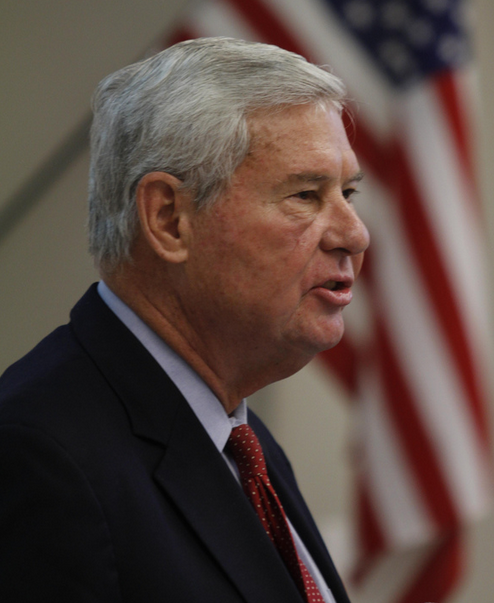
Former Senator Bob Graham

The intelligence community would have us believe that publishing the 28 pages would somehow pose a threat to national security, a notion that’s been pointedly rebutted by many who’ve read them, including former Senate intelligence committee chairman Graham.

At the January 7 press conference, Graham said“Much of what passes for classification for national security reasons is really classified because it would disclose incompetence. And since the people who are classifying are also often the subject of the materials, they have an institutional interest in avoiding exposure of their incompetence.”

The intelligence community’s failure in the years and months leading up to 9/11 isn’t exactly secret, but the 28 pages may shed powerfully unflattering new light on it. Remember, they’re found in the report of the “Joint Inquiry into Intelligence Community Activities Before and After the Terrorist Attacks of September 11, 2001.”

Secrecy about American intelligence agencies’ performance before and after the 9/11 attacks stretches far beyond the 28 pages. Perhaps the most prominent example of that broad veil relates to a 9/11 hijacker cell in Sarasota: Graham says the FBI failed to disclose its knowledge of that cell to the joint congressional intelligence inquiry he co-chaired.

When the cell later came to the attention of investigative journalist Dan Christensen at FloridaBulldog.org, the FBI first denied that it found any connection between 9/11 hijackers and a wealthy Saudi family that suddenly fled the country two weeks before September 11, and then denied it had any documentation of its investigation. Now we know the FBI indeed found direct links between that family and the hijackers, and a federal judge is studying more than 80,000 pages of FBI documents relating to the Sarasota investigation for potential release in a Freedom of Information Act lawsuit.

Relating the FBI’s Sarasota secrecy to the 28 pages, Graham said, “This is not a narrow issue of withholding information at one place, in one time. This is a pervasive pattern of covering up the role of Saudi Arabia in 9/11 by all of the agencies of the federal government which have access to information that might illuminate Saudi Arabia’s role in 9/11.”

Richard Clarke
Former Counterterror Czar Richard Clarke

The CIA may want the 28 pages kept secret, too. Richard Clarke, who was the White House’s counter-terrorism czar in the Clinton and Bush administrations, says the CIA never told him that two known Al Qaeda operatives were living in southern California under their own names. Considering the San Diego cell figures prominently in the joint inquiry report, the 28 pages may shed light on the CIA’s motives for its history-altering failure to inform Clarke or the FBI or elaborate on what disaster-averting information the CIA had and didn’t share.

Like the CIA, the NSA also knew about the San Diego-based hijackers well before September 11. Keeping the 28 pages under wraps may serve the agency in its fight to preserve the post-9/11 mass surveillance programs revealed by Edward Snowden: If the 28 pages amplify the fact that the government had all the information it needed to thwart the 9/11 attacks without those controversial programs, the NSA’s arguments would be further weakened.

A Deadly Bargain

Amid all this discussion of the actions and inactions that enabled the terrible loss of life on 9/11, one shouldn’t lose sight of the fact that lives continue to hang in the balance—and the fact that former Senator Graham and current Congressmen Walter Jones, Stephen Lynch and Thomas Massie have all said that declassifying the 28 pages is imperative to understanding and countering the ongoing terror threat.

Said Graham at the 28 pages press conference that came just hours after the terror attack on the offices of French magazine Charlie Hebdo: “There is no threat to national security in disclosure (of the 28 pages). I’m going to make the case today that there’s a threat to national security by nondisclosure, and we saw another chapter of that today in Paris.”

According to Graham, shielding Saudi Arabia from scrutiny of its role in 9/11 has emboldened the kingdom to continue its sponsorship of extremism and, in the process, enabled the rise of ISIS. If so, the continued censorship of the 28 pages has cost more lives around the world than were lost on September 11, 2001—and with growing U.S. involvement in the fight against ISIS, American lives could become increasingly imperiled.

Americans may not be surprised that a faraway monarchy would be willing to gamble the lives of innocents in a bid for continued power, but they should be deeply troubled that the U.S. intelligence community would—wittingly or not—make the same deadly bargain. By shielding themselves from the oversight that’s vital to our system of government, our national security agencies also shield Saudi Arabia from accountability. In so doing, they endanger the very lives they’re charged with saving.

Brian McGlinchey is the founder and director of 28Pages.org.

REDACTED w911Help release the 28 pages: Call or write to Congress today with our help.

Follow us on Facebook and Twitter and grow the 28 pages movement.

Florida Event Spotlights Signs of Foreign Support of 9/11 Hijackers

Last month, 9/11 parents Loreen and Matt Sellitto hosted an informative event focused on one of the most important yet least-understood aspects of September 11: the extent to which the terrorists received support from foreign governments—and the extent of the government’s knowledge of that support, both before and after the attacks.

Former Senator Bob Graham

Held in Naples, Florida, the November 11 event was called “The Untold Story of 9/11: A Conversation with Bob Graham.” Following opening remarks from host Loreen Sellitto and from Terry Strada of 9/11 Families United for Justice Against Terrorism, the event featured three speakers:

  • Former Senator Bob Graham, the most prominent voice outside government fighting for declassification of the 28 pages.
  • Broward Bulldog editor Dan Christensen, who broke the story of the FBI’s discovery of a 9/11 cell in Sarasota, and who continues working to bring FBI investigation documents into the daylight.
  • Attorney Tom Julin, who is helping the Broward Bulldog in its effort to overcome the government’s stonewalling.

Here, we cover many of the highlights; a full video of the event can be found at the bottom of the page.

Bob Graham on the San Diego Cell

Graham’s remarks centered on the story of Omar al-Bayoumi, a man who, before 9/11, held what Graham called a “ghost job” with a Saudi company in San Diego. Bayoumi, whom the FBI had previously identified as a Saudi agent, helped two 9/11 hijackers establish themselves in the United States.

Bayoumi later claimed that—on the same day he made a two-hour drive to Los Angeles to attend a meeting with the director of religious affairs at the Saudi consulate —he just happened to become acquainted with future 9/11 hijackers Nawaf al-Hazmi and Khalid al-Mihdar in a Middle Eastern restaurant after he overheard them talking Arabic in Saudi accents.

This encounter occurred soon after the pair’s arrival in Los Angeles, which in turn happened just days after they attended a terrorist summit in Malaysia. On the spot, Bayoumi invited the two to move to San Diego, where he furnished them with generous assistance, including the initial payment on an apartment and spending money. Adding to the cluster of coincidences, Bayoumi’s salary soared upon Hazmi and Mihdar’s arrival, while his wife began receiving payments from the Saudi embassy in Washington.

Broward Bulldog Battles Feds Over Sarasota Investigation

Christensen’s quest for answers about foreign sources of support of the 9/11 hijackers began in 2011 with a tip passed to him by Anthony Summers, who, with his wife Robbyn Swan, had just completed their book, “The Eleventh Day.” Summers and Swan had learned about an FBI investigation of a Saudi family with close ties to the Saudi government that suddenly abandoned its upscale home just outside Sarasota about two weeks before 9/11.

Pursuing the lead, Christensen contacted Senator Graham for his insights into the Sarasota cell. Braced for the possibility that Graham would decline comment because of classification restraints, Christensen was stunned to learn that Graham—who had been chairman of the Senate Intelligence Committee and co-chaired the joint Congressional inquiry into 9/11—was unable to comment for an altogether different reason: Graham said the FBI had never told him about its Sarasota investigation.

Broward Bulldog Editor Dan Christensen

Christensen then inquired with the FBI, which confirmed there had been an investigation, but said it found no connection to 9/11. Next, seeking to learn how they reached that conclusion, he requested the FBI’s investigation documents using the Freedom of Information Act (FOIA), but the FBI said there were no documents matching the request. Finding that completely implausible, in September 2012, Christensen and the Broward Bulldog filed a FOIA lawsuit.

About six months later, the FBI sent Christensen 35 partially redacted pages that contained a bombshell conclusion directly contradicting the government’s earlier denials: The investigation had in fact “revealed many connections” between the Saudi family that fled their home and “individuals associated with the terrorist attacks on 9/11/2001.” (Indeed, investigations showed the home had been called and even visited by future 9/11 hijackers.)

In April 2014, as the Bulldog’s lawsuit progressed, Fort Lauderdale U.S. District Judge William Zloch ordered the FBI to conduct a more thorough search of its files, chiding the government for advancing “nonsensical” legal arguments in its effort to maintain secrecy. Later, he ordered the FBI to turn over more than 80,000 pages from its Tampa office so he could personally review them and reach his own conclusions about the need for secrecy. The judge’s review of that enormous cache is still underway.

In July of 2014, the FBI released a new and intriguing document. This one revealed that, on Halloween in 2001, the Manatee County Sheriff’s Office was called by a citizen who observed a man discarding items in a dumpster behind a rented storage unit in Bradenton, Florida. After interviewing the man, who held a visa from Tunisia, police searched the dumpster and found “a self-printed manual on terrorism and Jihad, a map of the inside of an unnamed airport, a rudimentary last will and testament, a weight to fuel ratio calculation for a Cessna 172 aircraft, flight training information from the Flight Training Center in Venice and printed maps of Publix shopping centers in Tampa Bay.”

Attorney Tom Julin’s Pursuit of the 28 Pages

Attorney Tom Julin
Attorney Tom Julin

Julin, in addition to providing an interesting elaboration on the legal battle to liberate the FBI’s Sarasota files, explained the Broward Bulldog’s attempts to secure the release of the 28-page finding on foreign government support of the 9/11 hijackers found in the 2002 report of the joint Congressional inquiry.

Julin is helping Christensen, Summers and Swan push for the declassification of the 28 pages through a little-known process called Mandatory Declassification Review. Under that process, an agency’s refusal to declassify material can ultimately be appealed to a multi-agency panel that reviews the material and presents a recommendation to the president. The panel is now reviewing the 28 pages. While there’s no deadline, Julin has been told to expect the panel’s recommendation to President Obama sometime this winter.

The first amendment attorney said he was hopeful the panel would take the request seriously, pointing to the fact that “so many Congressmen have said declassification will not harm the national security interest, it will help the national security for the public to know what was Saudi Arabia’s role.”

Many More Questions Remain

Before opening up the discussion to questions from the audience, Graham discussed some of the remaining mysteries around the 9/11 plot. First, noting that 9/11 hijackers had spent significant amounts of time in Paterson, NJ, Falls Church, VA and Palm Beach County, Graham said, “We have been trying to find out, were there investigations similar to what we know took place in Sarasota in those three areas and if so, what result? We have run into exactly the same stone wall.”

Graham also explored the questions of:

  • Why would the Saudis support Islamic terrorists operating in the United States?
  • Why did the Bush administration shield Saudi Arabia by preventing the release of damning material?
  • Why would the Obama administration continue the Bush administration’s “soft treatment” of Saudi Arabia?

In the course of his remarks, Graham briefly discussed two of his books. The first, “Intelligence Matters: The CIA, the FBI, Saudi Arabia and the Failure of America’s War on Terror,” is a non-fiction work, which required advance clearance from the federal government that resulted in many passages being censored. That disappointing experience prompted Graham to do an end-run around government censors by publishing “Keys to the Kingdom,” a work labelled as fiction but which Graham used to write on the topic with greater freedom.

This post shares just some of the many interesting points covered during the event. To learn more, watch the full video below—then send a pre-written letter to Congress urging the release of the 28 pages.

Bob Graham: Censoring 28 Pages Paved Way for ISIS

Brent Bambury
CBC Radio’s Brent Bambury

In an interview with Brent Bambury of Canada’s CBC Radio last week, former Senator Bob Graham said the unwarranted censorship of a 28-page finding on foreign government support of the 9/11 hijackers shielded Saudi Arabia from scrutiny—enabling that country to continue funding extremists in the Middle East and setting the stage for the rise of ISIS:

I believe that had the role of Saudi Arabia in 9/11 been disclosed by the release of the 28 pages and by the declassification of other information as to the Saudi role and support of the 9/11 hijackers that it would have made it much more difficult for Saudi Arabia to have continued that pattern of behaviour...and I think would have had a good chance of reigning in the activity that today Canada, the United States and other countries either are or are not considering going to war with.”

Graham reinforced assertions by Congressman Stephen Lynch—who joined Rep. Walter Jones in introducing a resolution urging the president to declassify the 28 pages—that the redacted finding is highly relevant to the country’s confrontation with ISIS:

“The connection is a direct one. Not only has Saudi Arabia been promoting this extreme form of religion, but it also has been the principal financier, first of Al Qaeda then of the various Al Qaeda franchises around the world specifically the ones in Somalia and Yemen and now the support of ISIS.”

Bambury asked Graham—who co-chaired the inquiry that produced the 28 pages—how he felt when he learned this section would be redacted. Graham said, “I was dismayed, surprised, angry (along) with my colleague, who was a Republican senator. Neither of us felt there was any national security issues involved in those 28 pages which justified their being censored from public scrutiny.”

Graham was blunt when asked what he thought of Saudi Arabia’s claim that it, too, wants the 28 pages declassified: “I think that was a farce,” said Graham.

A CBC article summarizes the discussion, but we recommend listening to Bambury’s excellent 11-minute interview.

REDACTED w91128 Ways to Build the 28 Pages Movement