EXCLUSIVE- A Buried Envelope & Buried Questions: Your First Look Inside Declassified Document 17

9/11 Commission Work Plan Reveals FBI Found al Qaeda Member’s U.S. Pilot Certificate Inside Envelope of Saudi Embassy in D.C.

Investigators Sought to Probe Possible Political Influence on Examination of Saudi Government, Royal Family Links to 9/11

By Brian P. McGlinchey 

As President Obama prepares to visit Saudi Arabia on Wednesday, his administration is under increasing pressure to declassify 28 pages that, according to many who’ve read them, illustrate financial links between the Saudi government and the 9/11 hijackers.

Meanwhile, a far lesser-known document from the files of the 9/11 Commission—written by the same principal authors as the 28 pages and declassified last summer without publicity and without media analysis—indicates investigators proposed exploring to what extent “political, economic and other considerations” affected U.S. government investigations of links between Saudi Arabia and 9/11.
Tour of Al Janadriyah RanchDrafted by Dana Lesemann and Michael Jacobson as a set of work plans for their specific parts of the 9/11 Commission investigation, the 47-page document also provides an overview of individuals of most interest to investigators pursuing a Saudi connection to the 2001 attack that killed nearly 3,000 people.

Included in that overview is a previously unpublicized declaration that, after the capture of alleged al-Qaeda operative Ghassan al-Sharbi in Pakistan, the FBI discovered a cache of documents he had buried nearby. Among them: al-Sharbi’s U.S. pilot certificate inside an envelope of the Saudi embassy in Washington, D.C.

Declassified in July 2015 under the authority of the Interagency Security Classification Appeals Panel (ISCAP) pursuant to a Mandatory Declassification Review (MDR) appeal, the document is the seventeenth of 29 released under ISCAP appeal 2012-48, which focuses on FBI files related to 9/11. One of two documents in the series identified as “Saudi Notes,” we’ll refer to it as “Document 17.”

Dated June 6, 2003, Document 17 was written by Lesemann and Jacobson in their capacity as staff investigators for the 9/11 Commission, and was addressed to 9/11 Commission Executive Director Philip Zelikow, Deputy Executive Director Chris Kojm and General Counsel Dan Marcus.

Commission Investigators Posed Two Questions That Linger Today

Lesemann and Jacobson had previously worked together on the 2002 joint congressional 9/11 intelligence inquiry and authored the classified, 28-page chapter on foreign government financing of the attacks. Document 17 outlines how the two investigators proposed to extend their earlier research. The plans include many questions Lesemann and Jacobson felt the investigation should answer.

Two of those questions seem strikingly relevant today, as a declassification review of just 28 pages said to implicate Saudi Arabia in the 9/11 attacks has inexplicably taken three times as long as the entire joint inquiry that produced them, and while a growing number of current and former officials who are familiar with the pages emphatically assert there’s no national security risk in their release.

Lesemann and Jacobson, already veterans of investigating 9/11 with the congressional inquiry, asked:
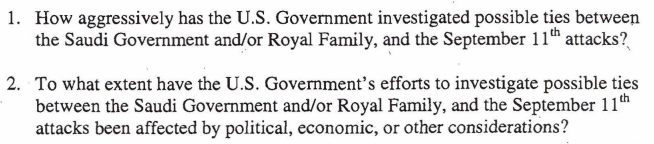
Document 17 Two Questions

They are two questions Lesemann wouldn’t be permitted to answer: Zelikow fired her first. Her termination had an apparent Saudi aspect of its own: Impatient with Zelikow’s neglect of her repeated requests for access to the 28 pages, she circumvented him to gain access on her own. When Zelikow discovered it, he promptly dismissed her.
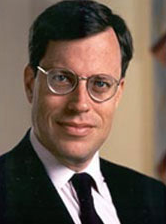
9/11 Executive Director Philip Zelikow
Philip Zelikow

Organizationally set apart from dozens of other questions as among the more important, overarching lines of inquiry for their particular avenue of the commission’s work, the significance of the questions’ presence in Document 17 is amplified by the absence of corresponding answers in the commission’s final report.

At some point—perhaps after Lesemann’s determined interest in Saudi links to 9/11 led to her dismissal—someone apparently determined a public study of those questions was beyond the scope of work.

Zelikow’s appointment over the commission was controversial, given his previous friendship with National Security Advisor Condoleezza Rice and the fact he’d served on the Bush administration’s transition team. That history and, once appointed, his ongoing contacts with Bush political advisor Karl Rove, led some to question whether he was willing or able to achieve the high level of impartiality so essential to his role.

The Bush administration’s lack of cooperation with Saudi-related 9/11 inquiries is well-documented. According to Philip Shenon’s book, The Commission:

(Commission member and former Secretary of the Navy John) Lehman was struck by the determination of the Bush White House to try to hide any evidence of the relationship between the Saudis and al Qaeda. “They were refusing to declassify anything having to do with Saudi Arabia,” Lehman said. “Anything having to do with the Saudis, for some reason, it had this very special sensitivity.” He raised the Saudi issue repeatedly with Andy Card. “I used to go over to see Andy, and I met with Rumsfeld three or four times, mainly to say, ‘What are you guys doing? This stonewalling is so counterproductive.”

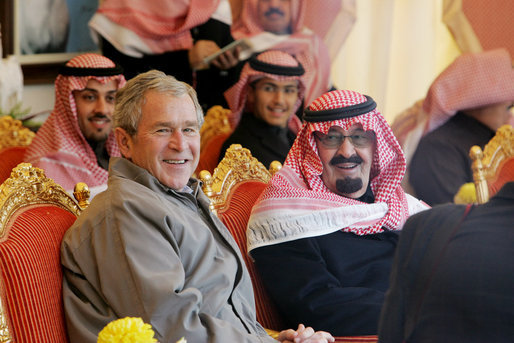
The Bush family has a multi-generational relationship with the Saudi royal family, with ties that are both deeply personal and deeply financial. Prince Bandar bin Sultan was the Saudi ambassador to the United States on 9/11, and is considered a personal friend of George W. Bush.

With many investigatory leads pointing toward the Saudi embassy in Washington, some feel Bandar merits thorough investigation—or that he may even be directly implicated in the 28 pages that Bush controversially redacted.

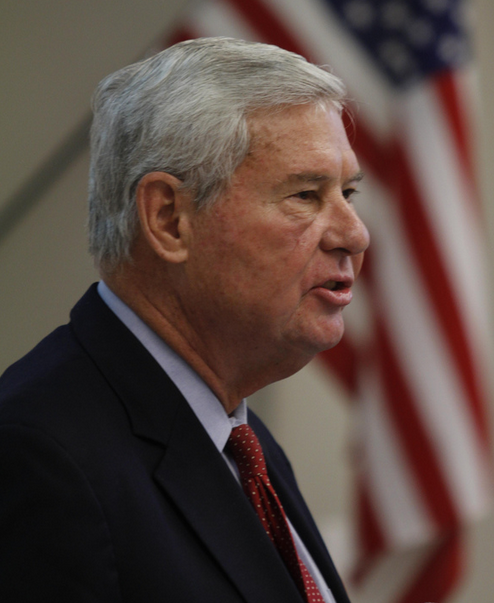
Saturday, appearing on Michael Smerconish’s CNN program to discuss a Saudi threat to divest itself of some $750 billion in U.S. Treasury securities if Congress passes a law clearing a path for 9/11 victims’ lawsuit against the kingdom, former Senator Bob Graham said, “I believe that there is material in the 28 pages and the volume of other documents that would indicate that there was a connection at the highest levels between the Kingdom of Saudi Arabia and the 19 hijackers.”
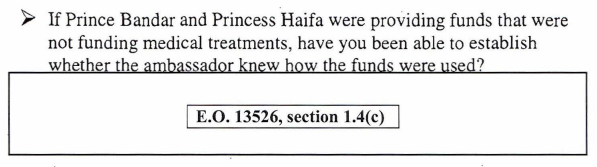
A Redacted Question from Document 17

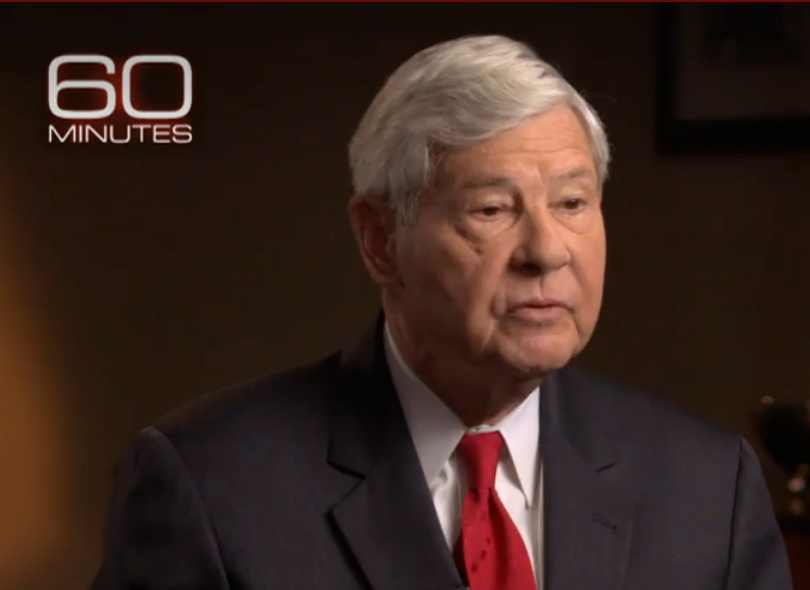
Asked by 60 Minutes if the 28 pages name names, commission member Lehman replied, “Yes. The average intelligent watcher of 60 Minutes would recognize them instantly.”

(If you watched the impactful prime time 60 Minutes segment on the 28 pages that aired last week and don’t remember Lehman’s intriguing statement, it’s because 60 Minutes oddly relegated perhaps their most newsworthy quote of all to this web extra.) There are many more examples of the U.S. government’s thwarting of Saudi-related inquiries, both outside and inside the work of the 9/11 Commission.

A Buried Flight Certificate

The FBI’s 2002 discovery of a U.S. pilot certificate or “flight certificate” inside a Saudi embassy envelope was news to Graham, who co-chaired the joint congressional inquiry that produced the 28 pages. 

Al-Sharbi Excerpt Document 17

“That’s very interesting. That’s a very intriguing and close connection to the Saudi embassy,” said Graham, who has been championing the declassification of the 28 pages and a perhaps hundreds of thousands of pages of other documents since 2003.  

Since people often re-use envelopes and citizens of any country may have legitimate reasons for correspondence with the embassies of their government in foreign countries they live in, the Saudi embassy envelope isn’t by itself conclusive of anything. 28Pages.org couldn’t find any other history of the FBI’s find or of the government’s evaluation of its significance.

GitmoAl-Sharbi is one of 80 remaining detainees at Guantanamo Bay. His public record includes his graduation from Embry-Riddle Aeronautical University, reported association with other al-Qaeda members and alleged attendance at training camps in Afghanistan.

He is also among the individuals identified in FBI agent Kenneth Williams’ July 2001 electronic communication, sometimes called the “Phoenix EC” or “Phoenix Memo.” With it, Williams attempted—unsuccessfully—to alert the rest of the bureau about suspicions that Middle Eastern extremists were attending flight schools with ill intent, and to recommend a nationwide investigation of the phenomenon.

While those aspects of al-Sharbi’s story have been widely discussed, the FBI’s reported discovery of his flight certificate inside a Saudi embassy envelope buried in Pakistan has not.

Additional Excerpts from Document 17

The al-Sharbi paragraph excerpted above is in a section titled, “A Brief Overview of Possible Saudi Government Connections to the September 11th Attacks.” Comprising a list of individuals of interest to the investigators, it begins with names central to the well-reported San Diego cell, including future hijackers Nawaf al-Hazmi and Khalid al-Midhar, purported Saudi government operative Omar al-Bayoumi, Saudi diplomat Fahad al-Thumairy and Osama Bassnan, a former employee at a Saudi mission in Washington, D.C. who received “considerable funding from Prince Bandar and Princess Haifa, supposedly for his wife’s medical treatments.”

Here, we directly excerpt many entries from the list, with an emphasis on those that are more suggestive of a link to the Saudi government. Much of the information is already well-known.

It’s important to note that any given association described in these documents may well be benign, that witness statements aren’t always accurate, and that a previous government assertion of a fact may have already proved or may yet be proved wrong.

Omar Al-Bayoumi: Al-Bayoumi, a Saudi national, provided September 11 hijackers Nawaf al-Hazmi and Khalid al-Mihdhar with considerable assistance after the hijackers arrived in San Diego in February 2000. He helped them locate an apartment, co-signed their lease, and ordered Mohdhar Abdullah (discussed below) to provide them with whatever assistance they needed in acclimating to the United States. The FBI now believes that in January 2000 al-Bayoumi met with Fahad al-Thumairy, a Saudi diplomat and cleric, at the Saudi Consulate in Los Angeles before going to the restaurant where he met the hijackers and engaged them in conversation. Whether or not al-Bayoumi ‘s meeting with the hijackers was accidental or arranged is still the subject of debate. During his conversation with the hijackers, Al-Bayoumi invited them to move to San Diego, which they did shortly thereafter. Al-Bayoumi has extensive ties to the Saudi Government and many in the local Muslim community in San Diego believed that he was a Saudi intelligence officer. The FBI believes it is possible that he was an agent of the Saudi Government and that he may have been reporting on the local community to Saudi Government officials. In addition, during its investigation, the FBI discovered that al-Bayoumi has ties to terrorist elements as well.

Osama Bassnan: Bassnan was a very close associate of al-Bayoumi’s, and was in frequent contact with him while the hijackers were in San Diego. Bassnan, a vocal supporter of Usama Bin Ladin, admitted to an FBI asset that he met al-Hazmi and al-Mihdhar while the hijackers were in San Diego, but denied this in a later conversation. There is some circumstantial evidence that he may have had closer ties to the hijackers, but the FBI has been unable to corroborate this additional reporting. Bassnan received considerable funding from Prince Bandar and Princess Haifa, supposedly for his wife’s medical treatments. According to FBI documents, Bassnan is a former employee of the Saudi Government’s Educational Mission in Washington, D.C.

Fahad Al-Thumairy: Until recently al-Thumairy was an accredited Saudi diplomat and imam at the King Fahad Mosque in Culver City, California. The news media reported that the U.S. Government revoked al-Thumairy’s visa in May 2003 ; the diplomat subsequently returned to Saudi Arabia. The FBI now believes that Omar al-Bayoumi met with al-Thumairy at the Saudi Consulate in Los Angeles before al-Bayoumi went to the restaurant where he met the hijackers. According to witness reporting, al-Hazmi and al-Mihdhar were also taken to the King Fahad Mosque while they were in the United States.

Mohdhar Abdullah: Abdullah was tasked by Omar al-Bayoumi to provide al-Hazmi and al-Mihdhar with whatever assistance they needed while in San Diego. Abdullah, who became one of the hijackers’ closest associates in San Diego, translated for them, helped them open bank accounts, contacted flight schools for the hijackers, and helped them otherwise acclimate to life in the United States.

Osama Nooh and Lafi al-Harbi: Al-Harbi and Nooh are Saudi naval officers who were posted to San Diego while hijackers al-Mihdhar and al-Hazmi were living there. After the September 11th attacks, the FBI determined that al-Hazmi had telephonic contact with both Nooh and al-Harbi while al-Hazmi was in the United States.

Mohammed Quadir-Harunani: Quadir-Harunani has been the subject of an FBI counterterrorism investigation since 1999 and the FBI is currently investigating whether he had contact with the September 11th hijackers. In June 2000 a call was placed from Transcom International, a company owned by Quadir-Harunani, to a number subscribed to by Said Bahaji, one of the key members of the Hamburg cell. Quadir-Harunani is also a close associate of Usama bin Ladin’s half-brother, Abdullah Bin Ladin (discussed below), who was assigned to the Saudi Embassy in Washington, D.C.-E87 2.

Abdullah Bin Ladin: Abdullah bin Ladin (ABL) is reportedly Usama bin Ladin’s half-brother. He is the President and Director of the World Arab Muslim Youth Association (WAMY) and the Institute of Islamic and Arabic Studies in America. Both organizations are local branches of nongovernmental organizations based in Riyadh, Saudi Arabia. According to the FBI, there is reason to believe that WAMY is “closely associated with the funding and financing of international terrorist activities and in the past has provided logistical support to individuals wishing to fight in the Afghan War.” ABL has been assigned to the Saudi Embassy in Washington, D.C. as an administrative officer. He is a close associate of Mohammed Quadir Harunani’s and has provided funding for Transcom International.

Fahad Abdullah Saleh Bakala: According to an FBI document, Bakala was close friends with two of the September 11th hijackers. The document also notes that Bakala has worked as a pilot for the Saudi Royal Family, flying Usama Bin Ladin between Afghanistan and Saudi Arabia during UBL’s exile.

Hamad Alotaibi: Alotaibi was assigned to the Saudi Embassy Military Division in Washington, D.C. According to an eyewitness report, one of the September 11th hijackers may have visited Alotaibi at his residence; another FBI document notes that a second hijacker may have also visited this address.

Hamid Al-Rashid: Al-Rashid is an employee of the Saudi Civil Aviation Authority and was apparently responsible for approving the salary of Omar al-Bayoumi. Hamid al-Rashid is also the father of Saud al-Rashid, whose photo was found in a raid of an al-Qa’ida safehouse in Karachi and who has admitted to being in Afghanistan between May 2000 and May 2001.

Ghassan al-Sharbi: Al-Sharbi is a Saudi student who was taking flight lessons in the Phoenix area before the September 11 attacks and is mentioned in the “Phoenix EC.” The U.S. government captured al-Sharbi in the same location where Abu Zubaida was discovered in early 2002. After Al-Sharbi was captured, the FBI discovered that he had buried a cache of documents nearby, including an envelope from the Saudi embassy in Washington that contained al-Sharbi’s flight certificate.

Saleh Al-Hussayen: According to FBI documents, Saleh Al-Hussayen is a Saudi Interior Ministry employee/official and may also be a prominent Saudi cleric. According to one news article, Saleh Al-Hussayen is the Chief Administrator of the Holy Mosques in Mecca and Medina. An FBI affidavit notes that Saleh Al-Hussayen stayed in the same hotel as three of the hijackers on September 10, 2001. He told the FBI that he did not know the hijackers . The FBI agents interviewing him, however, believed he was being deceptive. The interview was terminated when al-Hussayen either passed out or feigned a seizure and was taken to the hospital; he then departed the country before the FBI could reinterview him. Saleh Al-Hussayen is ‘also the uncle of Sami Al -Hussayen (discussed below).

Mohammed Fakihi: Fakihi is a Saudi diplomat. Until recently he was assigned to the Islamic Affairs Section of the Saudi Embassy in Berlin, Germany. Soon after the September 11th attacks, German authorities searched SECRET 3 SECRET 10 the apartment of Munir Motassadeq, an associate of the hijackers in Hamburg , and found Fakihi’s business card. According to press reports , the Saudis did not respond to German requests for information on Fakihi. More recently, German authorities discovered that Fakihi had contacts with other terrorists; Fakihi was subsequently recalled to Saudi Arabia.

Salah Bedaiwi: Bedaiwi is a Saudi Naval officer who was posted to a U .S. Navy base in Pensacola, Florida. He visited the Middle Eastern Market in Miami, a location frequented by several of the hijackers, and was in contact with at least one of the hijackers’ possible associates. The FBI has been investigating these connections, as well as his ties to other terrorist elements.

Mohammed Al-Qudhaeein and Hamdan Al-Shalawi: Al-Qudhaeein and Al-Shalawi were both Saudi students living in the Phoenix area. Qudhaeein was receiving funding from the Saudi Government during his time in Phoenix. Qudhaeein and Al-Shalawi were involved in a 1999 incident aboard an America West flight that the FBI’s Phoenix Office now believes may have been a “dry run” for the September 11th attacks. Al-Qudhaeein and Al-Shalawi were traveling to Washington, D.C. to attend a party at the Saudi Embassy; the Saudi Embassy paid for their airfare. According to FBI documents, during the flight they engaged in suspicious behavior, including several attempts to gain access to the cockpit. The plane made an emergency landing in Ohio, but no charges were filed against either individual. The FBI subsequently received information in November 2000 that Al-Shalawi had been trained at the terrorist camps in Afghanistan to conduct Khobar Towertype attacks and the FBI has also developed information tying Al-Qudhaeein to terrorist elements as well.

Ali Hafiz Al-Marri and Maha Al-Marri: Ali Al-Marri was indicted for lying to the FBI about his contact with Mustafa Al-Hasawi, one of the September 11th financiers. Ali Al-Marri, who arrived in the United States shortly before the September 11th attacks, attempted to call Al-Hasawi a number of times from the United States. The FBI has recently received reporting that he may also have been an al:.Qa’ida “sleeper agent.” According to FBI documents, Ali Al-Marri has connections to the Saudi Royal Family. The Saudi Government provided financial support to his wife, Maha Al-Marri, after Ali Al-Marri was detained and assisted her in departing the United States before the FBI could interview her.

Brian McGlinchey is the founder and director of 28Pages.org and principal at Liberty Messaging. This analysis was first published on April 18 and was republished April 19 to update the title and URL. Media inquiries.

Brian McGlinchey’s journalism has moved to a Substack newsletter—Stark Realities with Brian McGlinchey: https://starkrealities.substack.com/

EXCLUSIVE: Declassified Doc Shows 9/11 Commission Investigators Wanted to Examine Political, Economic Influence on Saudi-9/11 Inquiries

9/11 Commission Work Plan Reveals FBI Found al Qaeda Member’s U.S. Flight Certificate Inside Envelope of Saudi Embassy in D.C.

Investigators Sought to Examine Possible Political Influence on Examination of Saudi Government, Royal Family Links

By Brian P. McGlinchey 

As President Obama prepares to visit Saudi Arabia on Wednesday, his administration is under increasing pressure to declassify 28 pages that, according to many who’ve read them, illustrate financial links between the Saudi government and the 9/11 hijackers.

Meanwhile, a far lesser-known document from the files of the 9/11 Commission—written by the same principal authors as the 28 pages and declassified last summer without publicity and without media analysis—indicates investigators proposed exploring to what extent “political, economic and other considerations” affected U.S. government investigations of links between Saudi Arabia and 9/11.

Tour of Al Janadriyah RanchDrafted by Dana Lesemann and Michael Jacobson as a set of work plans for their specific parts of the 9/11 Commission investigation, the 47-page document also provides an overview of individuals of most interest to investigators pursuing a Saudi connection to the 2001 attack that killed nearly 3,000 people.

Included in that overview is a previously unpublicized declaration that, after the capture of alleged al-Qaeda operative Ghassan al-Sharbi in Pakistan, the FBI discovered a cache of documents he had buried nearby. Among them: al-Sharbi’s U.S. flight certificate inside an envelope of the Saudi embassy in Washington, D.C.

Declassified in July 2015 under the authority of the Interagency Security Classification Appeals Panel (ISCAP) pursuant to a Mandatory Declassification Review (MDR) appeal, the document is the seventeenth of 29 released under ISCAP appeal 2012-48, which focuses on FBI files related to 9/11. One of two documents in the series identified as “Saudi Notes,” we’ll refer to it as “Document 17.”

Dated June 6, 2003, Document 17 was written by Lesemann and Jacobson in their capacity as staff investigators for the 9/11 Commission, and was addressed to 9/11 Commission Executive Director Philip Zelikow, Deputy Executive Director Chris Kojm and General Counsel Dan Marcus.

Commission Investigators Posed Two Questions That Linger Today

Lesemann and Jacobson had previously worked together on the 2002 joint congressional 9/11 intelligence inquiry and authored the classified, 28-page chapter on foreign government financing of the attacks. Document 17 outlines how the two investigators proposed to extend their earlier research. The plans include many questions Lesemann and Jacobson felt the investigation should answer.

Two of those questions seem strikingly relevant today, as a declassification review of just 28 pages said to implicate Saudi Arabia in the 9/11 attacks has inexplicably taken three times as long as the entire joint inquiry that produced them, and while a growing number of current and former officials who are familiar with the pages emphatically assert there’s no national security risk in their release.

Lesemann and Jacobson, already veterans of investigating 9/11 with the congressional inquiry, asked:

Document 17 Two Questions

They are two questions Lesemann wouldn’t be permitted to answer: Zelikow fired her first. Her termination had an apparent Saudi aspect of its own: Impatient with Zelikow’s neglect of her repeated requests for access to the 28 pages, she circumvented him to gain access on her own. When Zelikow discovered it, he promptly dismissed her.

9/11 Executive Director Philip Zelikow
Philip Zelikow

Organizationally set apart from dozens of other questions as among the more important, overarching lines of inquiry for their particular avenue of the commission’s work, the significance of the questions’ presence in Document 17 is amplified by the absence of corresponding answers in the commission’s final report.

At some point—perhaps after Lesemann’s determined interest in Saudi links to 9/11 led to her dismissal—someone apparently determined a public study of those questions was beyond the scope of work.

Zelikow’s appointment over the commission was controversial, given his previous friendship with National Security Advisor Condoleezza Rice and the fact he’d served on the Bush administration’s transition team. That history and, once appointed, his ongoing contacts with Bush political advisor Karl Rove, led some to question whether he was willing or able to achieve the high level of impartiality so essential to his role.

The Bush administration’s lack of cooperation with Saudi-related 9/11 inquiries is well-documented. According to Philip Shenon’s book, The Commission:

(Commission member and former Secretary of the Navy John) Lehman was struck by the determination of the Bush White House to try to hide any evidence of the relationship between the Saudis and al Qaeda. “They were refusing to declassify anything having to do with Saudi Arabia,” Lehman said. “Anything having to do with the Saudis, for some reason, it had this very special sensitivity.” He raised the Saudi issue repeatedly with Andy Card. “I used to go over to see Andy, and I met with Rumsfeld three or four times, mainly to say, ‘What are you guys doing? This stonewalling is so counterproductive.”

The Bush family has a multi-generational relationship with the Saudi royal family, with ties that are both deeply personal and deeply financial. Prince Bandar bin Sultan was the Saudi ambassador to the United States on 9/11, and is considered a personal friend of George W. Bush.

With many investigatory leads pointing toward the Saudi embassy in Washington, some feel Bandar merits thorough investigation—or that he may even be directly implicated in the 28 pages that Bush controversially redacted.

Saturday, appearing on Michael Smerconish’s CNN program to discuss a Saudi threat to divest itself of some $750 billion in U.S. Treasury securities if Congress passes a law clearing a path for 9/11 victims’ lawsuit against the kingdom, former Senator Bob Graham said, “I believe that there is material in the 28 pages and the volume of other documents that would indicate that there was a connection at the highest levels between the Kingdom of Saudi Arabia and the 19 hijackers.”

A Redacted Question from Document 17

Asked by 60 Minutes if the 28 pages name names, commission member Lehman replied, “Yes. The average intelligent watcher of 60 Minutes would recognize them instantly.”

(If you watched the impactful prime time 60 Minutes segment on the 28 pages that aired last week and don’t remember Lehman’s intriguing statement, it’s because 60 Minutes oddly relegated perhaps their most newsworthy quote of all to this web extra.) There are many more examples of the U.S. government’s thwarting of Saudi-related inquiries, both outside and inside the work of the 9/11 Commission.

A Buried Flight Certificate

The FBI’s 2002 discovery of a U.S. flight certificate inside a Saudi embassy envelope was news to Graham, who co-chaired the joint congressional inquiry that produced the 28 pages. 

Al-Sharbi Excerpt Document 17

“That’s very interesting. That’s a very intriguing and close connection to the Saudi embassy,” said Graham, who has been championing the declassification of the 28 pages and a perhaps hundreds of thousands of pages of other documents since 2003.  

Since people often re-use envelopes and citizens of any country may have legitimate reasons for correspondence with the embassies of their government in foreign countries they live in, the Saudi embassy envelope isn’t by itself conclusive of anything. 28Pages.org couldn’t find any other history of the FBI’s find or of the government’s evaluation of its significance.

GitmoAl-Sharbi is one of 80 remaining detainees at Guantanamo Bay. His public record includes his graduation from Embry-Riddle Aeronautical University, reported association with other al-Qaeda members and alleged attendance at training camps in Afghanistan.

He is also among the individuals identified in FBI agent Kenneth Williams’ July 2001 electronic communication, sometimes called the “Phoenix EC” or “Phoenix Memo.” With it, Williams attempted—unsuccessfully—to alert the rest of the bureau about suspicions that Middle Eastern extremists were attending flight schools with ill intent, and to recommend a nationwide investigation of the phenomenon.

While those aspects of al-Sharbi’s story have been widely discussed, the FBI’s reported discovery of his flight certificate inside a Saudi embassy envelope buried in Pakistan has not.

Additional Excerpts from Document 17

The al-Sharbi paragraph excerpted above is in a section titled, “A Brief Overview of Possible Saudi Government Connections to the September 11th Attacks.” Comprising a list of individuals of interest to the investigators, it begins with names central to the well-reported San Diego cell, including future hijackers Nawaf al-Hazmi and Khalid al-Midhar, purported Saudi government operative Omar al-Bayoumi, Saudi diplomat Fahad al-Thumairy and Osama Bassnan, a former employee at a Saudi mission in Washington, D.C. who received “considerable funding from Prince Bandar and Princess Haifa, supposedly for his wife’s medical treatments.”

Here, we directly excerpt many entries from the list, with an emphasis on those that are more suggestive of a link to the Saudi government. Much of the information is already well-known.

It’s important to note that any given association described in these documents may well be benign, that witness statements aren’t always accurate, and that a previous government assertion of a fact may have already proved or may yet be proved wrong.

Omar Al-Bayoumi: Al-Bayoumi, a Saudi national, provided September 11 hijackers Nawaf al-Hazmi and Khalid al-Mihdhar with considerable assistance after the hijackers arrived in San Diego in February 2000. He helped them locate an apartment, co-signed their lease, and ordered Mohdhar Abdullah (discussed below) to provide them with whatever assistance they needed in acclimating to the United States. The FBI now believes that in January 2000 al-Bayoumi met with Fahad al-Thumairy, a Saudi diplomat and cleric, at the Saudi Consulate in Los Angeles before going to the restaurant where he met the hijackers and engaged them in conversation. Whether or not al-Bayoumi ‘s meeting with the hijackers was accidental or arranged is still the subject of debate. During his conversation with the hijackers, Al-Bayoumi invited them to move to San Diego, which they did shortly thereafter. Al-Bayoumi has extensive ties to the Saudi Government and many in the local Muslim community in San Diego believed that he was a Saudi intelligence officer. The FBI believes it is possible that he was an agent of the Saudi Government and that he may have been reporting on the local community to Saudi Government officials. In addition, during its investigation, the FBI discovered that al-Bayoumi has ties to terrorist elements as well.

Osama Bassnan: Bassnan was a very close associate of al-Bayoumi’s, and was in frequent contact with him while the hijackers were in San Diego. Bassnan, a vocal supporter of Usama Bin Ladin, admitted to an FBI asset that he met al-Hazmi and al-Mihdhar while the hijackers were in San Diego, but denied this in a later conversation. There is some circumstantial evidence that he may have had closer ties to the hijackers, but the FBI has been unable to corroborate this additional reporting. Bassnan received considerable funding from Prince Bandar and Princess Haifa, supposedly for his wife’s medical treatments. According to FBI documents, Bassnan is a former employee of the Saudi Government’s Educational Mission in Washington, D.C.

Fahad Al-Thumairy: Until recently al-Thumairy was an accredited Saudi diplomat and imam at the King Fahad Mosque in Culver City, California. The news media reported that the U.S. Government revoked al-Thumairy’s visa in May 2003 ; the diplomat subsequently returned to Saudi Arabia. The FBI now believes that Omar al-Bayoumi met with al-Thumairy at the Saudi Consulate in Los Angeles before al-Bayoumi went to the restaurant where he met the hijackers. According to witness reporting, al-Hazmi and al-Mihdhar were also taken to the King Fahad Mosque while they were in the United States.

Mohdhar Abdullah: Abdullah was tasked by Omar al-Bayoumi to provide al-Hazmi and al-Mihdhar with whatever assistance they needed while in San Diego. Abdullah, who became one of the hijackers’ closest associates in San Diego, translated for them, helped them open bank accounts, contacted flight schools for the hijackers, and helped them otherwise acclimate to life in the United States.

Osama Nooh and Lafi al-Harbi: Al-Harbi and Nooh are Saudi naval officers who were posted to San Diego while hijackers al-Mihdhar and al-Hazmi were living there. After the September 11th attacks, the FBI determined that al-Hazmi had telephonic contact with both Nooh and al-Harbi while al-Hazmi was in the United States.

Mohammed Quadir-Harunani: Quadir-Harunani has been the subject of an FBI counterterrorism investigation since 1999 and the FBI is currently investigating whether he had contact with the September 11th hijackers. In June 2000 a call was placed from Transcom International, a company owned by Quadir-Harunani, to a number subscribed to by Said Bahaji, one of the key members of the Hamburg cell. Quadir-Harunani is also a close associate of Usama bin Ladin’s half-brother, Abdullah Bin Ladin (discussed below), who was assigned to the Saudi Embassy in Washington, D.C.-E87 2.

Abdullah Bin Ladin: Abdullah bin Ladin (ABL) is reportedly Usama bin Ladin’s half-brother. He is the President and Director of the World Arab Muslim Youth Association (WAMY) and the Institute of Islamic and Arabic Studies in America. Both organizations are local branches of nongovernmental organizations based in Riyadh, Saudi Arabia. According to the FBI, there is reason to believe that WAMY is “closely associated with the funding and financing of international terrorist activities and in the past has provided logistical support to individuals wishing to fight in the Afghan War.” ABL has been assigned to the Saudi Embassy in Washington, D.C. as an administrative officer. He is a close associate of Mohammed Quadir Harunani’s and has provided funding for Transcom International.

Fahad Abdullah Saleh Bakala: According to an FBI document, Bakala was close friends with two of the September 11th hijackers. The document also notes that Bakala has worked as a pilot for the Saudi Royal Family, flying Usama Bin Ladin between Afghanistan and Saudi Arabia during UBL’s exile.

Hamad Alotaibi: Alotaibi was assigned to the Saudi Embassy Military Division in Washington, D.C. According to an eyewitness report, one of the September 11th hijackers may have visited Alotaibi at his residence; another FBI document notes that a second hijacker may have also visited this address.

Hamid Al-Rashid: Al-Rashid is an employee of the Saudi Civil Aviation Authority and was apparently responsible for approving the salary of Omar al-Bayoumi. Hamid al-Rashid is also the father of Saud al-Rashid, whose photo was found in a raid of an al-Qa’ida safehouse in Karachi and who has admitted to being in Afghanistan between May 2000 and May 2001.

Ghassan al-Sharbi: Al-Sharbi is a Saudi student who was taking flight lessons in the Phoenix area before the September 11 attacks and is mentioned in the “Phoenix EC.” The U.S. government captured al-Sharbi in the same location where Abu Zubaida was discovered in early 2002. After Al-Sharbi was captured, the FBI discovered that he had buried a cache of documents nearby, including an envelope from the Saudi embassy in Washington that contained al-Sharbi’s flight certificate.

Saleh Al-Hussayen: According to FBI documents, Saleh Al-Hussayen is a Saudi Interior Ministry employee/official and may also be a prominent Saudi cleric. According to one news article, Saleh Al-Hussayen is the Chief Administrator of the Holy Mosques in Mecca and Medina. An FBI affidavit notes that Saleh Al-Hussayen stayed in the same hotel as three of the hijackers on September 10, 2001. He told the FBI that he did not know the hijackers . The FBI agents interviewing him, however, believed he was being deceptive. The interview was terminated when al-Hussayen either passed out or feigned a seizure and was taken to the hospital; he then departed the country before the FBI could reinterview him. Saleh Al-Hussayen is ‘also the uncle of Sami Al -Hussayen (discussed below).

Mohammed Fakihi: Fakihi is a Saudi diplomat. Until recently he was assigned to the Islamic Affairs Section of the Saudi Embassy in Berlin, Germany. Soon after the September 11th attacks, German authorities searched SECRET 3 SECRET 10 the apartment of Munir Motassadeq, an associate of the hijackers in Hamburg , and found Fakihi’s business card. According to press reports , the Saudis did not respond to German requests for information on Fakihi. More recently, German authorities discovered that Fakihi had contacts with other terrorists; Fakihi was subsequently recalled to Saudi Arabia.

Salah Bedaiwi: Bedaiwi is a Saudi Naval officer who was posted to a U .S. Navy base in Pensacola, Florida. He visited the Middle Eastern Market in Miami, a location frequented by several of the hijackers, and was in contact with at least one of the hijackers’ possible associates. The FBI has been investigating these connections, as well as his ties to other terrorist elements.

Mohammed Al-Qudhaeein and Hamdan Al-Shalawi: Al-Qudhaeein and Al-Shalawi were both Saudi students living in the Phoenix area. Qudhaeein was receiving funding from the Saudi Government during his time in Phoenix. Qudhaeein and Al-Shalawi were involved in a 1999 incident aboard an America West flight that the FBI’s Phoenix Office now believes may have been a “dry run” for the September 11th attacks. Al-Qudhaeein and Al-Shalawi were traveling to Washington, D.C. to attend a party at the Saudi Embassy; the Saudi Embassy paid for their airfare. According to FBI documents, during the flight they engaged in suspicious behavior, including several attempts to gain access to the cockpit. The plane made an emergency landing in Ohio, but no charges were filed against either individual. The FBI subsequently received information in November 2000 that Al-Shalawi had been trained at the terrorist camps in Afghanistan to conduct Khobar Towertype attacks and the FBI has also developed information tying Al-Qudhaeein to terrorist elements as well.

Ali Hafiz Al-Marri and Maha Al-Marri: Ali Al-Marri was indicted for lying to the FBI about his contact with Mustafa Al-Hasawi, one of the September 11th financiers. Ali Al-Marri, who arrived in the United States shortly before the September 11th attacks, attempted to call Al-Hasawi a number of times from the United States. The FBI has recently received reporting that he may also have been an al:.Qa’ida “sleeper agent.” According to FBI documents, Ali Al-Marri has connections to the Saudi Royal Family. The Saudi Government provided financial support to his wife, Maha Al-Marri, after Ali Al-Marri was detained and assisted her in departing the United States before the FBI could interview her.

Brian McGlinchey’s journalism has moved to a Substack newsletter—Stark Realities with Brian McGlinchey: https://starkrealities.substack.com/

9/11 Bill Prompts Saudi Threat to Sell Off U.S. Treasury Debt

Saudi Arabia has warned the Obama administration and federal legislators that it will sell off U.S. Treasury debt worth $750 billion if Congress passes a law clearing the way for 9/11 victims to sue the kingdom for its alleged role in aiding the hijackers. according to a story in today’s New York Times.

Screen Shot 2016-04-16 at 2.36.10 PMAppearing on Michael Smerconish’s CNN program Saturday morning, former Senator Bob Graham, a leading advocate of declassifying 28 pages that allegedly implicate Saudi Arabia in the attacks, said, “I’m outraged but not surprised.”

According to the Times report, the kingdom’s caution was personally delivered last month by Saudi foreign minister Adel al-Jubeir, who reportedly told legislators that, if the bill passes, Saudi Arabia would sell up to $750 billion in Treasury debt before it could be potentially frozen by U.S. courts.

Threat Sparked by Justice Against Sponsors of Terrorism Act

Though presented as a necessity for Saudi Arabia’s own financial protection, Saudi Arabia’s cautionary statement is a de facto economic threat against the United States. A sell-off may prompt an increase in U.S. Treasury interest rates, raising borrowing costs for the American government, businesses and consumers.

The Saudi warning was triggered by the legislative progress of the Justice Against Sponsors of Terrorism Act (JASTA), which would amend the Foreign Sovereign Immunities Act (FSIA). Last fall, Saudi Arabia was dropped from a lawsuit filed by 9/11 families, victims and insurers after a federal judge said the plaintiffs had failed to meet the high jurisdictional hurdles that FSIA imposes for claims against foreign governments.

NYT TAccording to the New York Times report, the Obama administration has aggressively lobbied lawmakers against passing JASTA, telling them it could trigger moves by other countries to undermine immunity enjoyed by the U.S. government and American businesses and individuals abroad.

September 11 widow Terry Strada, who has spent years lobbying for JASTA, told Smerconish, “I’m shocked with what’s going on here. Do the Saudis really have that much influence on our government? Are they really calling the shots in Washington, D.C.?”

Graham: Saudis Operate with “Sense of Impunity”

Graham said that failing to hold Saudi Arabia to account for its “complicity in the murder of 3,000 Americans” gave the kingdom “a sense of impunity that they can do anything they wanted to with no sanction, and now that impunity has expanded to their trying to lobby the highest levels of the White House and the Congress” to prevent a courtroom determination of Saudi Arabia’s guilt.

“I believe that there is material in the 28 pages and the volume of other documents that would indicate that there was a connection at the highest levels between the Kingdom of Saudi Arabia and the 19 hijackers. I believe that the plot would not have occurred but for the support and protection that the hijackers were receiving primarily from Saudi Arabia,” said Graham.

Graham’s reference to the “highest levels” of the Saudi government is reminiscent of a statement former Navy secretary and 9/11 Commission member John Lehman made to 60 Minutes on Sunday. Asked if the 28 classified pages names names, he replied, “Yes. The average intelligent watcher of 60 Minutes would recognize them instantly.”

Smerconish asked Graham about the kingdom’s 2003 request to the Bush administration to release the 28 pages. “I think what the Saudis had was an understanding with the United States that whatever the Saudis indicated they wanted was a sham,” said Graham, adding that Saudi Arabia likely relied on a quiet commitment by the U.S. government to keep the pages classified, freeing the kingdom to make the request solely for public consumption.

Take Action: Demand Hearings on HRes 14 and S.1471

Follow us on Facebook and Twitter

On 60 Minutes, A Compelling Case for Releasing 28 Pages on 9/11

Former Sen. Bob Graham

The movement to declassify 28 pages on foreign government ties to 9/11 received its highest-profile exposure to date tonight, as 60 Minutes aired a report that featured insights from several former officials who are familiar with what the 28 pages contain—and believe the information should be public.

Even before it aired, Steve Kroft’s report had already had an impact: This afternoon, House Democratic Leader Nancy Pelosi released a statement reviving her long-dormant stance that the pages should be declassified.

The 28 pages are an entire chapter in the 838-page report of a joint House-Senate intelligence inquiry into 9/11 conducted in 2002. They were redacted by the George W. Bush administration over the objection of many who served on the inquiry, and of 46 senators who signed a 2003 letter to Bush demanding the release of the pages to the public. Among the signatories: future Secretaries of State Hillary Clinton and John Kerry and future Vice President Joe Biden.

“Substantial” Saudi Support for 9/11 Terrorists

While none of the individuals Kroft spoke to disclosed any specifics about their contents, former Senator Bob Graham, who co-chaired the inquiry, told Kroft he believes Saudi Arabia “substantially” supported the 19 hijackers. Asked if that support came from the government, wealthy individuals or charities, Graham said, “All of the above.”

Kroft elicited a particularly intriguing statement that, surprisingly, wasn’t included in the prime time segment, but can be found in an online “60 Minutes Overtime” segment. Asked if the 28 pages include specific names, former Secretary of the Navy John Lehman said, “Yes. The average intelligent watcher of 60 Minutes would recognize them instantly.”

Perhaps the strongest unclassified indication of Saudi support of the 9/11 hijackers was found in San Diego, where future 9/11 hijackers Nawaf al-Hazmi and Khalid al-Midhar received cash, assistance with lodging and other help from Omar al-Bayoumi, who is widely believed to have been an operative for the Kingdom.

Secure U.S. Capitol Facility That Houses the 28 Pages

Though they weren’t covered in the 60 Minutes segment, there are unanswered questions—and more government resistance to transparency—concerning an FBI investigation of a wealthy Saudi family that appeared to have multiple contacts with future 9/11 hijackers including Mohammed Atta from their home in Sarasota. The family abandoned the residence in haste just days before the attacks.

Investigative journalists have filed a Freedom of Information Act lawsuit to obtain the FBI’s records of its investigation of the Sarasota Saudis. The FBI initially said it had no files on it; a federal judge is now reviewing more than 80,000 pages the FBI ultimately produced.

Along with the secrecy of the 28 pages, the reluctance of the government to share the Florida files is part of what Graham previously called “a pervasive pattern of covering up the role of Saudi Arabia in 9/11, by all of the agencies of the federal government which have access to information that might illuminate Saudi Arabia’s role in 9/11.”

Roemer TenetProponents of the release of the 28 pages ostensibly have a surprising ally: Saudi Arabia itself. As former Congressman and 9/11 Commission member Tim Roemer told Kroft, “Look, the Saudis have even said they’re for declassifying it.”

While it’s true that Saudi Arabia, in the summer of 2003, formally requested that the Bush administration declassify the 28 pages, the public plea may have been offered with confidence—or perhaps even an assurance—that the White House would deny it. In 2014, Congressman Stephen Lynch told MNSBC’s Chris Hayes, “I think there might be some duplicity on the part of the Saudis in terms of them desiring this to be disclosed.”

Protecting Saudi Arabia…At What Cost?

Though Bush attributed the classification of the 28 pages to a need to protect intelligence “sources and methods,” Lehman forcefully refuted the idea that the secrecy is justified.

Referring to himself and other former officials who’ve read the 28 pages and favor their release, Lehman said, “We’re not a bunch of rubes that rode into Washington for this commission….we’ve seen fire and we’ve seen rain and the politics of national security. We all have dealt for our careers in highly classified and compartmentalized in every aspect of security. We know when something shouldn’t be declassified….those 28 pages in no way fall into that category.”

In his report, Kroft said, “Graham and others believe the Saudi role has been soft-pedaled to protect a delicate relationship with a complicated kindgom where the rulers, royalty, riches and religion are deeply intertwined in its institutions.”

There was no mention of a more specific interest Bush may have been protecting when he redacted the pages: His family’s close, multi-generational ties to the Saudi royals, ties that are deeply personal and financial. Likewise missing was commentary on the apparent double-standard applied as the U.S. government identified friend and foe in the nascent “war on terror.”

Graham has previously asserted that, by covering up Saudi ties to the worst terror attack on U.S. soil, the Bush and Obama administrations have only encouraged their continued sponsorship of extremism and proliferation of the ultra-conservative form of Islam called Wahhabism.

Saudi FlagClassified State Department documents published on Wikileaks acknowledge Saudi support for extremism enduring well beyond 2001. “Saudi Arabia remains a critical financial support base for al-Qaida, the Taliban, LeT and other terrorist groups,” declared then-Secretary of State Clinton in a 2009 cable. “Donors in Saudi Arabia constitute the most significant source of funding to Sunni terrorist groups worldwide.”

Kroft also spoke with Jim Kreindler and Sean Carter, attorneys representing families of 9/11 victims suing the Kingdom of Saudi Arabia for its alleged financial and logistical support of the 9/11 hijackers. In September, a federal judge dropped Saudi Arabia from that suit for lack of evidence.

Though that decision is being appealed, the case underscores why the press to release of the 28 pages isn’t a mere exercise in updating the history of that pivotal event.

“It’s been difficult for us because, for many years, we weren’t getting the kind of openness and cooperation that we think our government owes to the American people, particularly the families of people who were murdered,” said Kreindler.

In proclaiming its innocence, the Saudi government has routinely pointed to a sentence from the report of the 9/11 Commission: “We have found no evidence that the Saudi government as an institution or senior Saudi officials individually funded the organization.”

Carter said the sentence was written with a precision that deliberately narrowed its meaning: “They conspicuously leave open the potential that they found evidence that people who were officials that they did not regard as official had done so.”

The 9/11 Commission’s Lehman agreed: “It’s not an exoneration.”

Lehman’s fellow commission member and former Senator Bob Kerrey told Kroft the 9/11 Commission wasn’t able to fully examine the leads found in the 28 pages. “We didn’t have the time, we didn’t have the resoures. We certainly didn’t pursue the entire line of inquiry in regard to Saudi Arabia.”

President Obama to Visit Saudi Arabia Next Week

The publicity around the 28 pages and allegations that a country often described as a U.S. ally aided and abetted the 9/11 hijackers comes at particularly sensitive time: President Obama will visit the kingdom on April 21.

Ronald Breitweiser: Killed on 9/11
Ron Breitweiser

The close U.S.-Saudi relationship sparks anger in many of those who lost loved ones on September 11, among them, Kristen Breitweiser, whose husband, Ron, worked in the World Trade Center.

Anticipating the president’s upcoming trip, Breitweiser wrote, “I only wish I could adequately relay the disgust I have in my heart when I anticipate having to see my president smiling, laughing, and joking with his ‘special Saudi friends’ — the very same people who I believe underwrote the murder of my husband and nearly 3,000 others.”

REDACTED w911

Get involved: Call or write to Congress today

Stay informed: Follow 28Pages.org on Facebook and Twitter

60 Minutes to Report on 28 Pages Said to Link 9/11, Saudi Arabia

60-minutesThe drive to declassify 28 pages from a congressional intelligence inquiry that detail specific indications of foreign government support of the 9/11 hijackers is about to be put under a powerful spotlight, as 60 Minutes will air a segment on the topic this Sunday, April 10 at 7 pm ET/PT.

According to the CBS News preview of the story, Steve Kroft interviewed former senator Bob Graham, former congressman and CIA director Porter Goss, former 9/11 Commission members Bob Kerrey and John Lehman, lawyers representing 9/11 family members suing Saudi Arabia and former congressman Tim Roemer, who served on both the inquiry that produced the 28 pages and the 9/11 Commission that followed that inquiry.

Report to Air on Eve of Obama Visit to Saudi Arabia

The high-profile 60 Minutes segment—which is positioned for high viewership as it follows coverage of the Masters Tournament—comes at a particularly sensitive time for the White House, as the president will visit Saudi Arabia on April 21. 9/11 family members say that, in 2009 and 2011, Obama assured them he would declassify the 28 pages, yet that promise has gone unfulfilled.

Former Senator Bob Graham

Graham, who co-chaired the inquiry that wrote the 28 pages, has said, “The 28 pages primarily relate to who financed 9/11 and they point a very strong finger at Saudi Arabia as being the principal financier.” He has also said that, by shielding Saudi Arabia from scrutiny of its sponsorship of Sunni extremism, the continued classification has encouraged their continued sponsorship and paved the way for the rise of ISIS.

Congressman Thomas Massie described the experience of reading the pages as “shocking” and said, “I had to stop every couple pages and…try to rearrange my understanding of history. It challenges you to rethink everything.”

Congressmen Walter Jones, Stephen Lynch and Massie are leading an effort in the U.S. House of Representatives to declassify the 28 pages: Their House Resolution 14, which urges the president to declassify the material, has 41 cosponsors. A similar measure, Senate Bill 1471, was introduced by Senators Rand Paul and Ron Wyden and cosponsored by Kirsten Gillibrand.

Review of 28 Pages Nears Its Third Year

In response to heightened media attention to the 28 pages in September 2014, the White House said the president, earlier that summer, tasked Director of National Intelligence James Clapper with conducting an intelligence community review of the 28 pages for potential declassification.

Inexplicably, and with essentially no follow-up by national media to date, that review of just 28 pages has already taken far longer than the entire, unprecedented congressional inquiry that produced them. As we reported here last summer, in just six months the 2002 inquiry:

  • Reviewed nearly a half million pages of documents from intelligence agencies and other sources
  • Conducted roughly 300 interviews
  • Participated in briefings and panel discussions involving about 600 people from the intelligence community, other government departments, state and local entities, foreign government representatives and other individuals
  • Held 13 closed-door sessions and nine public hearings
  • Dueled with intelligence agencies and the White House over many aspects of the inquiry’s undertaking, including requests for information and the format of the final report
  • Wrote, edited and revised an 838-page report on the inquiry’s findings

A separate evaluation, under a process called Mandatory Declassification Review, was initiated in 2014 by an attorney representing investigative journalists Dan Christensen, Anthony Summers and Robbyn Swan. Like the review requested by the president, it is still pending as the Obama administration nears its final months.

REDACTED w911Build a big audience for the 60 Minutes segment: Share this story on social media

Follow 28Pages.org on Facebook and Twitter