9/11 Commission Leaders Circle Wagons Around Their Legacy

By Brian P. McGlinchey
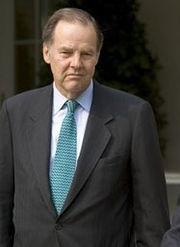
Tom Kean
9/11 Commission Co-Chair Tom Kean

With the campaign to declassify 28 pages from a congressional inquiry moving ever closer to its goal, the chairmen and executive director of the 9/11 Commission are doing their best to discount the significance of the pages, which are said to illustrate damning ties between Saudi Arabia and 9/11.

In interviews, a formal statement and an op-ed piece, the three have cast doubt on the contents of the final, 28-page chapter of a 2002 congressional report.

Their aspersions can be reduced to two propositions:

  • Comparable to “preliminary police notes,” the 28 pages are a collection of “raw, unvetted material,” and were rendered obsolete after the 9/11 Commission fully investigated those and other leads and issued its own final conclusions.
  • Releasing the 28 pages in full could cast a shadow of guilt on individuals who, via the 9/11 Commission’s investigation, were later deemed innocent.

As citizens and journalists weigh the commentary of commission chairmen Tom Kean and Lee Hamilton and executive director Philip Zelikow, they should consider the possibility that members of the Saudi royal family aren’t the only ones whose reputations may be harmed by the release of the pages: To the extent that the release of the 28 pages undermines the conclusions of the 9/11 Commission, Kean, Hamilton and Zelikow may have an interest in minimizing their significance. 

Before we proceed, note the 28 pages are not in the 9/11 Commission Report—they’re in the report of a joint congressional intelligence inquiry that preceded the commission.

Conflicting Justifications for Secrecy

There’s a glaring disconnect between the rationale for the redaction of the 28 pages advanced by Zelikow, Kean and Hamilton and the one offered by President George W. Bush when he classified them. While the three commission leaders argue that secrecy was warranted because the material was unvetted and hence unreliable, Bush said classification was necessary to protect intelligence “sources and methods.”

Republican Porter Goss, who co-chaired the joint inquiry and supports the release of the pages, likewise struck national security chords in 2003 as he tried to put the best face on Bush’s decision, saying nothing to question the reliability of the information that was concealed.

Speaking broadly of the need to keep some information in the 838-page report secret, Goss said, “You have to remember we are at war and there are some actionable items still being pursued by the appropriate authorities.” Then, apparently referring to the 28 pages, he said, “You’ll find there’s a couple of blank pages…as soon as the actions that are necessary to deal with those issues are completed, those pages will be filled out.” Not revised, corrected or repudiated after vetting. “Filled out” after action is taken.
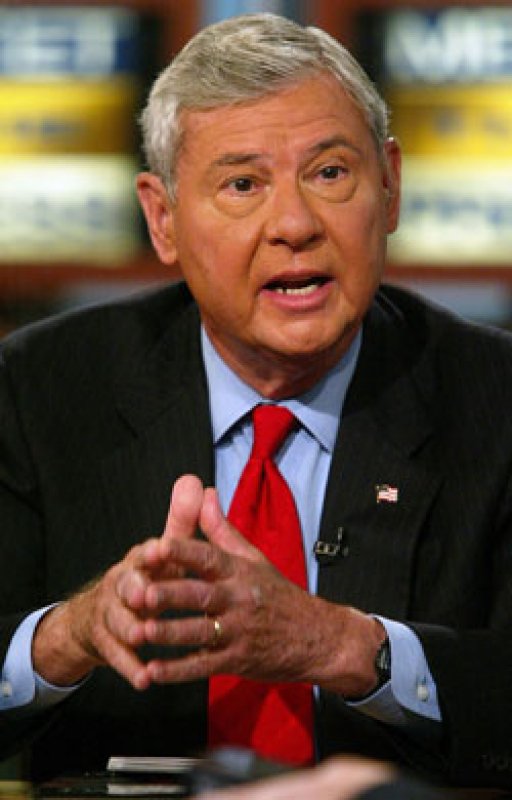
Former Sen. Bob Graham
Bob Graham

On Sunday’s Meet the Press, former Senator Bob Graham, who co-chaired the joint inquiry, flatly refuted the idea that the 28 pages are raw, unvetted material.

Asked if it’s correct to compare the 28 pages to leads in an initial police report, Graham replied, “No. This report was 850 pages. This is 28 pages out of that. There’s been no questions raised about the professionalism and quality of the other 820 pages of that report and this chapter followed the same standards that they did.”

Serious Doubts About Thoroughness of Commission

In their Friday statement, Kean and Hamilton remind us that the commission—as controversially stated on page 171 of its report—“found no evidence that the Saudi government as an institution or senior Saudi officials individually funded” al Qaeda.

That assertion raises a question that goes to the heart of the 28 pages controversy, a question that could threaten the reputations of Kean, Hamilton and Zelikow: Just how thoroughly did the 9/11 Commission pursue leads both inside and outside the 28 pages that point toward Riyadh?  
Philip Zelikow
Philip Zelikow

Though it may come as a surprise to journalists who are reporting the trio’s criticism of the 28 pages without scrutinizing much less acknowledging their potential conflicts of interest, there are many reasons to doubt that the probe of Saudi links was pursued with the vigor that 9/11 victims and the American people deserved.

That doubt specifically springs from Hamilton and Kean’s lack of investigative assertiveness in the face of Bush administration obstructionism, and the manner in which executive director Zelikow ran the inquiry.

  • Commission member and former senator Bob Kerrey, in a statement submitted in the 9/11 victims’ suit against Saudi Arabia, said “evidence relating to the plausible involvement of possible Saudi government agents in the September 11th attacks has never been fully pursued.”
  • As Philip Shenon recounted in The Commission, 9/11 commission member and former Navy secretary John Lehman “was struck by the determination of the Bush White House to try to hide any evidence of the relationship between the Saudis and al-Qaeda. ‘They were refusing to declassify anything having to do with Saudi Arabia,’ Lehman said. ‘Anything having to do with the Saudis, for some reason, it had this very special sensitivity.'”
  • Kean and Hamilton, against advice from commission member and former deputy attorney general Jamie Gorelick, ruled out the routine use of subpoenas to compel full cooperation by various parts of the government, including the White House.
  • Bush had a close personal relationship with Prince Bandar bin Sultan, the Saudi ambassador to the United States. Investigators learned Bandar’s wife wrote checks worth tens of thousands of dollars that eventually found their way to the wife of Omar al-Bayoumi, who is widely suspected of being a Saudi government operative. Bayoumi helped two future 9/11 hijackers find lodging and provided ongoing assistance to them. (With an admitted air of speculation, note that Lehman told 60 Minutes the 28 pages not only named names, but that “the average intelligent viewer of 60 Minutes would recognize them instantly.”)
  • The commission bent to the White House’s controversial demands that Bush and Vice President Dick Cheney only be interviewed by a limited number of commission members, in private at the White House, with no recording or transcription of the conversation. Kean and Hamilton also conceded to the extraordinary White House stipulation that Bush and Cheney were to be interviewed simultaneously, as a team.
  • Commission member Slade Gorton said the questioners, apparently mesmerized by the Oval Office environment, went easy on Bush and Cheney: “Several of my colleagues were not nearly as tough in the White House as they were when they went in.” Lehman asked Bush about the money transfers from Bandar’s wife to the wife of the alleged hijacker-handler in San Diego. “He dodged the questions,” said Lehman.
  • Zelikow had close ties to the Bush administration: He co-authored a book with Condoleezza Rice, worked on the transition team and commission staffers were alarmed to learn, against policy, he had ongoing contacts with Bush political advisor Karl Rove during the investigation. The first public witness Zelikow called was an individual with no special expertise on 9/11 who used the opportunity to endorse the U.S. invasion of Iraq that had commenced the week before.
  • Mike Jacobson and Dana Lesemann wrote the 28 pages for the congressional inquiry and also worked for the commission. When they set out to further their investigation of Saudi links, they compiled a list of 20 individuals they wanted to interview. Zelikow declared 20 was too many, and directed them to pick just 10, going against basic investigative principles that suggest casting as wide an initial net as possible.
  • After repeatedly asking Zelikow for access to the 28 pages without effect, Lesemann, fed up, went around him to gain access on her own; when Zelikow found out, he fired her.
  • With the commission’s final report nearly complete, Jacobsen was alarmed by a midnight call tipping him off that Zelikow and commission investigator Dieter Snell were rewriting findings that dealt with Saudi Arabia. As Shenon wrote, they removed “virtually all of the most serious allegations against the Saudis” and shifted important information into the footnotes. Members of the investigative team felt the excessive standard of proof demanded by Snell would effectively exonerate the guilty.
  • Rep. Walter Jones read the 28 pages and is championing their release. Asked last week if the government derailed the investigation to protect Bandar and other VIPs, Jones said, “Things that should have been done at the time were not done. I’m trying to give you an answer without being too explicit.”

New Indications of Political Influence on Saudi Investigation

Last week, 28Pages.org broke news by drawing to public notice a recently declassified 9/11 Commission document. While its revelation of a mysterious Saudi embassy envelope made headlines around the world, another revelation has thus far flown largely under the media radar: Jacobson and Lesemann, at the outset of their commission work, questioned the aggressiveness of the investigation of links between the 9/11 attacks and the Saudi Arabia, and wanted to probe the extent to which “political, economic and other influences” had affected that line of inquiry.
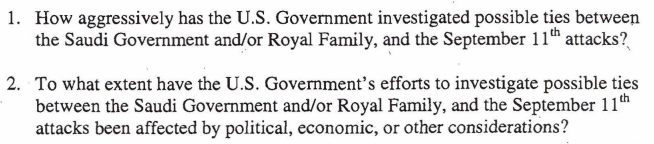
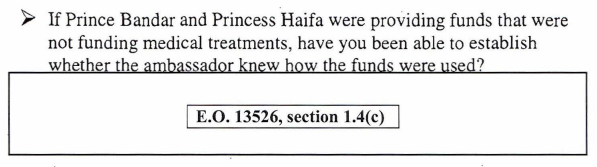
Document 17 Two Questions

As we wrote last week:

Organizationally set apart from dozens of other questions as among the more important, overarching lines of inquiry for their particular avenue of the commission’s work, the significance of the questions’ presence in Document 17 is amplified by the absence of corresponding answers in the commission’s final report.

At some point—perhaps after Lesemann’s determined interest in Saudi links to 9/11 led to her dismissal—someone apparently determined a public study of those critical questions was beyond the scope of work.

Between facts old and new, there seems ample reason to place an asterisk after the 9/11 Commission’s declaration that it found no links between the Saudi government and the al Qaeda hijackers. With an eye on the commission’s dubious investigatory approach and stark indications of political influence and White House obstruction, informed citizens and journalists want to know: Just how hard did the commission really look?

As Kean, Hamilton and Zelikow continue their campaign against the credibility of the 28 pages, the world awaits the journalist who will ask them that.

Our gratitude to 9/11 justice advocate Jon Gold for his collections of many facts cited above

Call the White House Today: Demand Full Declassification of the 28 Pages

Follow us on Facebook and Twitter

28Pages.org Exclusive: A Buried Envelope and Buried Questions: Your First Look Inside Declassified Document 17

As Clapper Stalls on 28 Pages, New Poll Shows Americans Want Complete 9/11 Disclosure

Screen Shot 2016-04-25 at 5.01.06 PMAmid surging public interest in 28 classified pages said to link Saudi Arabia to 9/11, a new Rasmussen Reports poll finds 74% of Americans want the U.S. government to release everything it knows about the attacks, other than information that would imperil national security.

Only a quarter of Americans believe they know the full truth about the September 11 attacks, and most Americans are cynical about the government’s motives for keeping some details under wraps: Among those who think the government hasn’t shared all it knows, 38% think it was withheld for political reasons and 29% say the secrecy is intended to protect allies. Just 21% think the lack of disclosure is meant to protect the country’s security.

Clapper: June Deadline for Review “Realistic”

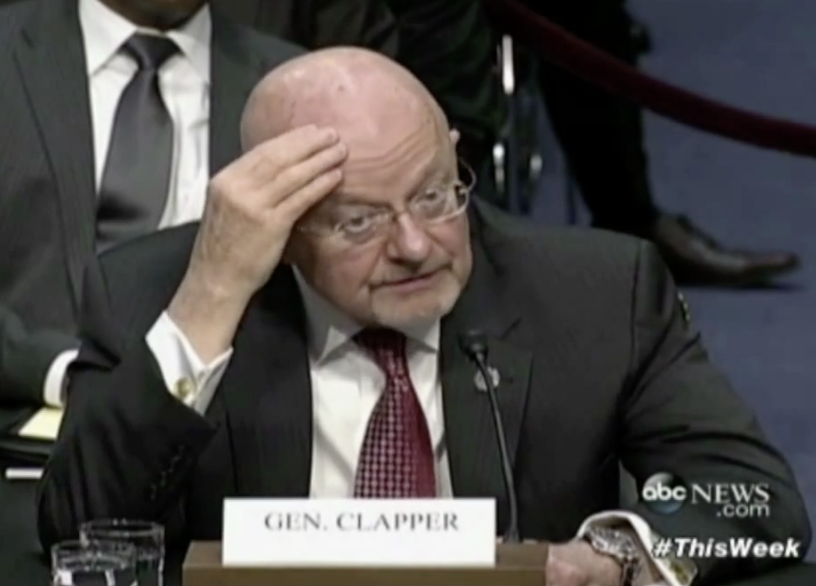
Meanwhile, the country’s principal custodian of secrets, Director of National Intelligence James Clapper, today told reporters he thinks it’s a “realistic goal” for the intelligence community to complete its declassification review of the 28 pages by June.  “We are in the position of trying to coordinate an interagency position on the declassification of the 28 pages,” said Clapper.

Clapper PerjuryWhile apparently intending to cultivate patience among the growing number of Americans who want the 28 pages released, Clapper, perhaps not wittingly, may have only further tested it.

Sharon Premoli, who was on the 80th floor of the World Trade Center’s north tower on September 11 and endured a harrowing escape to safety, places little credence in the notion that the intelligence community has actually been dutifully engaged in a review of the 28 pages since the summer of 2014.

Pointing to the review’s exceedingly narrow scope, Premoli told 28Pages.org, “What would take any person with average reading skills just a half hour to read has taken the intelligence community almost two full years.”

Premoli is wary of remarks by government officials that seem to imply a long-awaited declassification of the 28 pages may still keep some information out of public view. Referring to the intelligence community review, deputy national security adviser Ben Rhodes last week told reporters, “When that’s done, we’d expect that there will be some degree of declassification that provides more information.”

“Anything less than the full 28 pages is unacceptable,” said Premoli.

Some opponents of the declassification campaign say certain information in the pages may cast an undeserved shadow of guilt on people who were subsequently determined innocent. For Premoli, the remedy to such a situation is simple: In addition to the full 28 pages, the government should release associated documents that led to that determination. She concluded, “If they’re innocent, there’s not a problem. Let us decide.”

Call the White House and demand the release of all 28 pages

Follow us on Facebook and Twitter

New York Times, USA Today Urge Release of 28 Pages on 9/11

The movement to declassify 28 pages said to link Saudi Arabia to the 9/11 hijackers received two powerful endorsements today, as the editorial boards of the New York Times and USA Today each urged the president to release the pages to the public.

NYT TThe editorial voices of the nation’s second and third-largest newspapers join a rising bipartisan chorus that has recently added House intelligence committee chair Devin Nunes, House Democratic Leader Nancy Pelosi, Senate Minority Leader Harry Reid, and presidential candidates Ted Cruz, Bernie Sanders and Donald Trump.

In an editorial titled, “Unfinished Business from 9/11,” the Times noted that President Obama tasked the intelligence community with reviewing the material for declassification in 2014. “The process is still dragging on. The 28 pages should be released immediately,” said the Times. 

The Times, like many others in media and the Saudi Arabian government itself, put too much emphasis on the 9/11 Commission report’s statement that the investigation found “no evidence that the Saudi government as an institution or senior Saudi officials” funded the hijackers. In the highly influential 60 Minutes segment that aired April 10, former 9/11 commissioner John Lehman pointedly said the statement was “not an exoneration.”

The Times also used its editorial to declare “valid” Obama’s reservations about the Justice Against Sponsors of Terrorism Act (JASTA), which would clear a path for 9/11 victims and families to sue Saudi Arabia. Obama and other opponents claim that weakening U.S. sovereign immunity laws may inspire other countries to do that same, exposing not only the U.S. government, but also American businesses and individuals to widened litigation.

An op-ed piece penned this week by the 9/11 plaintiffs’ attorneys counters that the White House position is based on “troubling mischaracterizations of current law and JASTA itself.” Attorney Sean Carter elaborated on those mischaracterizations in a radio interview with Michael Smerconish.

Screen Shot 2016-04-22 at 2.29.55 PMThe USA Today editorial, “U.S. Saudi Ties Full of Knots,” begins by acknowledging lingering questions about an alleged Saudi government role in the attacks: “There has long been more innuendo than fact, thanks in part to the continuing classification of the notorious ’28 pages.'”

Noting the controversy about the significance of the 28 pages, USA Today quoted 9/11 Commission executive director Philip Zelikow as saying the 28 pages were largely comprised of “preliminary, unvetted reports.” However, there are many reasons why Zelikow may not be an unbiased voice on the issue.

Similar to the Times’ stance on JASTA, USA Today said, “Congress might be getting ahead of itself with the bill to strip Saudi Arabia of its sovereign immunity against lawsuits over terrorism ties,” but concludes that it’s “better to start by declassifying the infamous 28 pages and begin to publicly sort out what the Saudi role in 9/11 really was. Proof of Saudi government complicity would be a powerful argument for letting lawsuits proceed.”

Follow us on Facebook and Twitter

28Pages.org Exclusive: A Buried Envelope and Buried Questions: Your First Look Inside Declassified Document 17

EXCLUSIVE- A Buried Envelope & Buried Questions: Your First Look Inside Declassified Document 17

9/11 Commission Work Plan Reveals FBI Found al Qaeda Member’s U.S. Pilot Certificate Inside Envelope of Saudi Embassy in D.C.

Investigators Sought to Probe Possible Political Influence on Examination of Saudi Government, Royal Family Links to 9/11

By Brian P. McGlinchey 

As President Obama prepares to visit Saudi Arabia on Wednesday, his administration is under increasing pressure to declassify 28 pages that, according to many who’ve read them, illustrate financial links between the Saudi government and the 9/11 hijackers.

Meanwhile, a far lesser-known document from the files of the 9/11 Commission—written by the same principal authors as the 28 pages and declassified last summer without publicity and without media analysis—indicates investigators proposed exploring to what extent “political, economic and other considerations” affected U.S. government investigations of links between Saudi Arabia and 9/11.

Tour of Al Janadriyah RanchDrafted by Dana Lesemann and Michael Jacobson as a set of work plans for their specific parts of the 9/11 Commission investigation, the 47-page document also provides an overview of individuals of most interest to investigators pursuing a Saudi connection to the 2001 attack that killed nearly 3,000 people.

Included in that overview is a previously unpublicized declaration that, after the capture of alleged al-Qaeda operative Ghassan al-Sharbi in Pakistan, the FBI discovered a cache of documents he had buried nearby. Among them: al-Sharbi’s U.S. pilot certificate inside an envelope of the Saudi embassy in Washington, D.C.

Declassified in July 2015 under the authority of the Interagency Security Classification Appeals Panel (ISCAP) pursuant to a Mandatory Declassification Review (MDR) appeal, the document is the seventeenth of 29 released under ISCAP appeal 2012-48, which focuses on FBI files related to 9/11. One of two documents in the series identified as “Saudi Notes,” we’ll refer to it as “Document 17.”

Dated June 6, 2003, Document 17 was written by Lesemann and Jacobson in their capacity as staff investigators for the 9/11 Commission, and was addressed to 9/11 Commission Executive Director Philip Zelikow, Deputy Executive Director Chris Kojm and General Counsel Dan Marcus.

Commission Investigators Posed Two Questions That Linger Today

Lesemann and Jacobson had previously worked together on the 2002 joint congressional 9/11 intelligence inquiry and authored the classified, 28-page chapter on foreign government financing of the attacks. Document 17 outlines how the two investigators proposed to extend their earlier research. The plans include many questions Lesemann and Jacobson felt the investigation should answer.

Two of those questions seem strikingly relevant today, as a declassification review of just 28 pages said to implicate Saudi Arabia in the 9/11 attacks has inexplicably taken three times as long as the entire joint inquiry that produced them, and while a growing number of current and former officials who are familiar with the pages emphatically assert there’s no national security risk in their release.

Lesemann and Jacobson, already veterans of investigating 9/11 with the congressional inquiry, asked:

Document 17 Two Questions

They are two questions Lesemann wouldn’t be permitted to answer: Zelikow fired her first. Her termination had an apparent Saudi aspect of its own: Impatient with Zelikow’s neglect of her repeated requests for access to the 28 pages, she circumvented him to gain access on her own. When Zelikow discovered it, he promptly dismissed her.

9/11 Executive Director Philip Zelikow
Philip Zelikow

Organizationally set apart from dozens of other questions as among the more important, overarching lines of inquiry for their particular avenue of the commission’s work, the significance of the questions’ presence in Document 17 is amplified by the absence of corresponding answers in the commission’s final report.

At some point—perhaps after Lesemann’s determined interest in Saudi links to 9/11 led to her dismissal—someone apparently determined a public study of those questions was beyond the scope of work.

Zelikow’s appointment over the commission was controversial, given his previous friendship with National Security Advisor Condoleezza Rice and the fact he’d served on the Bush administration’s transition team. That history and, once appointed, his ongoing contacts with Bush political advisor Karl Rove, led some to question whether he was willing or able to achieve the high level of impartiality so essential to his role.

The Bush administration’s lack of cooperation with Saudi-related 9/11 inquiries is well-documented. According to Philip Shenon’s book, The Commission:

(Commission member and former Secretary of the Navy John) Lehman was struck by the determination of the Bush White House to try to hide any evidence of the relationship between the Saudis and al Qaeda. “They were refusing to declassify anything having to do with Saudi Arabia,” Lehman said. “Anything having to do with the Saudis, for some reason, it had this very special sensitivity.” He raised the Saudi issue repeatedly with Andy Card. “I used to go over to see Andy, and I met with Rumsfeld three or four times, mainly to say, ‘What are you guys doing? This stonewalling is so counterproductive.”

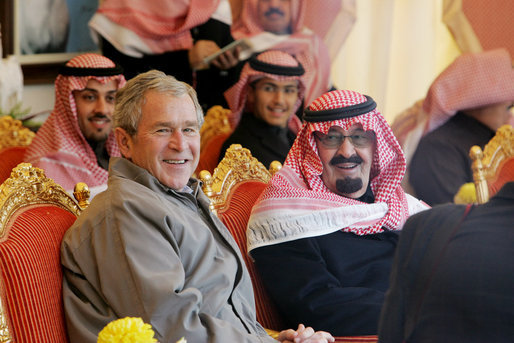
The Bush family has a multi-generational relationship with the Saudi royal family, with ties that are both deeply personal and deeply financial. Prince Bandar bin Sultan was the Saudi ambassador to the United States on 9/11, and is considered a personal friend of George W. Bush.

With many investigatory leads pointing toward the Saudi embassy in Washington, some feel Bandar merits thorough investigation—or that he may even be directly implicated in the 28 pages that Bush controversially redacted.

Saturday, appearing on Michael Smerconish’s CNN program to discuss a Saudi threat to divest itself of some $750 billion in U.S. Treasury securities if Congress passes a law clearing a path for 9/11 victims’ lawsuit against the kingdom, former Senator Bob Graham said, “I believe that there is material in the 28 pages and the volume of other documents that would indicate that there was a connection at the highest levels between the Kingdom of Saudi Arabia and the 19 hijackers.”

A Redacted Question from Document 17

Asked by 60 Minutes if the 28 pages name names, commission member Lehman replied, “Yes. The average intelligent watcher of 60 Minutes would recognize them instantly.”

(If you watched the impactful prime time 60 Minutes segment on the 28 pages that aired last week and don’t remember Lehman’s intriguing statement, it’s because 60 Minutes oddly relegated perhaps their most newsworthy quote of all to this web extra.) There are many more examples of the U.S. government’s thwarting of Saudi-related inquiries, both outside and inside the work of the 9/11 Commission.

A Buried Flight Certificate

The FBI’s 2002 discovery of a U.S. pilot certificate or “flight certificate” inside a Saudi embassy envelope was news to Graham, who co-chaired the joint congressional inquiry that produced the 28 pages. 

Al-Sharbi Excerpt Document 17

“That’s very interesting. That’s a very intriguing and close connection to the Saudi embassy,” said Graham, who has been championing the declassification of the 28 pages and a perhaps hundreds of thousands of pages of other documents since 2003.  

Since people often re-use envelopes and citizens of any country may have legitimate reasons for correspondence with the embassies of their government in foreign countries they live in, the Saudi embassy envelope isn’t by itself conclusive of anything. 28Pages.org couldn’t find any other history of the FBI’s find or of the government’s evaluation of its significance.

GitmoAl-Sharbi is one of 80 remaining detainees at Guantanamo Bay. His public record includes his graduation from Embry-Riddle Aeronautical University, reported association with other al-Qaeda members and alleged attendance at training camps in Afghanistan.

He is also among the individuals identified in FBI agent Kenneth Williams’ July 2001 electronic communication, sometimes called the “Phoenix EC” or “Phoenix Memo.” With it, Williams attempted—unsuccessfully—to alert the rest of the bureau about suspicions that Middle Eastern extremists were attending flight schools with ill intent, and to recommend a nationwide investigation of the phenomenon.

While those aspects of al-Sharbi’s story have been widely discussed, the FBI’s reported discovery of his flight certificate inside a Saudi embassy envelope buried in Pakistan has not.

Additional Excerpts from Document 17

The al-Sharbi paragraph excerpted above is in a section titled, “A Brief Overview of Possible Saudi Government Connections to the September 11th Attacks.” Comprising a list of individuals of interest to the investigators, it begins with names central to the well-reported San Diego cell, including future hijackers Nawaf al-Hazmi and Khalid al-Midhar, purported Saudi government operative Omar al-Bayoumi, Saudi diplomat Fahad al-Thumairy and Osama Bassnan, a former employee at a Saudi mission in Washington, D.C. who received “considerable funding from Prince Bandar and Princess Haifa, supposedly for his wife’s medical treatments.”

Here, we directly excerpt many entries from the list, with an emphasis on those that are more suggestive of a link to the Saudi government. Much of the information is already well-known.

It’s important to note that any given association described in these documents may well be benign, that witness statements aren’t always accurate, and that a previous government assertion of a fact may have already proved or may yet be proved wrong.

Omar Al-Bayoumi: Al-Bayoumi, a Saudi national, provided September 11 hijackers Nawaf al-Hazmi and Khalid al-Mihdhar with considerable assistance after the hijackers arrived in San Diego in February 2000. He helped them locate an apartment, co-signed their lease, and ordered Mohdhar Abdullah (discussed below) to provide them with whatever assistance they needed in acclimating to the United States. The FBI now believes that in January 2000 al-Bayoumi met with Fahad al-Thumairy, a Saudi diplomat and cleric, at the Saudi Consulate in Los Angeles before going to the restaurant where he met the hijackers and engaged them in conversation. Whether or not al-Bayoumi ‘s meeting with the hijackers was accidental or arranged is still the subject of debate. During his conversation with the hijackers, Al-Bayoumi invited them to move to San Diego, which they did shortly thereafter. Al-Bayoumi has extensive ties to the Saudi Government and many in the local Muslim community in San Diego believed that he was a Saudi intelligence officer. The FBI believes it is possible that he was an agent of the Saudi Government and that he may have been reporting on the local community to Saudi Government officials. In addition, during its investigation, the FBI discovered that al-Bayoumi has ties to terrorist elements as well.

Osama Bassnan: Bassnan was a very close associate of al-Bayoumi’s, and was in frequent contact with him while the hijackers were in San Diego. Bassnan, a vocal supporter of Usama Bin Ladin, admitted to an FBI asset that he met al-Hazmi and al-Mihdhar while the hijackers were in San Diego, but denied this in a later conversation. There is some circumstantial evidence that he may have had closer ties to the hijackers, but the FBI has been unable to corroborate this additional reporting. Bassnan received considerable funding from Prince Bandar and Princess Haifa, supposedly for his wife’s medical treatments. According to FBI documents, Bassnan is a former employee of the Saudi Government’s Educational Mission in Washington, D.C.

Fahad Al-Thumairy: Until recently al-Thumairy was an accredited Saudi diplomat and imam at the King Fahad Mosque in Culver City, California. The news media reported that the U.S. Government revoked al-Thumairy’s visa in May 2003 ; the diplomat subsequently returned to Saudi Arabia. The FBI now believes that Omar al-Bayoumi met with al-Thumairy at the Saudi Consulate in Los Angeles before al-Bayoumi went to the restaurant where he met the hijackers. According to witness reporting, al-Hazmi and al-Mihdhar were also taken to the King Fahad Mosque while they were in the United States.

Mohdhar Abdullah: Abdullah was tasked by Omar al-Bayoumi to provide al-Hazmi and al-Mihdhar with whatever assistance they needed while in San Diego. Abdullah, who became one of the hijackers’ closest associates in San Diego, translated for them, helped them open bank accounts, contacted flight schools for the hijackers, and helped them otherwise acclimate to life in the United States.

Osama Nooh and Lafi al-Harbi: Al-Harbi and Nooh are Saudi naval officers who were posted to San Diego while hijackers al-Mihdhar and al-Hazmi were living there. After the September 11th attacks, the FBI determined that al-Hazmi had telephonic contact with both Nooh and al-Harbi while al-Hazmi was in the United States.

Mohammed Quadir-Harunani: Quadir-Harunani has been the subject of an FBI counterterrorism investigation since 1999 and the FBI is currently investigating whether he had contact with the September 11th hijackers. In June 2000 a call was placed from Transcom International, a company owned by Quadir-Harunani, to a number subscribed to by Said Bahaji, one of the key members of the Hamburg cell. Quadir-Harunani is also a close associate of Usama bin Ladin’s half-brother, Abdullah Bin Ladin (discussed below), who was assigned to the Saudi Embassy in Washington, D.C.-E87 2.

Abdullah Bin Ladin: Abdullah bin Ladin (ABL) is reportedly Usama bin Ladin’s half-brother. He is the President and Director of the World Arab Muslim Youth Association (WAMY) and the Institute of Islamic and Arabic Studies in America. Both organizations are local branches of nongovernmental organizations based in Riyadh, Saudi Arabia. According to the FBI, there is reason to believe that WAMY is “closely associated with the funding and financing of international terrorist activities and in the past has provided logistical support to individuals wishing to fight in the Afghan War.” ABL has been assigned to the Saudi Embassy in Washington, D.C. as an administrative officer. He is a close associate of Mohammed Quadir Harunani’s and has provided funding for Transcom International.

Fahad Abdullah Saleh Bakala: According to an FBI document, Bakala was close friends with two of the September 11th hijackers. The document also notes that Bakala has worked as a pilot for the Saudi Royal Family, flying Usama Bin Ladin between Afghanistan and Saudi Arabia during UBL’s exile.

Hamad Alotaibi: Alotaibi was assigned to the Saudi Embassy Military Division in Washington, D.C. According to an eyewitness report, one of the September 11th hijackers may have visited Alotaibi at his residence; another FBI document notes that a second hijacker may have also visited this address.

Hamid Al-Rashid: Al-Rashid is an employee of the Saudi Civil Aviation Authority and was apparently responsible for approving the salary of Omar al-Bayoumi. Hamid al-Rashid is also the father of Saud al-Rashid, whose photo was found in a raid of an al-Qa’ida safehouse in Karachi and who has admitted to being in Afghanistan between May 2000 and May 2001.

Ghassan al-Sharbi: Al-Sharbi is a Saudi student who was taking flight lessons in the Phoenix area before the September 11 attacks and is mentioned in the “Phoenix EC.” The U.S. government captured al-Sharbi in the same location where Abu Zubaida was discovered in early 2002. After Al-Sharbi was captured, the FBI discovered that he had buried a cache of documents nearby, including an envelope from the Saudi embassy in Washington that contained al-Sharbi’s flight certificate.

Saleh Al-Hussayen: According to FBI documents, Saleh Al-Hussayen is a Saudi Interior Ministry employee/official and may also be a prominent Saudi cleric. According to one news article, Saleh Al-Hussayen is the Chief Administrator of the Holy Mosques in Mecca and Medina. An FBI affidavit notes that Saleh Al-Hussayen stayed in the same hotel as three of the hijackers on September 10, 2001. He told the FBI that he did not know the hijackers . The FBI agents interviewing him, however, believed he was being deceptive. The interview was terminated when al-Hussayen either passed out or feigned a seizure and was taken to the hospital; he then departed the country before the FBI could reinterview him. Saleh Al-Hussayen is ‘also the uncle of Sami Al -Hussayen (discussed below).

Mohammed Fakihi: Fakihi is a Saudi diplomat. Until recently he was assigned to the Islamic Affairs Section of the Saudi Embassy in Berlin, Germany. Soon after the September 11th attacks, German authorities searched SECRET 3 SECRET 10 the apartment of Munir Motassadeq, an associate of the hijackers in Hamburg , and found Fakihi’s business card. According to press reports , the Saudis did not respond to German requests for information on Fakihi. More recently, German authorities discovered that Fakihi had contacts with other terrorists; Fakihi was subsequently recalled to Saudi Arabia.

Salah Bedaiwi: Bedaiwi is a Saudi Naval officer who was posted to a U .S. Navy base in Pensacola, Florida. He visited the Middle Eastern Market in Miami, a location frequented by several of the hijackers, and was in contact with at least one of the hijackers’ possible associates. The FBI has been investigating these connections, as well as his ties to other terrorist elements.

Mohammed Al-Qudhaeein and Hamdan Al-Shalawi: Al-Qudhaeein and Al-Shalawi were both Saudi students living in the Phoenix area. Qudhaeein was receiving funding from the Saudi Government during his time in Phoenix. Qudhaeein and Al-Shalawi were involved in a 1999 incident aboard an America West flight that the FBI’s Phoenix Office now believes may have been a “dry run” for the September 11th attacks. Al-Qudhaeein and Al-Shalawi were traveling to Washington, D.C. to attend a party at the Saudi Embassy; the Saudi Embassy paid for their airfare. According to FBI documents, during the flight they engaged in suspicious behavior, including several attempts to gain access to the cockpit. The plane made an emergency landing in Ohio, but no charges were filed against either individual. The FBI subsequently received information in November 2000 that Al-Shalawi had been trained at the terrorist camps in Afghanistan to conduct Khobar Towertype attacks and the FBI has also developed information tying Al-Qudhaeein to terrorist elements as well.

Ali Hafiz Al-Marri and Maha Al-Marri: Ali Al-Marri was indicted for lying to the FBI about his contact with Mustafa Al-Hasawi, one of the September 11th financiers. Ali Al-Marri, who arrived in the United States shortly before the September 11th attacks, attempted to call Al-Hasawi a number of times from the United States. The FBI has recently received reporting that he may also have been an al:.Qa’ida “sleeper agent.” According to FBI documents, Ali Al-Marri has connections to the Saudi Royal Family. The Saudi Government provided financial support to his wife, Maha Al-Marri, after Ali Al-Marri was detained and assisted her in departing the United States before the FBI could interview her.

Brian McGlinchey is the founder and director of 28Pages.org and principal at Liberty Messaging. This analysis was first published on April 18 and was republished April 19 to update the title and URL. Media inquiries.

Brian McGlinchey’s journalism has moved to a Substack newsletter—Stark Realities with Brian McGlinchey: https://starkrealities.substack.com/

Sanders’ Worst-in-Show Answer on Whether He’s Read 28 Pages

Screen Shot 2016-04-18 at 9.03.50 PMSince our launch in 2014, 28Pages.org has encouraged citizens and journalists alike to ask members of Congress a simple question about the secret 28 pages on foreign government financing of the 9/11 attacks: “Have you read the 28 pages?”

Today, Senator Bernie Sanders managed to give the worst answer we’ve encountered to date.

On CBS This Morning, amid a discussion of tensions with Saudi Arabia over a bill that would clear a path for 9/11 victims to sue the kingdom and the president’s upcoming decision on whether to declassify the 28 pages, host Norah O’Donnell asked our favorite question: “Have you read them?”

“No, I have not,” he replied. An honest albeit disappointing answer—but not a surprising one given the extraordinarily low level of 28-pages readership on Capitol Hill. Then things turned south quickly.

Norah O'Donnell
Norah O’Donnell

Admirably pressed by the hosts as to whether he should read them, Sanders said, “The difficulty is, you see then, if you read them, then you’re gonna ask me a question, you’re gonna say, ‘You read them, what’s in them?’ And now I can tell you honestly I have not.”

Put another way, Sanders essentially declared he’d rather avoid the minor inconvenience of deflecting questions than be fully informed about who enabled 9/11—which might also provide critical insights into the rise of ISIS and other offshoots of extremism while informing the life and death votes he casts as a United States senator.

Sanders was clearly trying to muddle his way through any kind of rationalization as to why he hadn’t read 28 pages that millions of people around the world would read if they had the opportunity Sanders has to do so.

In other words, what we witnessed on CBS This Morning was a man who is duty-bound to be a scholar of terrorism being caught without doing his homework.

Turning a Blind Eye

Along with fellow Congressmen Walter Jones and Stephen Lynch, Thomas Massie has been urging colleagues to read the 28 pages for two years now. At a June 2015 press conference introducing Senate Bill 1471, which would direct the president to declassify the redacted chapter of a 2002 joint congressional intelligence inquiry, Massie decried the failure of the great majority to read them.

Some of the best intelligence we have in the war on terror is in these 28 pages, and most of our colleagues in the House have not read them, yet they’re pretending to be informed on these issues and having a discussion on how to prevent the next 9/11, yet turning a blind eye to the 28 pages,” said Massie.

Though he gets an F on the question of whether he’s read the 28 pages, Sanders earned an A on the question of whether they should be released: We are very grateful he said “yes” to that one.

Have your legislators read the 28 pages? Call today and ask!

Follow us on Facebook and Twitter