The 28 Pages and the War on Terror: Is Congress in a State of Willful Ignorance?

By Brian McGlinchey

Today more than ever, Americans are struggling to unravel the Gordian knot of overt and covert alliances that comprise the Middle East’s geostrategic landscape. As they do, politicians and pundits constantly remind them that reaching the correct conclusions about the region is imperative if we are to thwart the menace of terrorism and prevent the next 9/11.

REDACTED1As if a thicket of misinformation, hit-and-miss journalism and competing propaganda didn’t make the challenge daunting enough, the American people face an even more formidable barrier in their attempts to reach informed and rational conclusions about U.S. policy in the Middle East: the classification of a 28-page finding on foreign government support of the 9/11 hijackers—classification that continues over the objections of the chairman and vice-chairman of the 9/11 Commission and the former senator who co-chaired the inquiry that produced the 28 pages.

Preventing a hypothetical “next 9/11” starts with a clear understanding of what enabled the actual one—yet, even as the U.S. military prepares for the next chapter in the seemingly perpetual War on Terror, Americans continue to be denied critical knowledge about how the September 11 attacks were planned and funded. Reflecting on that disconnect, Kentucky Congressman Thomas Massie recently told Slate, “Until we know what enabled or caused 9/11, we shouldn’t be talking about starting a third war to prevent another 9/11.”

A Looming Scandal on the Hill

For everyday Americans, ignorance about what lies within the 28 pages is imposed; for apparently far too many in Congress, that ignorance is willful.

You see—unlike the citizens they represent—when it comes to reading or not reading the 28 pages, legislators enjoy the luxury of a choice: After securing permission through their respective intelligence committee, representatives and senators can venture into a guarded, soundproof room at the Capitol and read the classified findings on foreign government assistance to the 9/11 hijackers in their entirety. Astonishingly—given what’s at stake for the country and for the lives of servicemembers and civilians alike—there are indications only a slim minority have bothered to do so.

Rep. Walter Jones (NC)
Rep. Walter Jones

North Carolina’s Walter Jones is one congressman who did take the initiative to learn what lies in the 28 pages. Later, he said, “I was absolutely shocked by what I read. What was so surprising was that those whom we thought we could trust really disappointed me.” He added, “The information is critical to our foreign policy moving forward and should thus be available to the American people.”

On January 8th of this year, by way of a “Dear Colleague” letter, Jones and Massachusetts Congressman Stephen Lynch urged every one of their fellow House representatives to read the 28 pages for themselves. Among those who heeded their call was Rep. Massie. At a March 11 press conference in which he joined Jones and Lynch in imploring peers to examine the redacted finding, Massie offered a striking description of his reaction to the revelations within the 28 pages, saying: “It was a really disturbing event for me to read those. I had to stop every two or three pages and rearrange my perception of history. And it’s that fundamental…it certainly changes your view of the Middle East.”

Rep. Stephen Lynch
Rep. Stephen Lynch

Given legislators’ role in advocating, shaping and funding defense and foreign policy, one would think descriptions like those offered by Jones and Massie would instantly spark a long, long queue outside that soundproof room in the Capitol—if not prompted by representatives’ professional curiosity, then surely by simple human curiosity.

However, in what could emerge as a national security scandal that engulfs much of Congress, there are indications that, when it comes to acquiring essential knowledge to shape policies that safeguard the country, a majority of legislators have thus far made a conscious decision to remain ignorant:

  • As of this writing, 13 of the House’s 432 representatives have joined as cosponsors of a Jones-authored resolution urging the president to declassify the 28 pages.
  • A source on the Hill who is familiar with the declassification effort is personally unaware of any representative who has read the 28 pages over the last several months who didn’t emerge from the experience as a supporter of declassification.

When you overlay one of those observations on the other, the result points to a woefully low level of interest among the nation’s legislators in learning what “shocking,” “surprising” and “history-rearranging” facts are contained in the classified passage.

A Question for Every Representative and Senator:           “Have You Read the 28 Pages?”

Those indications paint a bleak portrait of Congressional diligence in overseeing national security policy. What’s needed now is a name-by-name accounting of which representatives and senators have read the 28 pages and which have not. To that end, 28Pages.org urges constituents, journalists and transparency advocacy organizations to help bring accountability to this essential issue of national security job performance by contacting legislators and asking them two simple, yes-or-no questions:

  • Have you read the 28 pages?
  • If not, have you asked permission from your intelligence committee to do so?

REDACTED w911We provide a wealth of resources to help citizens do their part, and encourage journalists to contact us for insights on the issue.
Keep up with the growing, nonpartisan drive to declassify the 28 pages.  Follow 28Pages.org on Twitter and like us on Facebook.

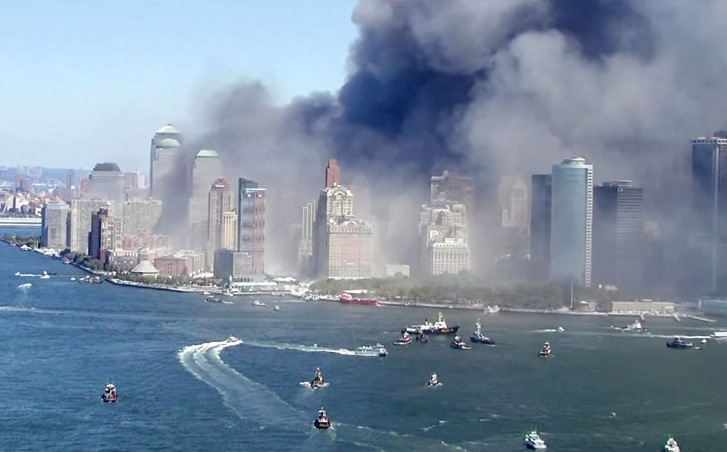
The Great Boatlift of 9/11

In the 13 years since the September 11 attacks, you’ve no doubt heard countless stories of individual selflessness and sacrifice from that day. On this 9/11 anniversary, we’d like to share a story that may have escaped your notice over these years, despite the fact that it is epic in scale.

911 FLOTILLA 2
The Great Boatlift of 9/11 in Action

This 11-minute, Tom Hanks-narrated short documentary tells the tale of the Great Boatlift of 9/11, in which hundreds of vessels—ferries, tugboats, party boats, yachts, private vessels, tour boats—rapidly descended on Manhattan to help enormous crowds of stranded people leave the island. It was a remarkable demonstration of humanity’s better instincts—and of spontaneous order. With no prior planning, this huge array of vessels rapidly organized itself into what would become the largest sea evacuation in history—even larger than the evacuation of Dunkirk in World War II—transporting nearly half a million desperate people in just about nine hours.

The determination of the boat captains and crew to do the right thing is heart-warming, and their words should serve as inspiration to those who are determined to overcome both hidden agendas and obvious dishonesty to someday deliver all the facts of 9/11 to the nation and the world.

ROBIN JONES“Average people, they stepped up when they needed to. They showed me when the American people need to come together and pull together, they will do it.”                        

Robin Jones, Engineer, Mary Gellatly

ARDOLINO

“I have one theory in life: I never want to say the words ‘I should have.’ If I do it and I fail, I tried.”

Vincent Ardolino, Captain, Amberjack V


Brian McGlinchey’s journalism has moved to a Substack newsletter—Stark Realities with Brian McGlinchey: https://starkrealities.substack.com/

28 Ways You Can Build the 28 Pages Movement

Whether you’re taking your first step toward helping declassify the 28-page finding on foreign government assistance to the 9/11 hijackers, or you’re looking for more ways to help, here are 28 ways you build the 28 pages movement.

1 & 2. Write to each of your two senators or call 202-224-3121 to ask them to cosponsor Senate Bill 1471. Here’s what to say.

3. Write to your representative or call 202-225-3121 to ask them to cosponsor House Resolution 14.

4. Write to the president or call the White House at 202-456-1111 and ask the president to keep his pledge to 9/11 families.

5. Like 28Pages.org on Facebook.

6. Follow @28Pages on Twitter.

7. Contact your favorite reporter, columnist, TV host, blogger or podcaster and ask them to give attention to the issue.

8. Write a letter to the editor.

9. Call in to a radio or TV talk show.

10. Email your friends a link to a video of Rep. Thomas Massie’s memorable remarks on his experience of reading the 28 pages.

11. Bring up the 28 pages using the “comments” feature found under articles on many news and other websites and include a link to an informative page about the 28 pages.

12. Start a discussion thread about the 28 pages on any message board.

13. Post a comment on an elected official’s Facebook page urging them to help declassify the 28 pages and include a link to an article or video on the topic.

14. Explain the issue to friends or family.

15. Invite some friends to like 28Pages.org on Facebook.

16. Subscribe to the 28Pages.org blog by clicking the button on the right side of this page.

17. Make a 28 pages bumper sticker or t-shirt (extra points for showing us your final product via social media).

18. Make and then share a YouTube video like this or this…or, if you want to get your groove on, maybe even this.

19. Share a 28Pages.org Facebook post.

20. Tweet a link to 28Pages.org or other educational content.

21. See if you can get a politically-oriented Twitter user with a large following to retweet you on the topic.

22. Visit your Congressional representative’s local office in person.

23 and 24. Visit each of your senators’ local offices in person.

25. Use #declassify when discussing the subject in social media.

26. Call any member of the Senate Intelligence Committee or House Intelligence Committee and ask them to use special rules to declassify the 28 pages without the president’s approval.

27. Choose any H.Res. 14 cosponsor and call to thank them for their stand.

28. Help us out—add your own activism idea in the comments below!

Ron Paul Doubles Down on Drive to #Declassify the 28 Pages

Having just days ago interviewed House Resolution 428 sponsor Walter Jones about the 28 pages, Ron Paul has now made himself the focus of an audio interview on the same topic and created a YouTube video to help spur a social media campaign centered on the hashtag #declassify.

Historical Perspective on Key U.S. Relationship

In the 6-minute audio interview posted at Voices of Liberty, Paul offered a long-term, historical perspective on a U.S. relationship with Saudi Arabia he characterized as “very unhealthy.” Paul traced the current state of affairs back to security-for-oil commitments given to Saudi Arabia by President Franklin Roosevelt and honored by the long succession of presidents that have followed him.

Carrying that perspective up to the 9/11 attacks, Paul said:

“There’s a fuzzy relationship between Saudi Arabia and us. I was so astounded on 9/11…that all the Saudi Arabians that were here—including bin Laden family members—all got to fly out, many, many hours if not days before I was allowed to get on an airplane and come home. And they were never even questioned or quizzed by the FBI and I got to thinking, ‘What in the world’s going on?’

And now it pops up and there’s strong hints, even by those who were on this committee, saying, ‘Well, it might have something to do with Saudi Arabia’… So this makes it so much more important that we find out exactly what is in the redacted pages. Obviously these are the probably the most important pages and so often commissions are set up to protect governments and government agents rather than finding the truth.”

Putting the issue of declassifying the 28 pages in a broader context, Paul said, “It seems like the whole purpose is to bury the information that might embarrass our government or put some blame on our government for not having done a good job…People deserve (to know what’s hidden in the 28 pages). People are supposed to have their privacy and the government is supposed to be open. Today the government is being used to keep (its) secrecy and invade our privacy.”

Addressing those who may be prone to assuming there’s a good reason for the 28 pages to remain classified, Paul said, “Every time they shout ‘national security’ you ought to be suspicious of what our government’s up to.”

Firing Up Social Media

In addition to the interview, Paul also took to YouTube, Facebook and Twitter to urge others to help build public awareness and political pressure on the issue of the 28 pages. In the video posted below, Paul says, “I deserve to know the truth hidden in the 9/11 report and so do you. Join me in the #declassify campaign and make your voice heard.” On his Facebook page–which has more than 1.3 million “likes”—Paul encouraged others to make videos with the same message, to challenge others to do the same, and to tag members of Congress in their social media posts.

In addition to those actions, 28Pages.org urges citizens to call their Congressional representatives and senators using our simple guide, and to help spread awareness of 28Pages.org as an information and activism hub for the movement. Please follow us on Twitter and Facebook.   

Foreign Government Involvement in 9/11 Shouldn’t Stay Secret

And that’s why we’ve launched 28Pages.org. More than a website, it will serve as an information and activism hub for citizens, elected officials and journalists who want to follow or join the growing, bipartisan movement to declassify a 28-page finding about foreign support for the 9/11 terrorists.

The 28-page redaction at issue is found in the report of the Joint Inquiry into Intelligence Community Activities Before and After the Terrorist Attacks of September 11, 2001. Not to be confused with the 9/11 Commission, this inquiry was a separate undertaking of the House and Senate intelligence committees.

While the resulting 838-page volume features many redacted words, sentences and paragraphs, President George W. Bush’s censorship of this particular section was comprehensive: 28 consecutive pages fully masked from public view, with only a few introductory paragraphs left intact. Within what little that is visible, we find the inquiry reviewed “FBI and CIA documents suggesting specific potential sources of foreign support for the September 11 hijackers.”

Though some argue for continued deference to President Bush’s decision and President Obama’s inaction in reversing it, a growing number from both sides of the aisle are calling for declassification, united by two shared conclusions:

  • There’s no national security justification for the comprehensive redaction of this section. 
  • Citizens deserve to know about foreign support for the 9/11 attacks.

The growing drive to declassify this section doesn’t spring from passive curiosity. Rather, it is compelled by a near-universal interest in:

  • Securing justice for 9/11 victims. Such justice is often pursued via military and diplomatic action, but it can also come in a courtroom: Victims and families are pursuing civil action against countries they believe to be complicit in the 9/11 attacks.
  • Preventing future attacks. Warding off future terrorist attacks necessitates an accurate and shared understanding of the most devastating attack to date.
  • Pursuing a rational foreign policy. For both policymakers and the citizens from whom their power flows, it’s essential to fully understand the misdeeds and motives of foreign governments that aided Al Qaeda in its preparation for September 11…lest we continue policies that actually reinforce the maintenance of power by guilty parties.

With a firm commitment to well-sourced facts and sound reasoning, 28Pages.org explores the many facets of this issue and shines a spotlight on the stances taken by elected officials, as we strive to facilitate the long-overdue disclosure of what lies in those 28 pages.